Facebook

Author: FilmNerd

  • Troma Tuesdays – An Introduction

    Troma Tuesdays – An Introduction

    [et_pb_section fb_built=”1″ admin_label=”section” _builder_version=”3.22″][et_pb_row admin_label=”row” _builder_version=”3.25″ background_size=”initial” background_position=”top_left” background_repeat=”repeat”][et_pb_column type=”4_4″ _builder_version=”3.25″ custom_padding=”|||” custom_padding__hover=”|||”][et_pb_text _builder_version=”4.6.0″ hover_enabled=”0″ sticky_enabled=”0″]

    “Greetings from Tromaville!”

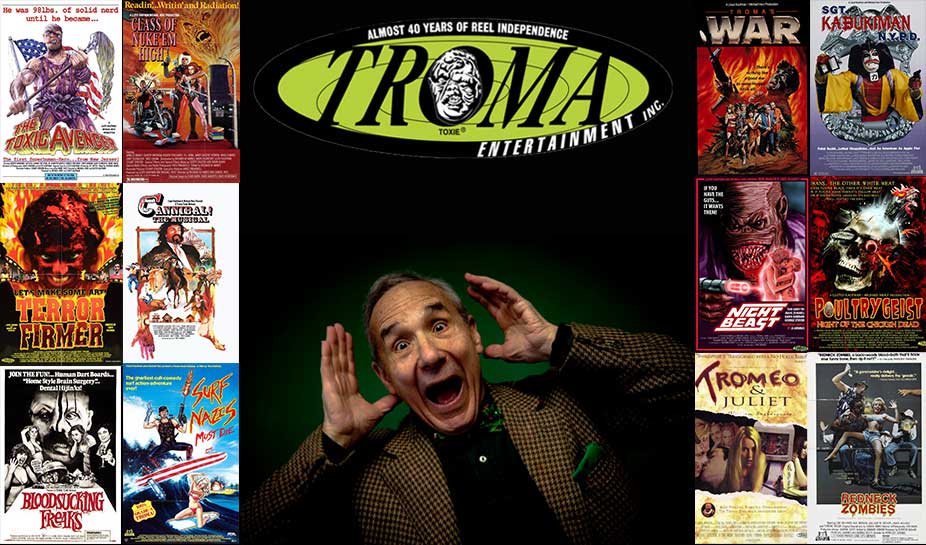
    Those are the words used to introduce the films of Troma Entertainment by its co-founder and president, Lloyd Kaufman. Founded alongside business partner Michael Herz in 1974, Troma has gained a reputation for producing and distributing mostly independent films. Much like Full Moon Features, they primarily aim at horror and sci-fi films but with more of an over-the-top nature. Their films are known for their copious amounts of blood, gore, nudity, low-brow humor, political incorrectness, and everything in between. Troma has been seen as a more rebellious studio, aiming for mainstream attention while not conforming to the mainstream. While working with only a fraction of a typical Hollywood studio budget, they have maintained a rabid and growing fanbase. During their 40+ years, they’ve helped launch the careers of James Gunn, J.J. Abrams, and Trey Parker and Matt Stone. To celebrate Troma’s legacy, FilmNerd is proud to present Troma Tuesdays!

    [/et_pb_text][/et_pb_column][/et_pb_row][/et_pb_section]

  • Tourist Trap (1979)

    Tourist Trap (1979)

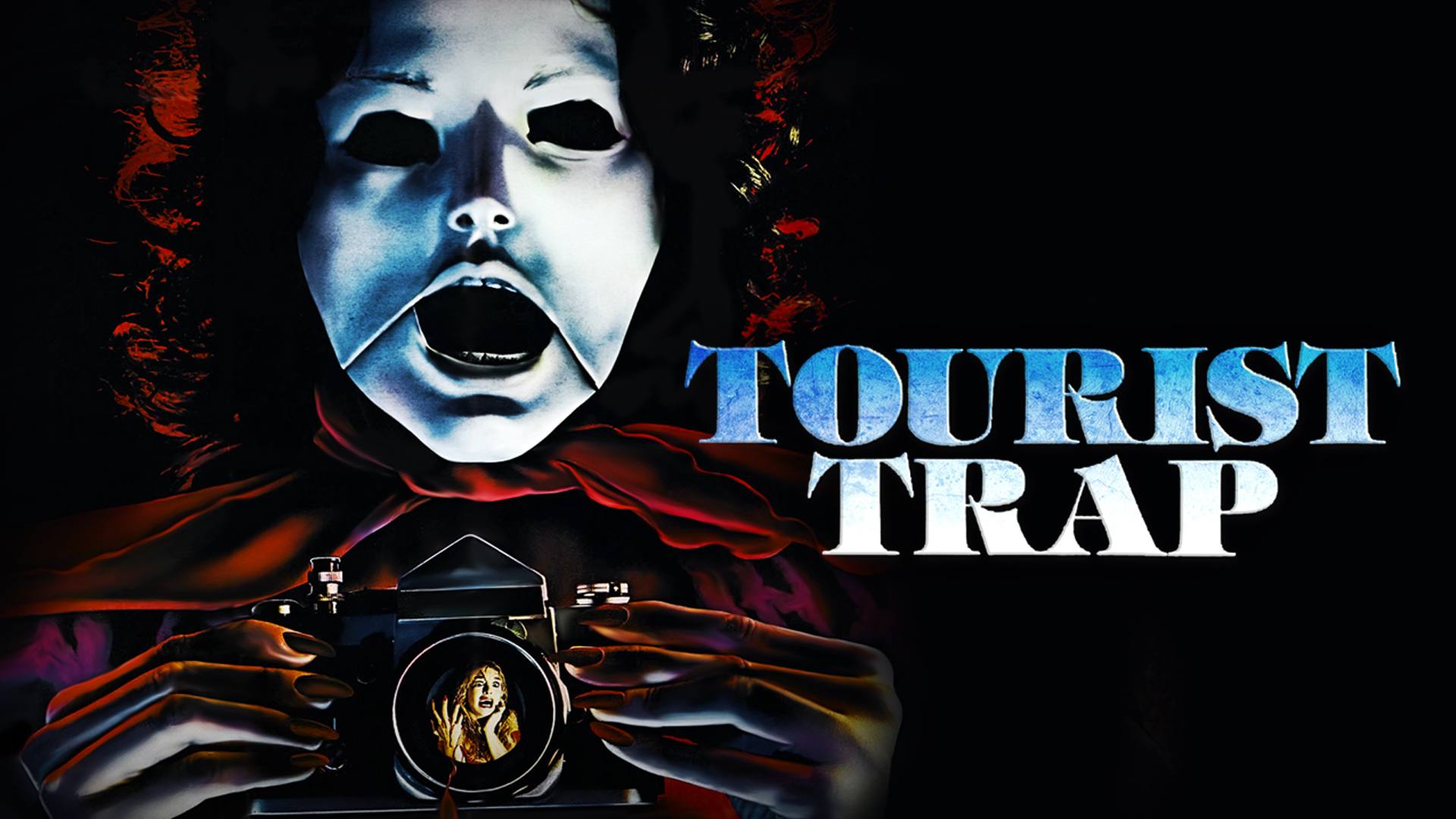
    [et_pb_section fb_built=”1″ _builder_version=”4.16″ _module_preset=”default” global_colors_info=”{}”][et_pb_row column_structure=”2_3,1_3″ _builder_version=”4.16″ _module_preset=”default” global_colors_info=”{}”][et_pb_column type=”2_3″ _builder_version=”4.16″ _module_preset=”default” global_colors_info=”{}”][et_pb_text _builder_version=”4.16″ _module_preset=”default” global_colors_info=”{}”]After earning a Master’s degree from the University of Texas, David Schmoeller got an internship working on 1978’s Capricorn One. Following his internship, Schmoeller was developing a screenplay off of his thesis film The Spider Will Kill You. He wrote the screenplay alongside J. Larry Carroll, and they tried pitching it to Sam Arkoff and Bruce Cohn Curtis. Eventually, they pitched their screenplay to Charles Band, who liked it and agreed to produce, with Schmoeller serving as director. He was given a $300,000 budget, $50,000 of which would go towards a name actor, that actor being Chuck Connors. The rest of the cast consisted of relatively unknown actors, though they helped Schmoeller learn working with actors. The crew included production designer Robert Burns from The Texas Chain Saw Massacre and Pino Donaggio as the composer. Finally, March of 1979 saw the release of Schmoeller’s directorial debut, Tourist Trap.

    [/et_pb_text][/et_pb_column][et_pb_column type=”1_3″ _builder_version=”4.16″ _module_preset=”default” global_colors_info=”{}”][et_pb_circle_counter title=”Rating” number=”85″ bar_bg_color=”#7CDA24″ _builder_version=”4.16″ _module_preset=”default” global_colors_info=”{}”][/et_pb_circle_counter][/et_pb_column][/et_pb_row][et_pb_row _builder_version=”4.16″ _module_preset=”default” global_colors_info=”{}”][et_pb_column type=”4_4″ _builder_version=”4.16″ _module_preset=”default” global_colors_info=”{}”][et_pb_text _builder_version=”4.27.4″ _module_preset=”default” hover_enabled=”0″ global_colors_info=”{}” sticky_enabled=”0″]

    Synopsis

    Friends Molly (Jocelyn Jones), Jerry (Jon Van Ness), Eileen (Robin Sherwood), and Becky (Tanya Roberts) are traveling through the desert. Unfortunately, their car breaks down, but fortunately, they get help from Mr. Slausen (Chuck Connors), a tourist trap owner. The four follow him to said tourist trap, a museum full of lifelike wax mannequins, some having mechanical movements. Slausen tells the girls to stay in the museum while he and Jerry go off to fix the truck. Eileen, however, ignores his warning and goes to check out a nearby house, where she runs into a masked killer. When they don’t hear back from them, Becky and Molly decide to go find them, only to find something horrifying. Turns out Slausen’s brother, who built the mannequins, has been in hiding and killing any tourists who come by. But not all is as it seems at the local tourist trap!


    Review

    Tourist Trap is a very underrated chiller that could be considered a slasher film, releasing one year after Halloween. Admittedly, its plot is nothing special: young people stranded in a deserted area being stalked by a killer. Not only that, but the film borrows elements from other films, including PsychoCarrie, and The Texas Chain Saw Massacre. That being said, this film has plenty to help it stand apart, such as its mood and emphasis on atmosphere. Chuck Connors delivers a phenomenal performance as Mr. Slausen, who seems innocent and charming, but you know there’s something off. The other actors do a serviceable job, Jocelyn Jones, in particular, standing out as our main heroine and final girl. For a first-time director, Schmoeller shows quite a lot of potential here, creating an effectively creepy and unnerving mood throughout. It’s easy to see how he went on to later direct Puppet Master.

    For a PG-rated film, Tourist Trap is surprisingly disturbing, even with the lack of excessive blood and gore. For instance, there’s a death scene where a woman suffocates from having plaster applied to her face without breathing holes. Also, if you’re freaked out by mannequins, this film will haunt you with all the shots of their blank faces. There are some supernatural elements added in which, while not a detractor from the film, feel somewhat out of place. On the flip side, Donaggio’s score is very unique, at times playful and innocent, and other times haunting and creepy. Even with a 90-minute runtime, the film can be slow at times, but it does work to build up tension. Even with its flaws, it’s a shame this movie is so overlooked as it’s an effectively creepy film deserving recognition. Overall, Tourist Trap is an effective chiller worthy of its cult status.


    Buy Tourist Trap from:

    Disclosure: The above link is an affiliate link, which means that, at zero cost to you, I will earn a commission if you click through the link and finalize a purchase.​

    [/et_pb_text][/et_pb_column][/et_pb_row][/et_pb_section]

  • Midnight Cowboy (1969)

    Midnight Cowboy (1969)

    [et_pb_section fb_built=”1″ _builder_version=”4.5.8″ _module_preset=”default”][et_pb_row column_structure=”2_3,1_3″ _builder_version=”4.5.8″ _module_preset=”default”][et_pb_column type=”2_3″ _builder_version=”4.5.8″ _module_preset=”default”][et_pb_text _builder_version=”4.5.8″ _module_preset=”default”]

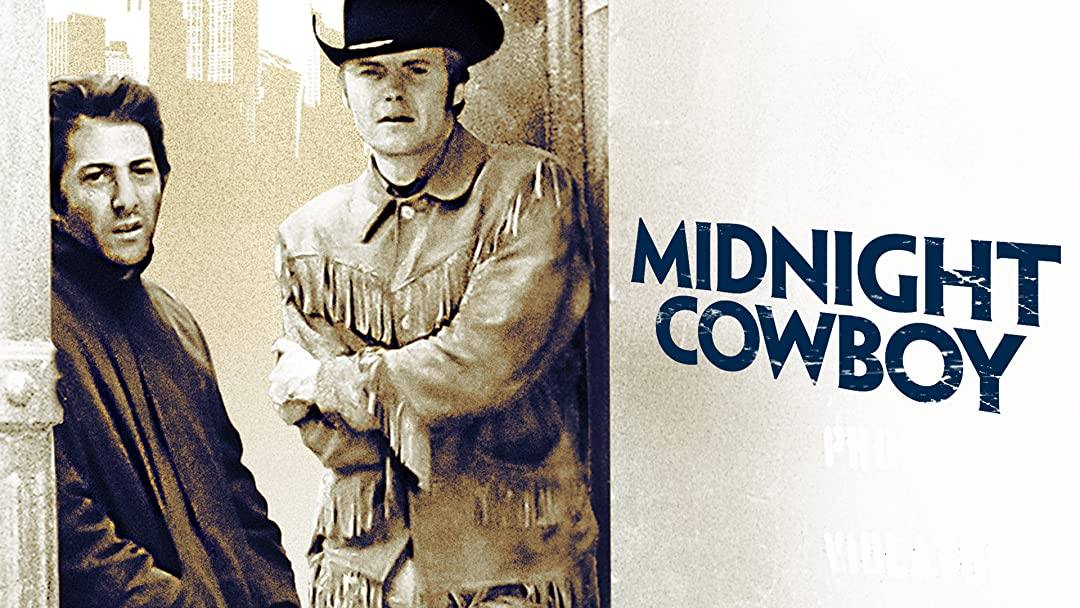
    With the advent of television and the decline in theater patronage in the 1950s, studios desperately tried to succeed. In addition to introducing new gimmicks like CinemaScope, stereo sound, and 3-D, there was a flood of giant spectacle films. While they had some success with movies like The Sound of Music and West Side Story, things quickly died out. This gave way to smaller, riskier films like Bonnie & ClydeThe Wild Bunch, and The Graduate becoming surprise hits. These successes led to a period commonly known as the New Hollywood Movement, where fresh young directors had creative freedom. Many films of this period focused on more taboo subjects that challenged what was considered acceptable in society. One filmmaker who emerged during this time was John Schlesinger, who was looking for something risky to tackle. So in 1969, Schlesinger brought us Midnight Cowboy based on the James Leo Herlihy novel.

    [/et_pb_text][/et_pb_column][et_pb_column type=”1_3″ _builder_version=”4.5.8″ _module_preset=”default”][et_pb_circle_counter title=”Rating” number=”95″ bar_bg_color=”#7CDA24″ _builder_version=”4.5.8″ _module_preset=”default”][/et_pb_circle_counter][/et_pb_column][/et_pb_row][et_pb_row _builder_version=”4.5.8″ _module_preset=”default”][et_pb_column type=”4_4″ _builder_version=”4.5.8″ _module_preset=”default”][et_pb_text _builder_version=”4.5.8″ _module_preset=”default” hover_enabled=”0″]

    Synopsis

    Texan boy Joe Buck (Jon Voight) decides to leave his dishwashing job to become a hustler in New York City. Upon arriving, however, he doesn’t find much luck, though he does manage to hook up with middle-aged Cass (Sylvia Miles). Things change for Buck when he meets Enrico Salvatore “Ratso” Rizzo (Dustin Hoffman), a con artist with a limp. Unfortunately, Joe’s luck gets worse when Rizzo cons him out of $20, tricking him into meeting a gay religious fanatic. On top of that, Joe gets locked out of his hotel room and loses his things, leaving him with nothing. He eventually runs into Rizzo, who offers to let him stay at his apartment and act as his manager. As the two develop their friendship, Joe’s luck starts getting better, though Rizzo’s health starts declining, eventually ending up bedridden. It’s a story of two unlikely friends struggling in an unforgiving world.


    Review

    Since its initial release, Midnight Cowboy has been heralded as a cinematic masterpiece, and it deserves that status. First off, Schlesinger’s direction is phenomenal, taking full advantage of the grime and grit of late 1960s New York City. Also, Voight and Hoffman give some of the best performances of their careers, playing off each other really well. It’s also interesting seeing the character dynamic change from Rizzo providing for Buck to Buck providing for Rizzo. Further adding to his character growth, we get flashbacks to Joe Buck’s past, which help give insight to his character. They give you just enough information so you can understand it without taking away from the overall experience. There are some secondary cast members who stand out, including Miles, Brenda Vaccaro, Bob Balaban, and Jennifer Salt from Sisters. It’s a wonderfully acted film, highlighted by two fantastic lead performances from Jon Voight and Dustin Hoffman.

    It’s interesting that the film was originally given an “X” rating, but was reduced to an “R” after the fact. While nothing in the film is necessarily shocking by today’s standards, it’s easy to see why it was considered controversial. The fact that it was pushing boundaries goes to show how it helped usher in the New Hollywood movement. Admittedly, there are a few moments that are somewhat disturbing, namely during the flashbacks and when Rizzo’s slowly dying. If there are any complaints to be had, I’d say that the film moves at a somewhat slow pace. There are moments where the film meanders a bit, but you’re still engaged thanks to the great performances. It’s definitely a film that’s worth watching for its historical significance, but some modern audiences will most likely get bored. Overall, Midnight Cowboy is a fantastically bleak film spearheaded by two amazing lead performances.


    Buy Midnight Cowboy from The Criterion Collection: https://bit.ly/3hv6zXY

    [/et_pb_text][/et_pb_column][/et_pb_row][/et_pb_section]

  • Godzilla Raids Again (1955)

    Godzilla Raids Again (1955)

    [et_pb_section fb_built=”1″ _builder_version=”4.16″ _module_preset=”default” global_colors_info=”{}”][et_pb_row column_structure=”2_3,1_3″ _builder_version=”4.16″ _module_preset=”default” global_colors_info=”{}”][et_pb_column type=”2_3″ _builder_version=”4.16″ _module_preset=”default” global_colors_info=”{}”][et_pb_text _builder_version=”4.16″ _module_preset=”default” global_colors_info=”{}”]

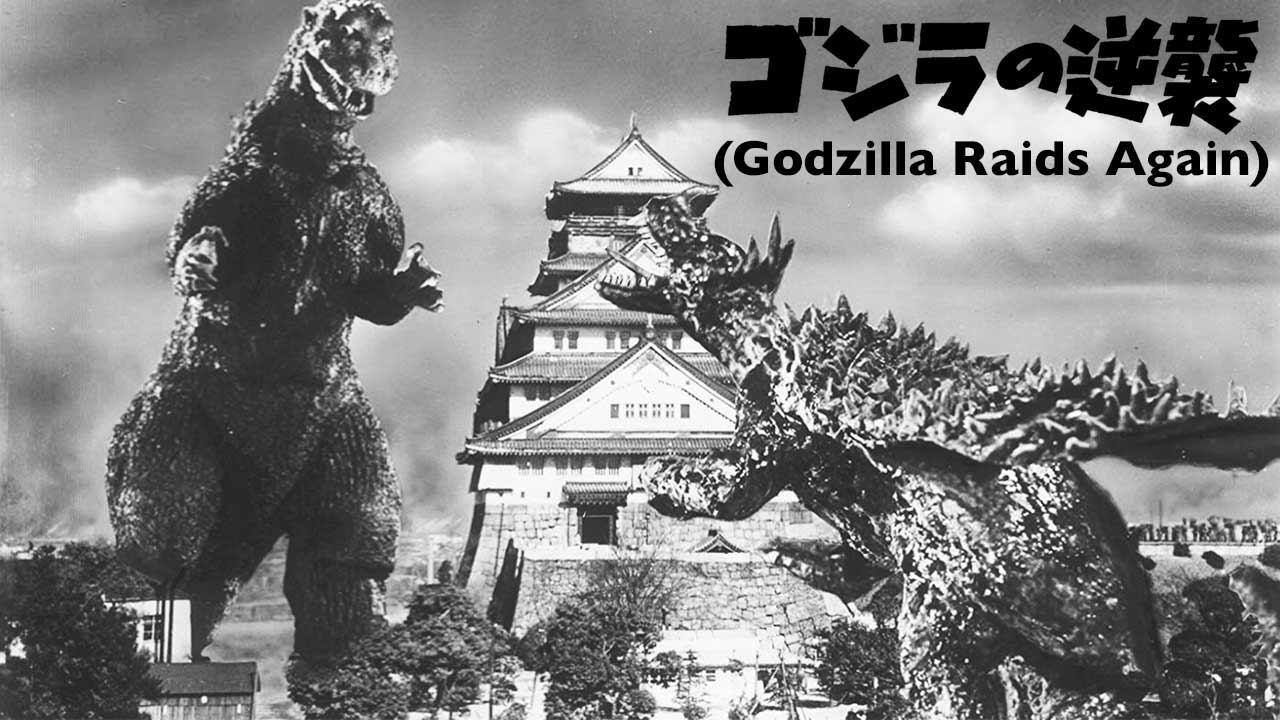
    Against a budget of ¥100 million, Godzilla grossed ¥183 million, or $2.1 million, at the Japanese box office. In 1956, the film was re-edited and released in the US as Godzilla, King of the Monsters featuring Raymond Burr. Though lacking much of the original’s political themes, it was successful enough to further establish Godzilla’s popularity worldwide. Following its success, producer Tomoyuki Tanaka was asked by executive producer Iwao Mori to start producing a sequel. However, original director Ishiro Honda couldn’t return as he was working on 1955’s Love Makeup, so Oda Motoyoshi was hired. For the sequel, they decided to include a new monster, which established the trope of having a monster fight Godzilla. Not wanting to lose the momentum of the original film’s success, the sequel was released one year later. On April 24, 1955, Godzilla Raids Again was released in Japan and Japanse American cinemas.

    [/et_pb_text][/et_pb_column][et_pb_column type=”1_3″ _builder_version=”4.16″ _module_preset=”default” global_colors_info=”{}”][et_pb_circle_counter title=”Rating” number=”80″ bar_bg_color=”#7CDA24″ _builder_version=”4.16″ _module_preset=”default” global_colors_info=”{}”][/et_pb_circle_counter][/et_pb_column][/et_pb_row][et_pb_row _builder_version=”4.16″ _module_preset=”default” global_colors_info=”{}”][et_pb_column type=”4_4″ _builder_version=”4.16″ _module_preset=”default” global_colors_info=”{}”][et_pb_text _builder_version=”4.27.4″ _module_preset=”default” global_colors_info=”{}”]

    Synopsis

    Two Japanese pilots, Shoichi Tsukioka (Hiroshi Koizumi) and Koji Kobayashi (Minoru Chiaki) are hunting fish for a cannery company. When Kobayashi starts losing control of his plane, he lands on Iwato Island, where he sees Godzilla fighting another monster. After Kobayashi’s rescued by Tsukioka, they report what they saw to the authorities, who dub the new monster Anguirus. Dr. Kyohei Yamane (Takashi Shimura), who witnessed Godzilla’s rampage beforehand, confirms that this Godzilla is another member of its species. While the monsters continue their rampage, the Japanese military tries to keep Godzilla away from shore and wreaking further havoc. Eventually, Godzilla wins the fight by killing Anguirus and returns to the sea, leading the military to search for him. After Godzilla takes out some fishing boats, the military tries everything they can to bring the monster down. Will they succeed, or will Godzilla continue his rampage throughout Japan?


    Review

    While the original film may have had its flaws, it was still a landmark in Japanese cinema and indeed worldwide. The film commented on the dangers of nuclear war and was a metaphor for the then-recent nuclear devastation Japan was going through. This film, however, ditches the somber tone and symbolism for a more or less fairly conventional 50s monster movie. You have regular civilians running into the monsters, the military failing to stop the monsters, and a big monster brawl. Granted, this one introduced many concepts we’d see in future Godzilla movies, and they were still figuring things out. Also, the fact that this film was rushed to a release one year later hinders the film’s quality. Though the first film’s effects were somewhat crude, the filmmakers were able to work with what they had. Here, you can tell the crew wasn’t given much time to prepare.

    That being said, there are some decent effects on display, and the monster fights are the highlight of the film. You can also tell the filmmakers learned some lessons from the last film, such as slimming down the Godzilla suit. Once again, the black and white cinematography does complement the monster scenes, even if it lacks the original’s gritty quality. Still, there are some parallels similar to the original, namely scenes of Osaka in flames symbolizing the Nagasaki bombing. Unfortunately, there are tons of filler scenes that drag the movie down and add to its more conventional nature. That’s not to say any of the performances are terrible, but the primary human scenes can get dull. This is still a fairly important entry in the series, establishing future tropes and being the last black-and-white Godzilla film. Overall, Godzilla Raids Again is a slightly disjointed yet enjoyable kaiju film worth watching.


    Buy Godzilla Raids Again from Amazon: https://amzn.to/49yvlUT.

    Disclosure: The above link is an affiliate link, which means that, at no additional cost, I will earn a commission if you click through the link and make a purchase.

    [/et_pb_text][et_pb_code _builder_version=”4.27.4″ _module_preset=”default” hover_enabled=”0″ global_colors_info=”{}” sticky_enabled=”0″]

    Where to watch Godzilla Raids Again (1955)

    data-api-key=”LMVDLdLSH5ZJnQ4FMGMgyJCB8cmGbfCV” data-object-type=”Movie” data-title=”Godzilla Raids Again” data-year=”1955″ data-theme=”light”>

    [/et_pb_code][/et_pb_column][/et_pb_row][/et_pb_section]
  • Trancers III: Deth Lives (1992)

    Trancers III: Deth Lives (1992)

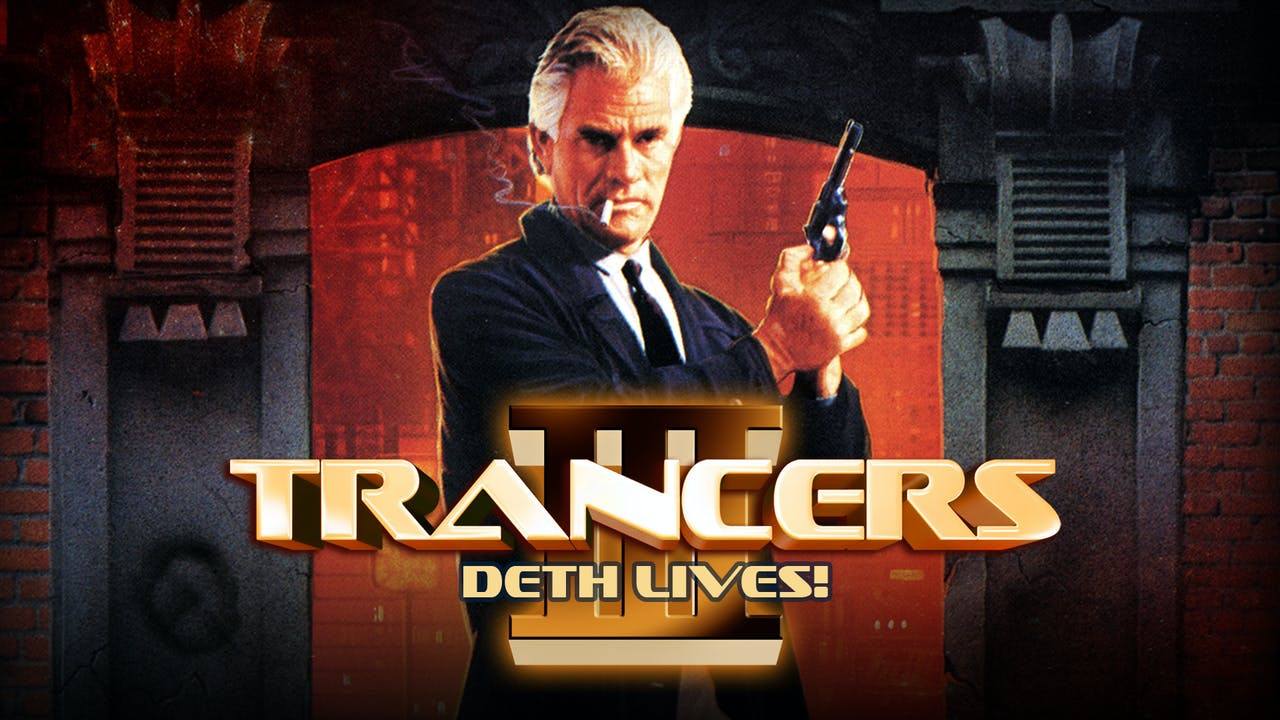
    [et_pb_section fb_built=”1″ _builder_version=”4.16″ _module_preset=”default” global_colors_info=”{}”][et_pb_row column_structure=”2_3,1_3″ _builder_version=”4.16″ _module_preset=”default” global_colors_info=”{}”][et_pb_column type=”2_3″ _builder_version=”4.16″ _module_preset=”default” global_colors_info=”{}”][et_pb_text _builder_version=”4.16″ _module_preset=”default” global_colors_info=”{}”]C. Courtney Joyner has had a long working relationship with Charles Band all the way back to Empire Pictures. In 1987, Joyner wrote the horror film Prison for Empire, which was directed by a then up-and-coming Renny Harlin. Unfortunately, Empire Pictures collapsed some years later, and Joyner went off to work on other projects, including Class of 1999. One day, a friend of Joyner’s went with him to the Full Moon offices, and Joyner reunited with Charles Band. While there, Band offered Joyner the chance to write three screenplays, including Puppet Master III: Toulon’s Revenge and Doctor Mordrid. For the third screenplay, Joyner wrote a Trancers sequel, but since Band wouldn’t return to direct, Joyner wanted the opportunity. Luckily for Joyner, producer Albert Band and lead Tim Thomerson supported him, so he was given the chance to direct. So in 1992, Joyner’s directorial debut, Trancers III: Deth Lives, was released.

    [/et_pb_text][/et_pb_column][et_pb_column type=”1_3″ _builder_version=”4.16″ _module_preset=”default” global_colors_info=”{}”][et_pb_circle_counter title=”Rating” number=”80″ bar_bg_color=”#7CDA24″ _builder_version=”4.16″ _module_preset=”default” global_colors_info=”{}”][/et_pb_circle_counter][/et_pb_column][/et_pb_row][et_pb_row _builder_version=”4.16″ _module_preset=”default” global_colors_info=”{}”][et_pb_column type=”4_4″ _builder_version=”4.16″ _module_preset=”default” global_colors_info=”{}”][et_pb_text _builder_version=”4.27.4″ _module_preset=”default” hover_enabled=”0″ global_colors_info=”{}” sticky_enabled=”0″]

    Synopsis

    Jack Deth (Tim Thomerson), the cop from the future, has been working as a private detective in 1992 Los Angeles. While working a case, Deth is visited by an android named Shark (R. A. Mihailoff), who takes him to 2252. Jack meets up with wife Alice Stillwell (Megan Ward) and Cmdr Raines (Thelmas Hopkins), who tell him what’s happening. At some point, some new trancers emerge and start a war, so Jack must travel back to stop them. He’s sent to 2005, where he meets up with ex-wife Lena (Helen Hunt), who reported on a top-secret government operation. Turns out these trancers are the result of experiments performed by Col “Daddy” Muthuh (Andrew Robinson) to create super soldiers. Jack teams up with R.J. (Melanie Smith), who escaped the military compound where the trancers are bred, to stop them. Will Jack and R.J. be able to stop Col Muthuh’s trancer operation?


    Review

    While Trancers II was enjoyable, Trancers III: Deth Lives is a major improvement that feels more like a legitimate sequel. Whereas the last film felt like a disposable but fun sci-fi action film, this one has more of an edge. The scenes in 2252 have a dark and gritty tone reminiscent of the future scenes from The Terminator. Megan Ward even goes from waifish and demure last film to being like Linda Hamilton in Terminator 2: Judgment Day. However, this film remembers that humor was a big staple of the series, though it’s more subtle here than previously. As Jack Deth, Tim Thomerson is just as much a cocky smart-ass as before, and he’s still great at it. While Richard Lynch made for a decent villain last time, Andrew Robinson is a much more intimidating villain here. His performance is both intense yet subdued at the same time.

    Of course, Helen Hunt had started becoming a big star, but it’s still nice she came back for this. Thankfully, she’s written out in a way that feels justified, and there are some great scenes between her and Thomerson. Relative newcomer Melanie Smith does a good job as R.J., and she has some fantastic chemistry with Thomerson. The production design is top-notch, the military compound being the highlight with a futuristic look that could possibly exist. With KNB doing the make-up effects, they look fantastic, possibly even being the best make-up effects in the whole series. My only complaints are that there are very few action scenes that stand out, and the film feels somewhat rushed. With a 74-minute runtime, not a whole lot of what’s happening is explored, so some may find that disappointing. Overall, Trancers III: Deth Lives is another high point in Full Moon’s history.


    Buy Trancers III: Deth Lives from:

    Disclosure: The above link is an affiliate link, which means that, at zero cost to you, I will earn a commission if you click through the link and finalize a purchase.​

    [/et_pb_text][/et_pb_column][/et_pb_row][/et_pb_section]
  • Big Money Rustlas (2010)

    Big Money Rustlas (2010)

    [et_pb_section fb_built=”1″ fullwidth=”on” _builder_version=”4.5.6″ _module_preset=”default” custom_margin=”||||false|false”][et_pb_fullwidth_header title=”Special Review” subhead=”This review was requested by Discord user Quantum Frankie Theory. If you’d like to join the server, click the button below.” text_orientation=”center” button_one_text=”Visit Discord” button_one_url=”https://discord.gg/sKBSX7u” background_overlay_color=”#8300E9″ _builder_version=”4.5.6″ _module_preset=”default” custom_margin=”||||false|false” custom_padding=”25px||25px||false|false”][/et_pb_fullwidth_header][/et_pb_section][et_pb_section fb_built=”1″ _builder_version=”4.5.6″ _module_preset=”default”][et_pb_row column_structure=”2_3,1_3″ _builder_version=”4.5.6″ _module_preset=”default”][et_pb_column type=”2_3″ _builder_version=”4.5.6″ _module_preset=”default”][et_pb_text _builder_version=”4.5.6″ _module_preset=”default”]

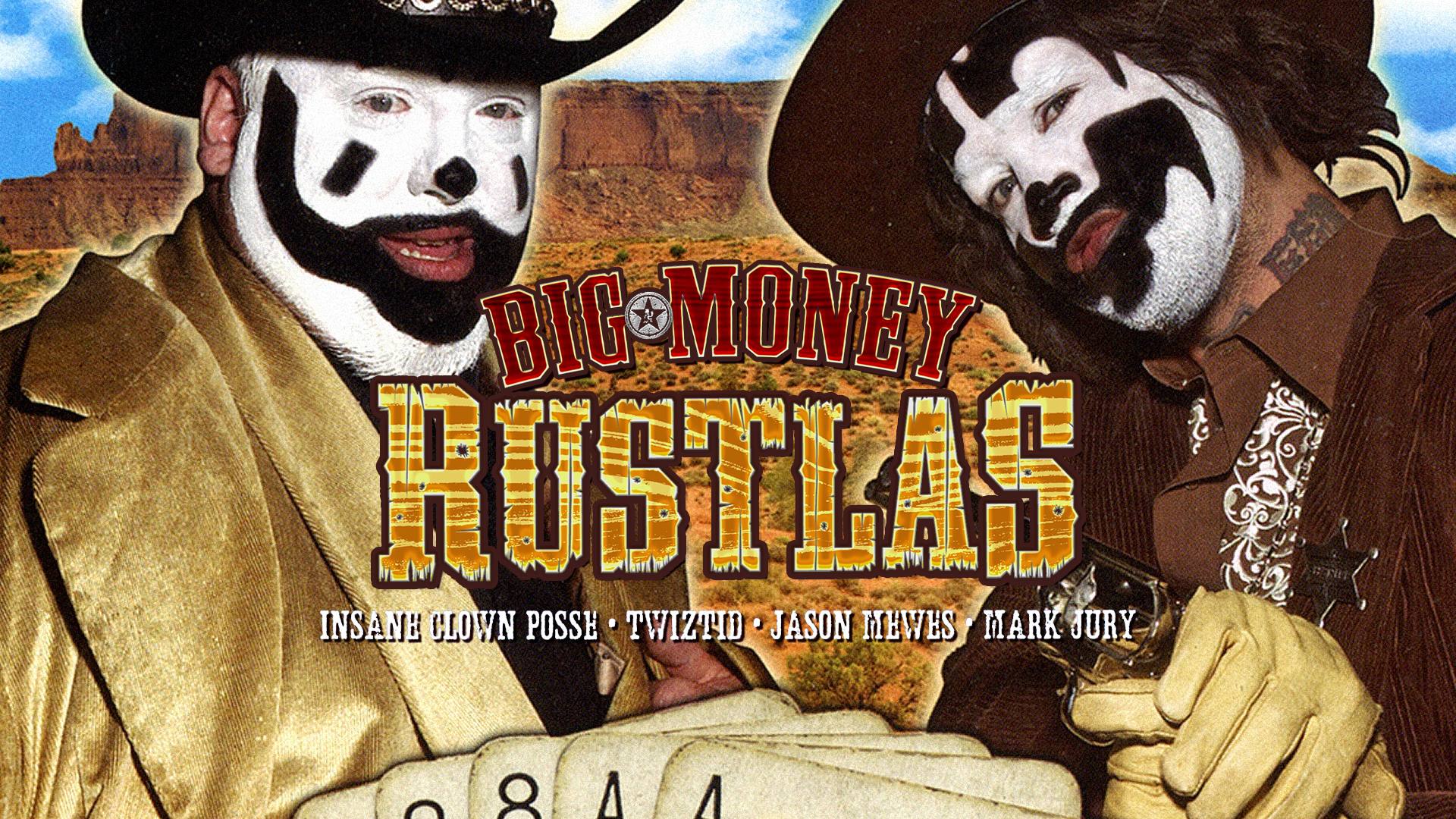
    In 1989, Detroit-based rappers Violent J (Joseph Bruce) and Shaggy 2 Dope (Joseph Utsler) formed the rap duo, JJ Boys. While initially not interested in a serious music career, they decided to take it further by signing with Psychopathic Records. They released their first EP in 1991 under the name Inner City Posse, though they couldn’t get much airtime. Around 1991, the group decided to change their name to Insane Clown Posse, don clown face paint, and make history. Despite their naysayers, the duo has earned two platinum and five gold albums, and even have their own cult fanbase. With their success, they decided to try filmmaking, starting with 2000’s Big Money Hustlas, a send-up of 70s Blaxploitation films. Years later, they decided to make another film, this time a send-up of Westerns and similar comedies, particularly Blazing Saddles. So, in 2010, ICP released their follow-up film, Big Money Rustlas.

    [/et_pb_text][/et_pb_column][et_pb_column type=”1_3″ _builder_version=”4.5.6″ _module_preset=”default”][et_pb_circle_counter title=”Rating” number=”70″ bar_bg_color=”#EDF000″ _builder_version=”4.5.6″ _module_preset=”default”][/et_pb_circle_counter][/et_pb_column][/et_pb_row][et_pb_row _builder_version=”4.5.6″ _module_preset=”default”][et_pb_column type=”4_4″ _builder_version=”4.5.6″ _module_preset=”default”][et_pb_text _builder_version=”4.5.6″ _module_preset=”default” hover_enabled=”0″]

    Synopsis

    In the small town of Mudbug, the ruthless gambling tycoon Big Baby Chips (Violent J) has taken over. He and his henchmen Raw Stank (Jamie Madrox) and Dusty Poot (Monoxide) walk over everyone and crush anyone opposing them. One day, the outlaw Sugar Wolf (Shaggy 2 Dope) rides in and is distraught over what’s become of his hometown. His mother (Cindie Haynie) explains that while Wolf was away, his father (Ron Jeremy) and his brothers were gunned down. Determined to change things, Wolf decides to become the new sheriff, hiring town local Bucky (Jason Mewes) as his deputy. The gang gets word of this and decides to send out some of their top assassins to kill Wolf. Though he’s able to make quick work of them, Wolf loses his shooting hand, and Bucky gets killed. Will Wolf be able to save the town, or will Chips take him down?


    Review

    Going into this movie, I had little to no expectations, especially since I hadn’t heard any of their music before. With that in mind, I will say that Big Money Rustlas was decent at best, but unremarkable at worst. Acting-wise, everyone does a fine enough job, though some performances are so over-the-top, they border on slightly annoying. Violent J and Shaggy 2 Dope do their jobs well, but Jamie Madrox and Monoxide, in particular, were irritating. As for the comedy, sadly many of the jokes fall flat, either being too predictable or vulgar for vulgarity’s sake. Admittedly, there were a few jokes that made me chuckle, so I have to give it credit for that. Also, while the movie is clearly low-budget, there’s some decent cinematography, and the Western town doesn’t look half bad. You can tell that there was plenty of effort put into this film.

    In addition to Jason Mewes and Ron Jeremy, there are appearances from Dustin “Screech” Diamond, Bridget Powers, and Tom Sizemore. While Diamond and Powers are having some fun, it feels like Sizemore is slumming it, which is slightly depressing. Going back to the comedy, some of the more offensive humor hasn’t aged well, particularly some gay and racial humor. While I enjoy plenty of off-color jokes and politically-incorrect humor, these jokes are weak and among the film’s worst jokes. Obviously, this movie isn’t trying to say something deep or have a lasting impact, but it’s just some disposable entertainment. While this hasn’t converted me to being a Juggalo (fan of ICP), I’m sure fans of ICP will enjoy this. Though I don’t regret watching this and somewhat enjoyed it, I can only recommend this if you have some drinks. Overall, Big Money Rustlas has its moments but isn’t for everyone.


    Buy Big Money Rustlas from Amazon: https://amzn.to/30R410z

    [/et_pb_text][/et_pb_column][/et_pb_row][/et_pb_section]
  • Island of Lost Souls (1932)

    Island of Lost Souls (1932)

    [et_pb_section fb_built=”1″ _builder_version=”4.5.5″ _module_preset=”default”][et_pb_row column_structure=”2_3,1_3″ _builder_version=”4.5.5″ _module_preset=”default”][et_pb_column type=”2_3″ _builder_version=”4.5.5″ _module_preset=”default”][et_pb_text _builder_version=”4.5.5″ _module_preset=”default”]

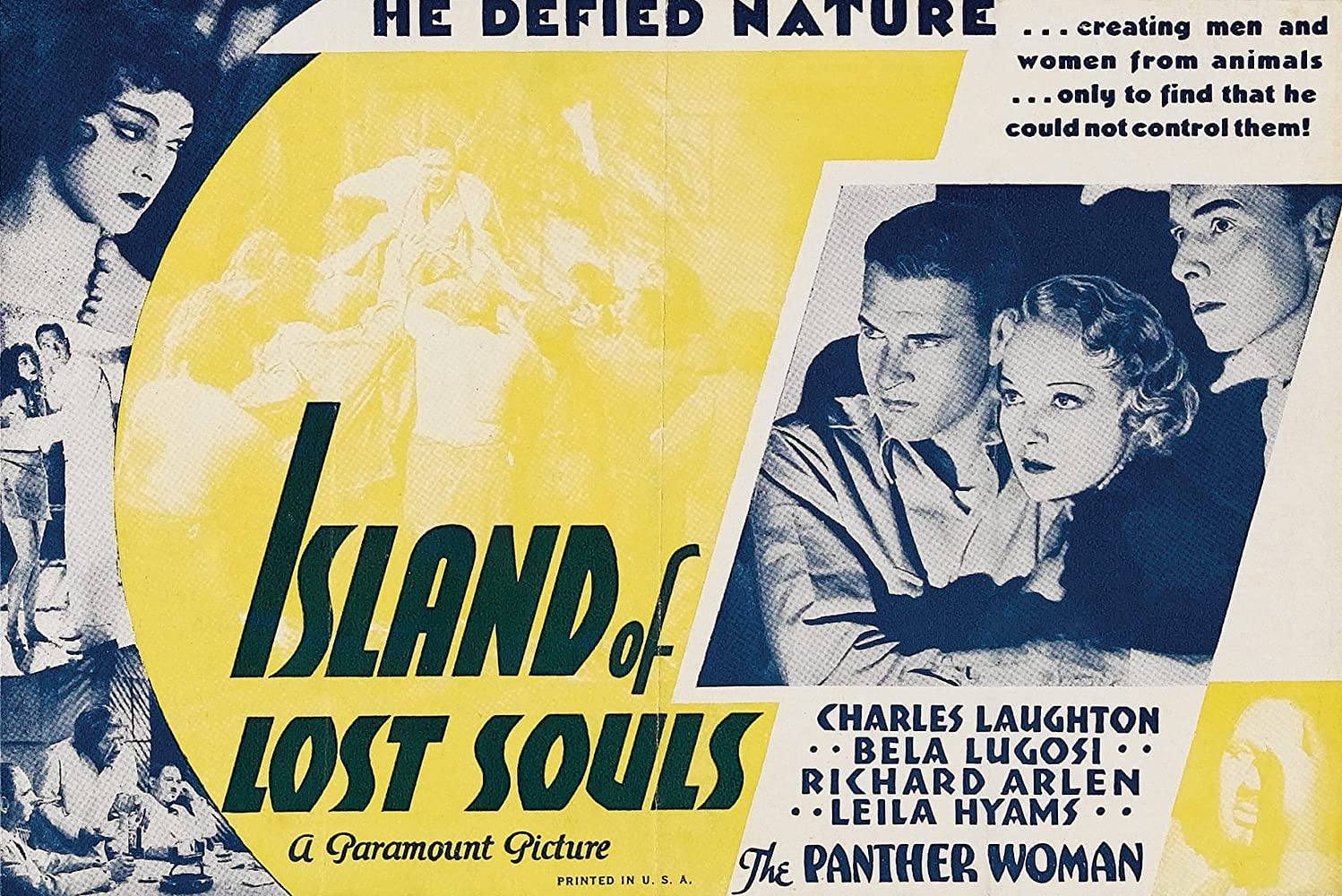
    In 1896, famed sci-fi novelist H. G. Wells published The Island of Dr. Moreau, a story of science gone awry. Described as “an exercise in youthful blasphemy”, it tells the story of Dr. Moreau, a mad scientist creating animal-human hybrids. In the 1930s, there was a massive boom in horror films thanks to the release of Universal’s Dracula and Frankenstein. Paramount Pictures decided to capitalize on this trend, starting with their 1931 adaptation of Dr. Jekyll and Mr. Hyde. The film was both a critical and commercial success upon release and lead Fredric March won a Best Actor Oscar. Seeing the potential, Paramount decided to follow it up with an adaptation of the H. G. Wells novel. For the adaptation, they hired Erle C. Kenton to direct, who was mostly known for comedies and crime dramas. Finally, in 1932, The Island of Lost Souls was released to theaters.

    [/et_pb_text][/et_pb_column][et_pb_column type=”1_3″ _builder_version=”4.5.5″ _module_preset=”default”][et_pb_circle_counter title=”Rating” number=”90″ bar_bg_color=”#7CDA24″ _builder_version=”4.5.5″ _module_preset=”default”][/et_pb_circle_counter][/et_pb_column][/et_pb_row][et_pb_row _builder_version=”4.5.5″ _module_preset=”default”][et_pb_column type=”4_4″ _builder_version=”4.5.5″ _module_preset=”default”][et_pb_text _builder_version=”4.5.5″ _module_preset=”default” hover_enabled=”0″]

    Synopsis

    Edward Parker (Richard Arlen) has been rescued and brought onto a freighter by its captain, Captain Davies (Stanley Fields). Unfortunately, Parker’s thrown off and left on the boat of Dr. Moreau (Charles Laughton) and his assistant Montgomery (Arthur Hohl). They arrive on Moreau’s island, where Parker is treated to his hospitality and is introduced to Lota (Kathleen Burke). Parker soon suspects something going on, so he investigates and discovers the “House of Pain”, where he discovers Moreau’s experiments. Turns out that Moreau has been creating human-animal hybrids, all of whom follow the Sayer of the Law (Bela Lugosi). Meanwhile, Parker’s fiance Ruth Thomas (Leila Hyams) hires Captain Donahue (Paul Hurst) to help her find and rescue him. As Parker spends more time with Lota, it becomes clear that Moreau wants him to mate with her. Will Moreau succeed in his experiments, and will Ruth be able to rescue her fiance?


    Review

    Island of Lost Souls is certainly one of the more interesting movies to come out of the pre-code era. While there’ve been many Dr. Moreau adaptations over the years, this one remains the definitive version, and for good reason. Firstly, the performances are top-notch, Charles Laughton being the highlight, playing more a calm, collected scientist than a mad one. He’s so charismatic and oddly charming that you almost buy into the bizarre experiments he’s performing, making a memorable villain. Arlen does a good job as the standard hero, and Burke is both captivating and seductive as the Panther Woman. Though virtually unrecognizable under heavy makeup, Lugosi delivers a great performance as always, even though his screentime is limited. Filmmaking wise, Kenton’s direction is decent, though there isn’t anything special on display, which was fairly typical of 1930s films. For its time, it’s a good looking film.

    What’s really impressive are the makeup effects used to create the human-animal hybrids, especially considering the limited budget they had. The makeup effects were done by Charles Gemora and Wally Westmore, who would work with John Ford and Alfred Hitchcock. It’s easy to see why, given how they were able to use very primitive materials to transform all these extras. Honestly, the effects are about on-par with the work Jack Pierce did for Frankenstein and The Wolf Man. Admittedly, parts of the movie tend to drag, and the action doesn’t really pick up until near the end. Thankfully, at roughly 70 minutes in length, it never outstays its welcome and is a fairly quick sit. It’s hard to recommend a movie like this to newer audiences, but it’s worth watching for any budding film historian. Overall, Island of Lost Souls is a piece of cinematic history worth uncovering.


    Buy The Island of Lost Souls from The Criterion Collection: https://bit.ly/3kn5cMV

    [/et_pb_text][/et_pb_column][/et_pb_row][/et_pb_section]
  • Godzilla (1954)

    Godzilla (1954)

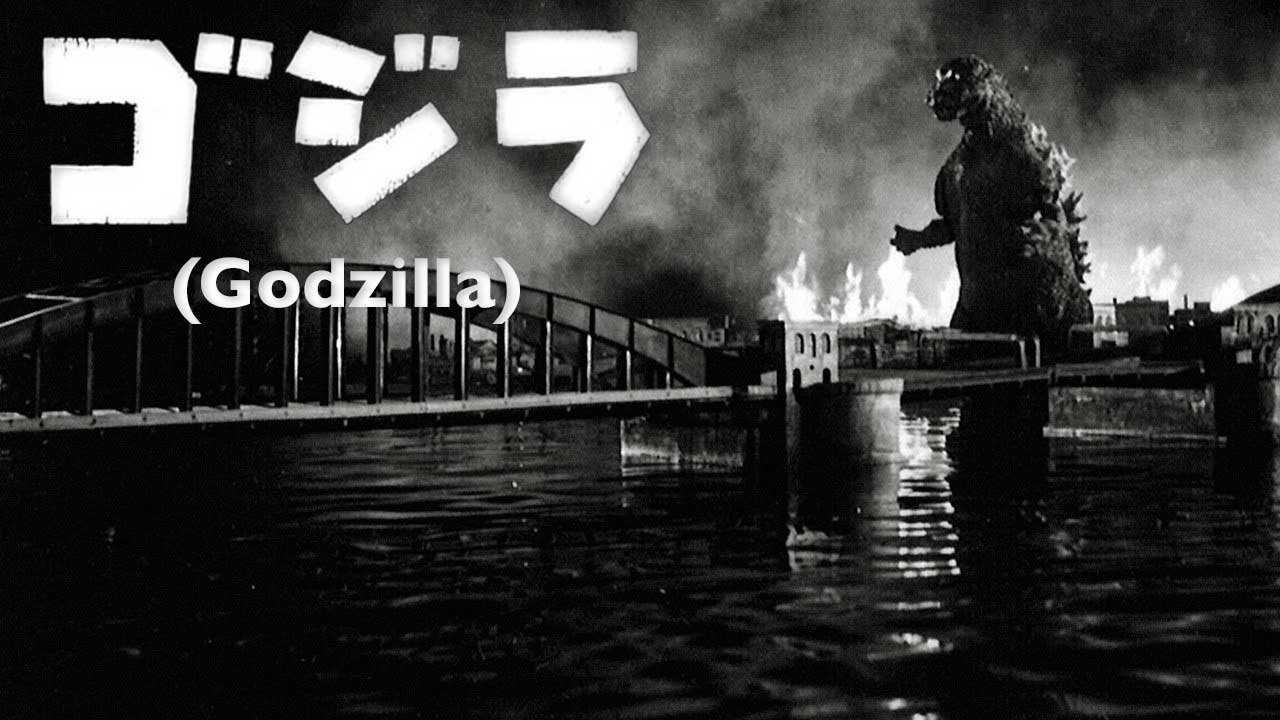
    [et_pb_section fb_built=”1″ admin_label=”section” _builder_version=”4.16″ global_colors_info=”{}”][et_pb_row column_structure=”2_3,1_3″ admin_label=”row” _builder_version=”4.16″ background_size=”initial” background_position=”top_left” background_repeat=”repeat” global_colors_info=”{}”][et_pb_column type=”2_3″ _builder_version=”4.16″ custom_padding=”|||” global_colors_info=”{}” custom_padding__hover=”|||”][et_pb_text _builder_version=”4.16″ _module_preset=”default” global_colors_info=”{}”]On August 6, 1945, the United States dropped an atomic bomb on the Japanese city of Hiroshima, claiming 135,000 lives. Three days later, the US dropped another atomic bomb, this time on Nagasaki, which claimed an additional 64,000 casualties. Following this, Japan officially surrendered to the US, and the effects of both bombs are still being felt today. As part of the American occupation of Japan, the film industry was drastically changed to portray more Western ideals. Around this time, Japan entered a golden age of cinema thanks to filmmaker Akira Kurosawa of Rashomon and Yojimbo fame. Meanwhile, producer Tomoyuki Tanaka of Toho Studios was inspired by these nuclear attacks to work on a giant monster movie. Tanaka hired filmmaker Ishiro Honda to direct given his war-time experience, who decided to make this monster movie completely serious. So in 1954, Gojira aka Godzilla roared its way into Japanese cinemas.
    [/et_pb_text][/et_pb_column][et_pb_column type=”1_3″ _builder_version=”4.16″ custom_padding=”|||” global_colors_info=”{}” custom_padding__hover=”|||”][et_pb_circle_counter title=”Rating” number=”95″ bar_bg_color=”#7CDA24″ _builder_version=”4.16″ _module_preset=”default” global_colors_info=”{}”][/et_pb_circle_counter][/et_pb_column][/et_pb_row][et_pb_row _builder_version=”4.16″ _module_preset=”default” global_colors_info=”{}”][et_pb_column type=”4_4″ _builder_version=”4.16″ _module_preset=”default” global_colors_info=”{}”][et_pb_text _builder_version=”4.27.4″ _module_preset=”default” global_colors_info=”{}”]

    Synopsis

    Several freighters off the coast of Japan are being destroyed, one survivor claiming that a giant monster was responsible. Dubbed “Godzilla”, the monster destroys an entire village and the villagers demand answers and assistance from the government. Paleontologist Kyohei Yamane (Takashi Shimura) is hired to investigate and findings massive amounts of radiation before the monster reappears. While Yamane wants to study the creature, the military wants to destroy it, but nothing seems to kill it. Meanwhile, Yamane’s daughter Emiko (Momoko Kōchi) tells her fiance Hideto Ogata (Akira Takarada) about a possible way to destroy Godzilla. Her former lover, Daisuke Serizawa (Akihiko Hirata) has developed a weapon called the “Oxygen Destroyer”, which kills via asphyxiation. Serizawa is conflicted about using it fearing the superpowers will exploit it, but he’s convinced otherwise after seeing Godzilla’s rampage. Will the monster be stopped, or will Tokyo be crushed and destroyed by Godzilla?


    Review

    Godzilla is not only one of the most important films in Japanese cinema, but also in worldwide cinema. While not the first (Godzilla was inspired by The Beast from 20,000 Fathoms), the film started the kaiju genre. For the next several decades, movies with guys in rubber monster suits destroying miniatures became a mainstay of Japanese cinema. However, while the later films got more ridiculous, this one stands out for how gloomy and foreboding it is. Given that Japan had fairly recently experienced nuclear war firsthand, the film perfectly shows the horrors of atomic fallout. We see tons of ruined cityscapes and people injured or dying in hospitals, and the black-and-white cinematography enhances the mood. Even when the monster’s off-screen, the overall film has a very foreboding feel that gives a feeling of dread. The film somehow manages to make a scene of schoolgirls singing off-setting and slightly creepy.

    Though somewhat crude by American standards, the effects used here are impressive given the circumstances at the time. The film makes effective use of miniatures and camera angles to show Godzilla’s size and make the monster a threat. Today’s audiences will probably criticize the effects, but keep in mind, the filmmakers had a fraction of an American budget. If there are any complaints I have, I will say that though the performances are solid, there’s isn’t much characterization. Granted, the film is more so focused on symbolizing years of atomic destruction than on giving us fully developed characters. In that sense, Godzilla more than succeeds, and it’s easy to see how this started a whole new subgenre. While the film can be slow at times, the scenes of Godzilla’s rampage are the highlight and make it watch-worthy. Overall, Godzilla more than earns its place in history as a Japanese classic.


    Buy Godzilla from Amazon: https://amzn.to/4qFU5AM.

    Disclosure: The above link is an affiliate link, which means that, at no additional cost, I will earn a commission if you click through the link and make a purchase.

    [/et_pb_text][et_pb_code _builder_version=”4.27.4″ _module_preset=”default” hover_enabled=”0″ global_colors_info=”{}” sticky_enabled=”0″]

    Where to watch Godzilla (1954)

    data-api-key=”LMVDLdLSH5ZJnQ4FMGMgyJCB8cmGbfCV” data-object-type=”Movie” data-title=”Godzilla” data-year=”1954″ data-theme=”light”>

    [/et_pb_code][/et_pb_column][/et_pb_row][/et_pb_section]

  • Godzilla Retrospective – An Introduction

    Godzilla Retrospective – An Introduction

    [et_pb_section fb_built=”1″ admin_label=”section” _builder_version=”3.22″][et_pb_row admin_label=”row” _builder_version=”3.25″ background_size=”initial” background_position=”top_left” background_repeat=”repeat”][et_pb_column type=”4_4″ _builder_version=”3.25″ custom_padding=”|||” custom_padding__hover=”|||”][et_pb_text _builder_version=”4.5.2″ hover_enabled=”0″]

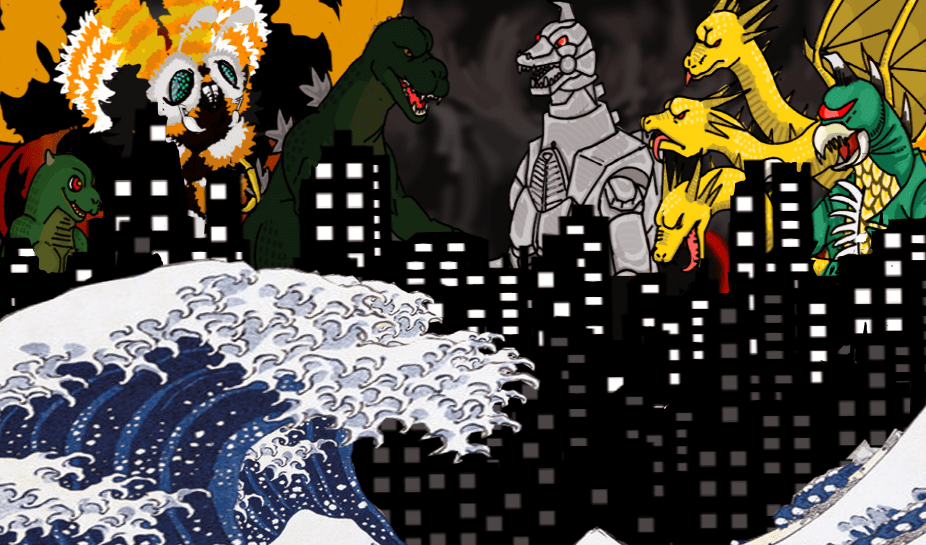
    In 1954, producer Tomoyuki Tanaka hired director Ishiro Honda on a new project that was quite a gamble. Inspired by the 1953 film The Beast from 20,000 Fathoms, Tanaka pitched the idea of making their giant monster movie. With that, Gojira aka Godzilla was released and was a smash hit in Japan, giving birth to a new franchise. Since then, Godzilla has appeared in 36 films at the time of writing this, 32 Japanese and 4 American. While the quality of the films ebbs and flows over time, the series overall has continued to grow in popularity. Over the years, Godzilla has gone from a destructive force of nature to a savior of the world. So, to celebrate the series’ 60+ year legacy, I’ve decided to review each film from 1954 to today. Without further ado, get ready for some rubber suit monster action with FilmNerd’s Godzilla Retrospective!


    Special thanks to @asterik on Twitter for the banner artwork!

    [/et_pb_text][/et_pb_column][/et_pb_row][/et_pb_section]
  • Creepozoids (1987)

    Creepozoids (1987)

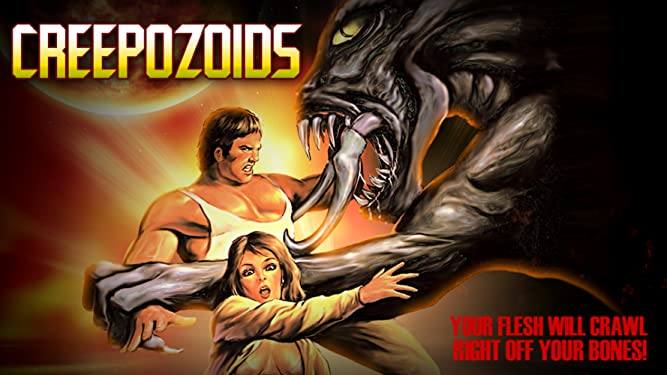
    [et_pb_section fb_built=”1″ _builder_version=”4.16″ _module_preset=”default” global_colors_info=”{}”][et_pb_row column_structure=”2_3,1_3″ _builder_version=”4.16″ _module_preset=”default” global_colors_info=”{}”][et_pb_column type=”2_3″ _builder_version=”4.16″ _module_preset=”default” global_colors_info=”{}”][et_pb_text _builder_version=”4.16″ _module_preset=”default” global_colors_info=”{}”]In my review of Sorority Babes in the Slimeball Bowl-O-Rama, I talked about the early career of filmmaker David DeCoteau. After directing his first mainstream film, 1986’s Dreamanic for Charles Band, DeCoteau presented him with two pitches for his follow-up. With the popularity of post-apocalyptic movies and the recent release of Aliens, DeCoteau pitched Mutant Spawn 2000, which combined both. His other concept was a Ghoulies knock-off called Creepozoids, the film’s title being inspired by the Midnight Star song “Freak-A-Zoid”. Charles Band liked the concept of Mutant Spawn 2000 and the title Creepozoids, so he decided to combine the two. On a budget of roughly $150,000, DeCoteau assembled a small crew and filmed in a small studio in LA. Though casting Linnea Quigley fresh off of The Return of the Living Dead, most of the cast was relatively unknown. Finally, in 1987, Creepozoids was released both theatrically and direct-to-video.

    [/et_pb_text][/et_pb_column][et_pb_column type=”1_3″ _builder_version=”4.16″ _module_preset=”default” global_colors_info=”{}”][et_pb_circle_counter title=”Rating” number=”70″ bar_bg_color=”#EDF000″ _builder_version=”4.16″ _module_preset=”default” global_colors_info=”{}”][/et_pb_circle_counter][/et_pb_column][/et_pb_row][et_pb_row _builder_version=”4.16″ _module_preset=”default” global_colors_info=”{}”][et_pb_column type=”4_4″ _builder_version=”4.16″ _module_preset=”default” global_colors_info=”{}”][et_pb_text _builder_version=”4.27.4″ _module_preset=”default” hover_enabled=”0″ global_colors_info=”{}” sticky_enabled=”0″]

    Synopsis

    Years after a nuclear war, a group of survivors are wandering through a post-apocalyptic cityscape looking for supplies and shelter. Led by Jake (Richard Hawkins), the group finds an abandoned facility that they decide to hold up in for now. Jesse (Michael Aranda) checks the computer logs to see what happened to the people who were previously there. Meanwhile, Jake, Blanca (Linnea Quigley), Butch (Ken Abraham), and Kate (Kim McKamy) explore and find food, beds, and running water. Unbeknownst to them, however, a strange and deadly creature is lurking throughout the facility, along with some killer rats. One by one, the creature picks off the crew members and sprays them with acid turning them into radioactive mutants. As their numbers continue to dwindle, the remaining crew members have to find a way to survive against the creature. Who will be able to survive and fight against the Creepozoids?


    Review

    Creepozoids is a movie that clearly “borrows” from more popular films, not the least of which being Ridley Scott’s Alien. The film also uses the trappings of post-apocalyptic films, but that’s more so for the setup rather than the plot. That said, Creepozoids is still a fine example of B-movie thrills made on a shoestring budget with plenty of creativity. The cast all put plenty of enthusiasm into their performances, even if many of them don’t do much. The main creature, though it’s clearly a knock-off of the Xenomorph, looks impressive and has a memorable design. DeCoteau is able to work around his low budget to create an effective mood using moody colors and dynamic lighting. Plus, at seventy-two minutes, the film never outstays its welcome and won’t take up too much of your time. Plus, Linnea Quigley’s in it, so you get to see her get naked.

    Probably my biggest issue with the film is how padded it is, even with its relatively short runtime. There are several reused shots and alternate takes used, and the end credits are stretched out for so long. Also, while DeCoteau is able to mostly mask the low budget, there are moments where you can see the cheapness. For instance, you can tell that they only had a few filming locations that they constantly reuse and redress. Also, some of the puppets that are used are obvious, namely, the giant rat puppet used every now and then. We’re never given much backstory other than some brief text at the beginning, and even that’s never fully explored. Still, this is the kind of movie that’s more concerned with delivering B-movie thrills than having a compelling story. Overall, Creepozoids knows exactly what kind of movie it is, and it mostly succeeds at that.


    Buy Creepozoids from:

    Disclosure: The above link is an affiliate link, which means that, at zero cost to you, I will earn a commission if you click through the link and finalize a purchase.​

    [/et_pb_text][/et_pb_column][/et_pb_row][/et_pb_section]