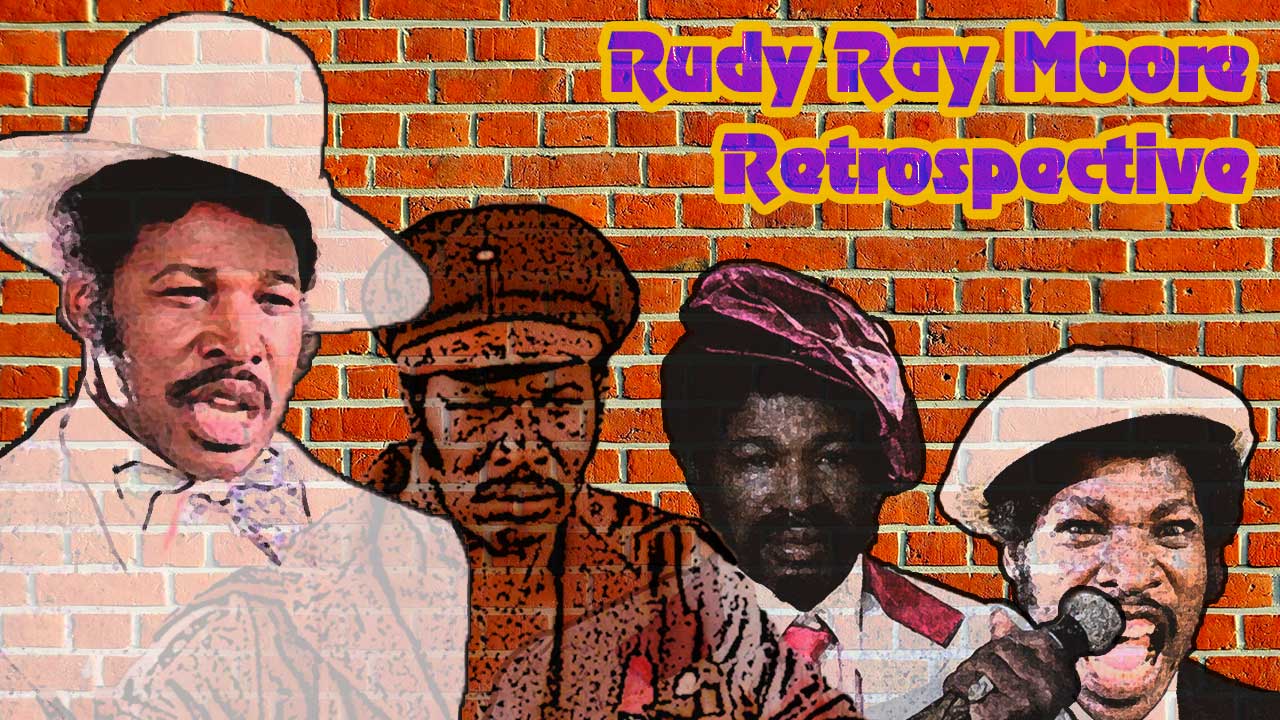
[et_pb_section fb_built=”1″ admin_label=”section” _builder_version=”3.22″ global_colors_info=”{}”][et_pb_row admin_label=”row” _builder_version=”3.25″ background_size=”initial” background_position=”top_left” background_repeat=”repeat” global_colors_info=”{}”][et_pb_column type=”4_4″ _builder_version=”3.25″ custom_padding=”|||” global_colors_info=”{}” custom_padding__hover=”|||”][et_pb_text _builder_version=”4.14.8″ global_colors_info=”{}”]There are many important names in the history of black cinema: Sidney Poitier, John Singleton, and Steve McQueen, amongst others. These people have created some of the greatest films that inspire future generations to pursue their dreams. However, one era of black filmmaking tends to get overlooked or dismissed by today’s audiences: the Blaxploitation era. Throughout the 1970s, actors like Richard Roundtree, Pam Grier, Jim Brown, and Fred Williamson were tearing up movie screens. Many of these films were low budget, tackled many different genres, and even explored themes that are still relevant today. Despite what the name suggests, Blaxploitation films were more about empowering African Americans than exploiting them. One name that doesn’t get brought up as much in Blaxploitation is Rudolph Frank Moore, aka Rudy Ray Moore. In honor of Black History Month, FilmNerd will look at Moore’s four major motion pictures from 1975 to 1979.
[/et_pb_text][/et_pb_column][/et_pb_row][et_pb_row column_structure=”1_4,1_4,1_4,1_4″ _builder_version=”4.14.8″ _module_preset=”default” global_colors_info=”{}”][et_pb_column type=”1_4″ _builder_version=”4.14.8″ _module_preset=”default” global_colors_info=”{}”][et_pb_image src=”https://staging.film-nerd.com/wp-content/uploads/2022/02/dolemite-poster-scaled.jpg” alt=”Dolemite” title_text=”dolemite-poster” admin_label=”Dolemite” module_class=”enlarge” _builder_version=”4.14.8″ _module_preset=”default” hover_enabled=”0″ global_colors_info=”{}” url=”@ET-DC@eyJkeW5hbWljIjp0cnVlLCJjb250ZW50IjoicG9zdF9saW5rX3VybF9wb3N0Iiwic2V0dGluZ3MiOnsicG9zdF9pZCI6IjY3NjUifX0=@” _dynamic_attributes=”url” sticky_enabled=”0″][/et_pb_image][/et_pb_column][et_pb_column type=”1_4″ _builder_version=”4.14.8″ _module_preset=”default” global_colors_info=”{}”][et_pb_image src=”https://staging.film-nerd.com/wp-content/uploads/2022/02/the-human-tornado-poster-scaled.jpg” alt=”The Human Tornado” title_text=”the-human-tornado-poster” admin_label=”The Human Tornado” module_class=”enlarge” _builder_version=”4.14.8″ _module_preset=”default” hover_enabled=”0″ global_colors_info=”{}” url=”@ET-DC@eyJkeW5hbWljIjp0cnVlLCJjb250ZW50IjoicG9zdF9saW5rX3VybF9wb3N0Iiwic2V0dGluZ3MiOnsicG9zdF9pZCI6IjY3ODMifX0=@” _dynamic_attributes=”url” sticky_enabled=”0″][/et_pb_image][/et_pb_column][et_pb_column type=”1_4″ _builder_version=”4.14.8″ _module_preset=”default” global_colors_info=”{}”][et_pb_image src=”https://staging.film-nerd.com/wp-content/uploads/2022/02/petey-wheatstraw-poster.jpg” alt=”Petey Wheatstraw” title_text=”petey-wheatstraw-poster” admin_label=”Petey Wheatstraw” module_class=”enlarge” _builder_version=”4.14.8″ _module_preset=”default” hover_enabled=”0″ global_colors_info=”{}” url=”@ET-DC@eyJkeW5hbWljIjp0cnVlLCJjb250ZW50IjoicG9zdF9saW5rX3VybF9wb3N0Iiwic2V0dGluZ3MiOnsicG9zdF9pZCI6IjY3ODgifX0=@” _dynamic_attributes=”url” sticky_enabled=”0″][/et_pb_image][/et_pb_column][et_pb_column type=”1_4″ _builder_version=”4.14.8″ _module_preset=”default” global_colors_info=”{}”][et_pb_image src=”https://staging.film-nerd.com/wp-content/uploads/2022/02/disco-godfather-poster.jpg” alt=”Disco Godfather” title_text=”disco-godfather-poster” admin_label=”Disco Godfather” module_class=”enlarge” _builder_version=”4.14.8″ _module_preset=”default” hover_enabled=”0″ global_colors_info=”{}” url=”@ET-DC@eyJkeW5hbWljIjp0cnVlLCJjb250ZW50IjoicG9zdF9saW5rX3VybF9wb3N0Iiwic2V0dGluZ3MiOnsicG9zdF9pZCI6IjY3OTMifX0=@” _dynamic_attributes=”url” sticky_enabled=”0″][/et_pb_image][/et_pb_column][/et_pb_row][/et_pb_section]