Facebook

FilmNerd

Category: Full Moon Fridays

  • Spellcaster (1988)

    Spellcaster (1988)

    [et_pb_section fb_built=”1″ _builder_version=”4.16″ _module_preset=”default” global_colors_info=”{}”][et_pb_row column_structure=”2_3,1_3″ _builder_version=”4.16″ _module_preset=”default” global_colors_info=”{}”][et_pb_column type=”2_3″ _builder_version=”4.16″ _module_preset=”default” global_colors_info=”{}”][et_pb_text _builder_version=”4.16″ _module_preset=”default” global_colors_info=”{}”]

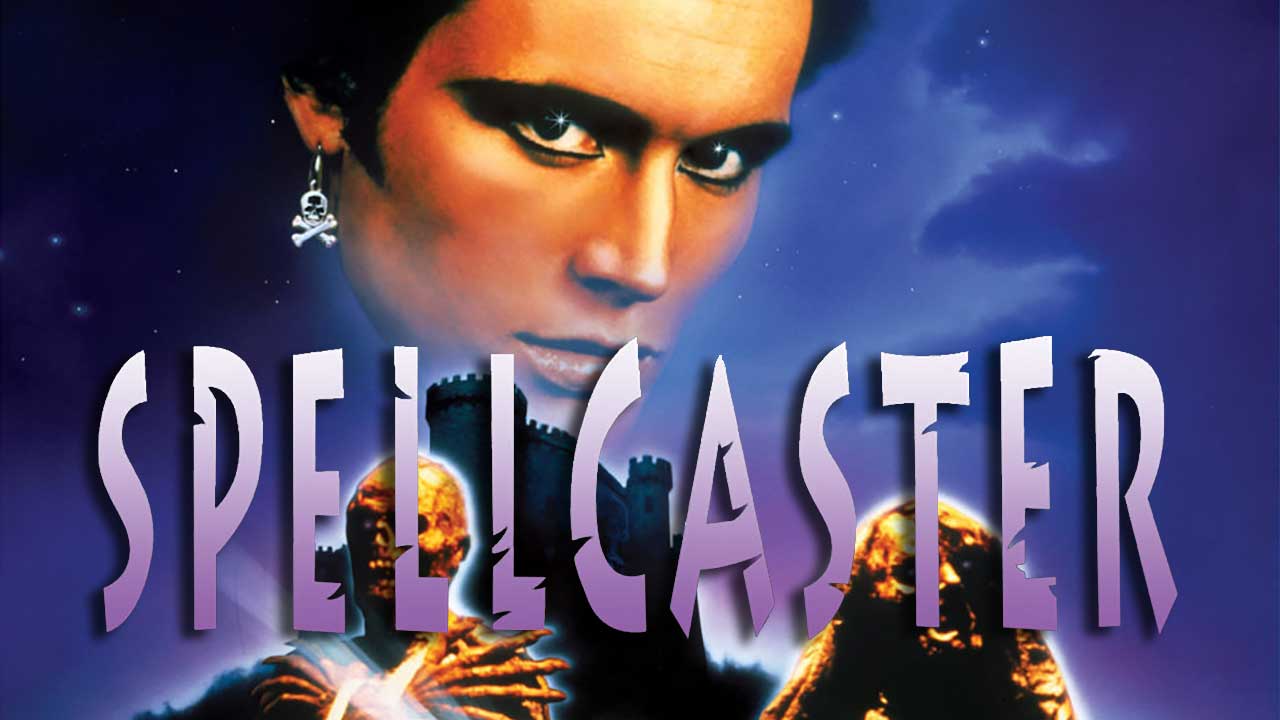
    Around the time of Troll and Dolls, screenwriter Ed Naha was working on a new script at Empire Pictures. However, he and many other talents at the studio had jumped ship to work on Honey, I Shrunk the Kids. As such, Empire handed the script over to writer and frequent Stuart Gordon collaborator Dennis Paoli to finish. For the director, they hired Canadian-born Rafal Zielinski, who had previously directed the 1987 comedy Valet Girls for Empire. The cast featured Bunty Bailey from the “Take On Me” music video, radio host Richard Blade, and musician Adam Ant. While parts were shot at Dino De Laurentiis’ old studio, much of it was filmed at Castello di Giove. After a roughly six-week shoot that went by smoothly, the film wrapped and was set for release in 1988. Unfortunately, due to Empire Pictures’ collapse, Spellcaster wouldn’t be officially released until May 1992.

    [/et_pb_text][/et_pb_column][et_pb_column type=”1_3″ _builder_version=”4.16″ _module_preset=”default” global_colors_info=”{}”][et_pb_circle_counter title=”Rating” number=”75″ bar_bg_color=”#EDF000″ _builder_version=”4.16″ _module_preset=”default” global_colors_info=”{}”][/et_pb_circle_counter][/et_pb_column][/et_pb_row][et_pb_row _builder_version=”4.16″ _module_preset=”default” global_colors_info=”{}”][et_pb_column type=”4_4″ _builder_version=”4.16″ _module_preset=”default” global_colors_info=”{}”][et_pb_text _builder_version=”4.27.4″ _module_preset=”default” hover_enabled=”0″ global_colors_info=”{}” sticky_enabled=”0″]

    Synopsis

    At the castle of one Signore Diablo (Adam Ant), a group of seven people is gathered for a contest. Sponsored by the record company of pop star Cassandra Castle (Buntly Bailey), the contestants are after a $1 million check. Among the contestants are orphaned siblings Jackie (Gail O’Grady) and Tom (Harold Pruett), who agree to split the money. Hosted by VJ Rex (Richard Blade), the contestants have one day to search the whole castle for the check. However, Signore Diablo has other plans for his guests as he uses magic to eliminate them one by one. Before too long, each of the contestants is killed by their own sins, such as gluttony, greed, and pride. While Jackie wants to leave the castle, Tom is determined to get that $1 million check and get rich quickly. Who will win the prize, and who will survive the Spellcaster?


    Review

    Though hardly a classic like Re-Animator and TrancersSpellcaster is still an enjoyable slice of 80s cheese, though somewhat forgettable. From the fashion to the music and even some of the cast, this film just screams the late 80s. There’s so much big mall hair, tacky clothing, and punk/new wave music, it’s like a time capsule of 1988. The cast each fits into various archetypes you’d see in plenty of films at the time for better or worse. You’ve got the fat guy who constantly eats, the goody-two-shoes girl, the valley girl, the womanizing creeper, and more. Richard Blade certainly steals the show as the overly exaggerated though somewhat cynical VJ dealing with the craziness around him. Though he doesn’t show himself until the last act, Adam Ant is still very charming and conniving as the villain. It’s a shame his screen-time is so limited.

    Unfortunately, the rest of the cast either comes off a little on the bland side or even annoying. Bunty Bailey can get slightly annoying, but it’s also kinda funny seeing her play such a drunken bitch. Speaking of, Kim Johnston Ulrich is clearly having fun as the bitchy valley girl Teri, someone you love to hate. Special mention should go to Traci Lind, credited as “Traci Linn”, who is drop-dead gorgeous as the stereotypical French girl. The creature effects have that distinct John Carl Buechler style, where you can tell they’re puppets, but charmingly so. Rafal Zielinski’s direction is decent, and taking advantage of a real Italian castle adds quite a lot of production value. At slightly under 90 minutes, the movie goes by fairly quickly, though you’ll probably forget about it shortly after. Overall, Spellcaster isn’t going to blow you away, but it’ll provide some cheesy entertainment.


    Buy Spellcaster on Amazon: https://amzn.to/3AMcnq0.

    Disclosure: The above link is an affiliate link, which means that, at no additional cost, I will earn a commission if you click through the link and make a purchase.

    [/et_pb_text][et_pb_code _builder_version=”4.27.4″ _module_preset=”default” hover_enabled=”0″ sticky_enabled=”0″]

    Where to watch Spellcaster (1988)

    data-api-key=”LMVDLdLSH5ZJnQ4FMGMgyJCB8cmGbfCV” data-object-type=”Movie” data-title=”Spellcaster” data-year=”1988″ data-theme=”light”>

    [/et_pb_code][/et_pb_column][/et_pb_row][/et_pb_section]
  • Curse of the Puppet Master (1998)

    Curse of the Puppet Master (1998)

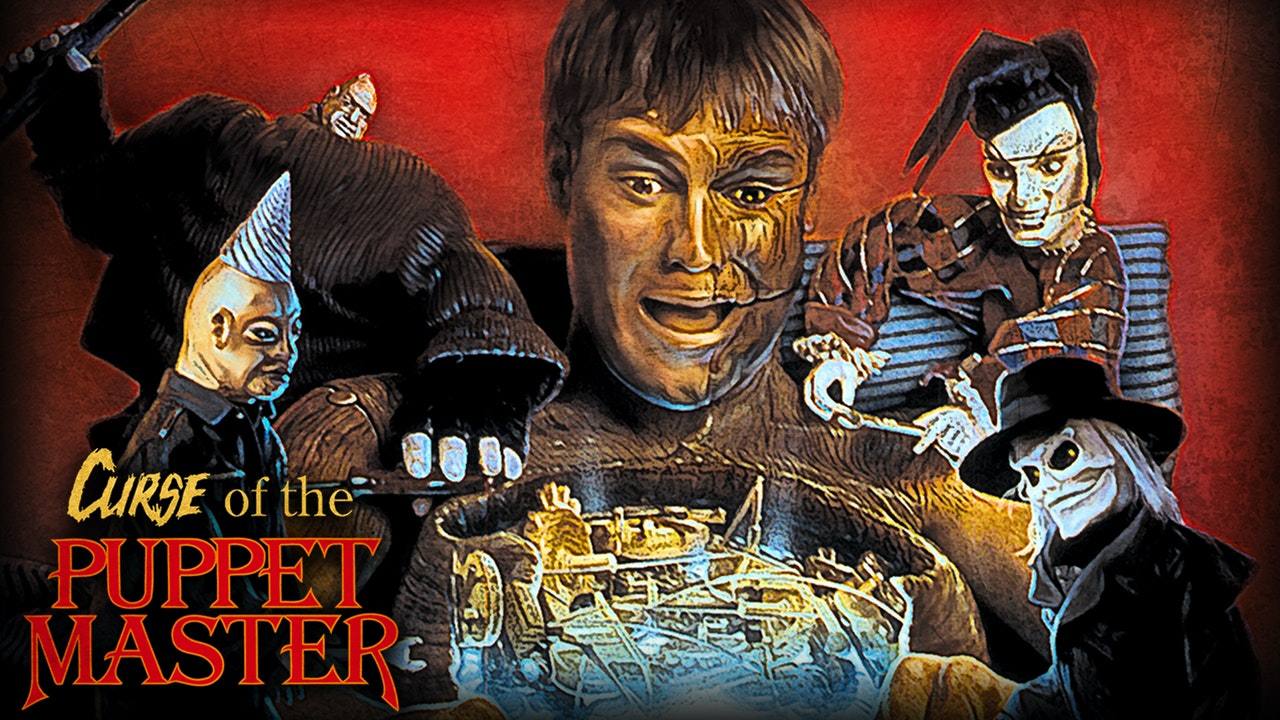
    [et_pb_section fb_built=”1″ _builder_version=”4.16″ _module_preset=”default” global_colors_info=”{}”][et_pb_row column_structure=”2_3,1_3″ _builder_version=”4.16″ _module_preset=”default” global_colors_info=”{}”][et_pb_column type=”2_3″ _builder_version=”4.16″ _module_preset=”default” global_colors_info=”{}”][et_pb_text _builder_version=”4.16″ _module_preset=”default” global_colors_info=”{}”]While Puppet Master 5 was intended to be the last film, Charles Band had other ideas for the franchise. He wanted to do an epic trilogy of films known as Puppet Wars, which would see Toulon’s puppets fighting monsters. They would be going up against the likes of The Mummy, Frankenstein’s Monster, and Dracula, and Guy Rolfe would’ve returned. Unfortunately, Full Moon had ended their deal with Paramount, and they were struggling financially, so those plans fell through. David DeCoteau, who previously directed Puppet Master III, wasn’t getting much work when he got to direct Shrieker for Band. DeCoteau was given a script for a new Puppet Master movie, but he didn’t like it. He decided to take inspiration from 1973’s Sssssss and have a female puppet master, but he was overruled. After an 8-day shoot, Curse of the Puppet Master was released in 1998.

    [/et_pb_text][/et_pb_column][et_pb_column type=”1_3″ _builder_version=”4.16″ _module_preset=”default” global_colors_info=”{}”][et_pb_circle_counter title=”Rating” number=”60″ bar_bg_color=”#EDF000″ _builder_version=”4.16″ _module_preset=”default” global_colors_info=”{}”][/et_pb_circle_counter][/et_pb_column][/et_pb_row][et_pb_row _builder_version=”4.16″ _module_preset=”default” global_colors_info=”{}”][et_pb_column type=”4_4″ _builder_version=”4.16″ _module_preset=”default” global_colors_info=”{}”][et_pb_text _builder_version=”4.27.4″ _module_preset=”default” hover_enabled=”0″ global_colors_info=”{}” sticky_enabled=”0″]

    Synopsis

    Dr. Magrew (George Peck) runs a puppet show/museum called The House of Marvels and recently acquired Toulon’s puppets. His daughter Jane (Emily Harrison) has just returned from college to help him with running the puppet show. At a gas station, Robert “Tank” Winsley (Josh Green) is getting harassed by local bully Joey Carp (Michael D. Guerin). After Joey and his friends leave, Jane finds a statue that Robert carved, which impresses Magrew enough to offer work. He invites Robert to their home and offers him a job to help create a living puppet similar to Toulon’s. Meanwhile, Sheriff Garvey (Robert Donavan) and Deputy Wayburn (Jason-Shane Scott) are questioning Magrew about his last assistant’s whereabouts. Soon enough, the puppets are set free and kill Joey, which paints a bigger target on Magrew. What does Magrew have planned, and what will become of Tank and Jane?


    Review

    Compared to the last five entries, Curse of the Puppet Master is a major step down in quality. Say what you will about 4 & 5, but they had the potential to further expand the series. You know you’re in trouble when the opening credits are padded out with stock footage from the previous films. In fact, there’s hardly any original puppet footage included, and they’re just pushed along and barely move at all. Sadly, by this point, stop-motion animator David Allen had left Full Moon and would succumb to cancer in 1999. This is also the first film since the original Puppet Master where the puppets hardly have any screen time. It doesn’t help either that the film itself is pretty boring and moves at a snail’s pace. Admittedly, the concept sounds interesting, but in execution, it falls flat. Granted, these movies were never known for their deep stories.

    Acting-wise, everyone does the best job they can given the somewhat anemic material they’re given to work with. George Peck does a decent job as Dr. Magrew, but he doesn’t quite have the same charisma as Guy Rolfe. On top of being pretty cute, Emily Harrison is likable enough as the female lead, though she doesn’t do much. Josh Green is alright as Tank, but he doesn’t quite pull off the idiot savant quality they were going for. He comes off somewhat bland and wooden, which I suppose is fitting given his character’s ultimate fate at the end. There are maybe one or two kill scenes altogether, but they are plenty bloody and gruesome. The ending is pretty ridiculous, but by that point, it comes a bit too late following an otherwise dull entry. Overall, Curse of the Puppet Master has its moments, but it’s a pretty subpar entry.


    Buy Curse of the Puppet Master from:

    Disclosure: The above link is an affiliate link, which means that, at zero cost to you, I will earn a commission if you click through the link and finalize a purchase.

    [/et_pb_text][/et_pb_column][/et_pb_row][/et_pb_section]
  • Mansion of the Doomed (1976)

    Mansion of the Doomed (1976)

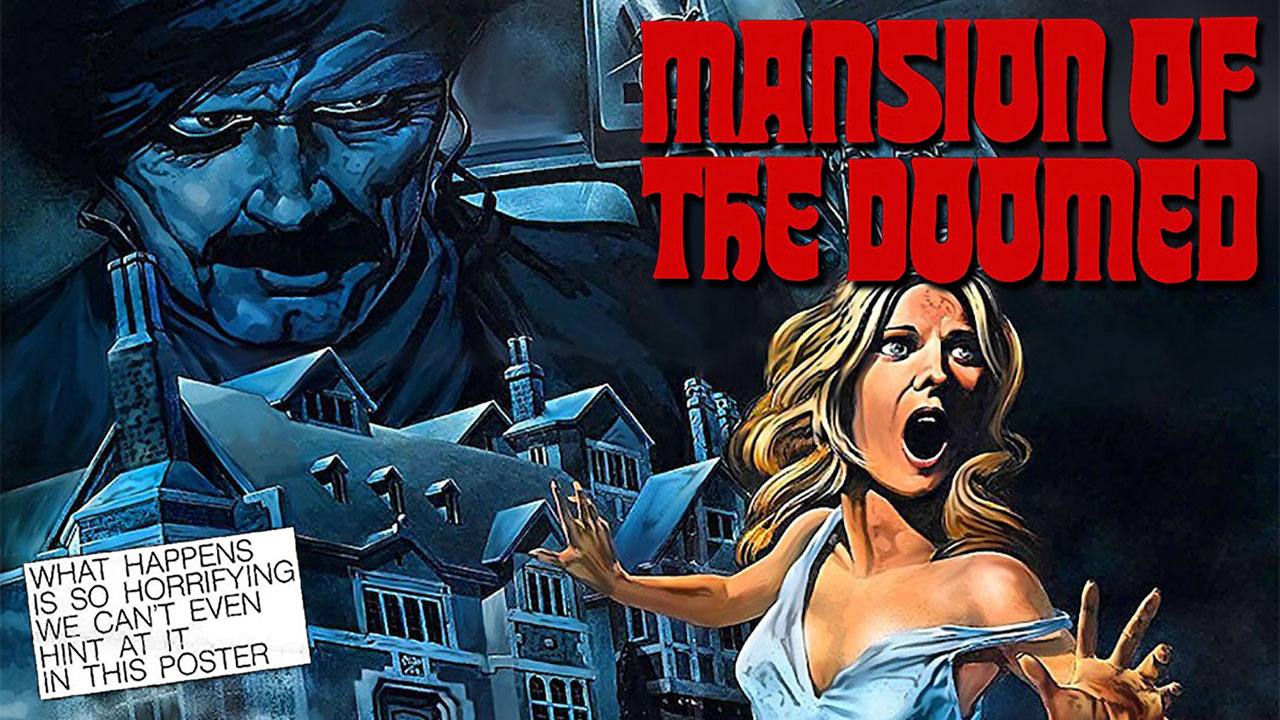
    [et_pb_section fb_built=”1″ _builder_version=”4.16″ _module_preset=”default” global_colors_info=”{}”][et_pb_row column_structure=”2_3,1_3″ _builder_version=”4.16″ _module_preset=”default” global_colors_info=”{}”][et_pb_column type=”2_3″ _builder_version=”4.16″ _module_preset=”default” global_colors_info=”{}”][et_pb_text _builder_version=”4.16″ _module_preset=”default” global_colors_info=”{}”]Growing up in Italy, Charles Band aspired to get into the film industry much like his father, Albert Band. He came back to the States in the early 70s with hardly any money and started working various odd jobs. One day, he found an ad that someone in Dallas had acquired several volumes of The New York Times. Encompassing 35 years of the newspaper, he was selling them for $300, so Band took the offer. He decided to sell them to high-end clients for $50 each based on their date of birth. Within a few weeks, Band managed to raise $300,000, so he decided to use it to fund a feature film. Charles hired writer Frank Ray Perilli and director Michael Pataki, having worked with them on Last Foxtrot in Burbank. Originally titled The Eyes of Dr. Chaney, the film was released in 1976 as Mansion of the Doomed.

    [/et_pb_text][/et_pb_column][et_pb_column type=”1_3″ _builder_version=”4.16″ _module_preset=”default” global_colors_info=”{}”][et_pb_circle_counter title=”Rating” number=”80″ bar_bg_color=”#7CDA24″ _builder_version=”4.16″ _module_preset=”default” global_colors_info=”{}”][/et_pb_circle_counter][/et_pb_column][/et_pb_row][et_pb_row _builder_version=”4.16″ _module_preset=”default” global_colors_info=”{}”][et_pb_column type=”4_4″ _builder_version=”4.16″ _module_preset=”default” global_colors_info=”{}”][et_pb_text _builder_version=”4.27.4″ _module_preset=”default” hover_enabled=”0″ global_colors_info=”{}” sticky_enabled=”0″]

    Synopsis

    After his daughter Nancy (Trish Stewart) loses her eyesight in an accident, Dr. Chaney (Richard Basehart) vows to fix it. He decides the optimal solution would be to replace her damaged eyes with new ones, but there’s a problem. According to his assistant Katherine (Gloria Grahame), there’s no way to perform such surgery without damaging the optic nerve. Chaney must extract the entire eyeball from a living donor for the surgery to work and restore Nancy’s eyesight. When Nancy’s fiancée Dr. Bryan (Lance Henriksen), visits, Chaney drugs him and takes his eyes for the surgery. At first, the surgery is a success and Nancy can see, but unfortunately, she loses it soon after. Because of this, Chaney starts kidnapping various people, extracting their eyes, and trying to restore Nancy’s eyesight with similar results. The eyeless victims are locked in the basement, struggling to escape from this Mansion of the Doomed!


    Review

    Mansion of the Doomed is a sadly forgotten and underrated grindhouse thriller that deserves to be more well-known. While not exactly a horror classic, this is still a fairly well-constructed and effectively creepy film that’s worth a watch. Though the film was most likely inspired by the 1960 film Eyes Without a Face, it’s still fairly unique. Given that he was mostly known as a character actor, Michael Pataki does a solid job behind the camera. He makes great use of darkness and shadows to give a very foreboding atmosphere, and the film’s fairly well-paced. The cast largely does a solid job, Richard Basehart giving a great performance as a surgeon plagued with guilt. While his methods are wrong, he wants to help his daughter, so you at least understand his perspective. His performance elevates the role from being the stereotypical mad scientist to a more sympathetic yet flawed character.

    Trish Stewart, though not given much to do, is equally sympathetic as the blind daughter wanting her sight back. Gloria Grahame, though clearly washed up after It’s A Wonderful Life, does the best she can with the material. However, the big stand-out is a then-unknown Lance Henriksen, who really shows signs of the great actor he’d become. Speaking of stand-outs, this was one of the first films that special effects legend Stan Winston worked on. While clearly working with a low budget, the make-up used to make people eyeless is pretty impressive. The score by Robert O. Ragland is effectively creepy and perfectly complements the overall tone and style of the film. Admittedly, there are plenty of slow spots, especially scenes with Chaney wandering the streets with droning voiceovers alongside these scenes. Overall, Mansion of the Doomed, while not a classic, is still an underrated gem worth seeking out.


    Buy Mansion of the Doomed from

    Disclosure: The above link is an affiliate link, which means that, at zero cost to you, I will earn a commission if you click through the link and finalize a purchase.

    [/et_pb_text][/et_pb_column][/et_pb_row][/et_pb_section]
  • Castle Freak (1995)

    Castle Freak (1995)

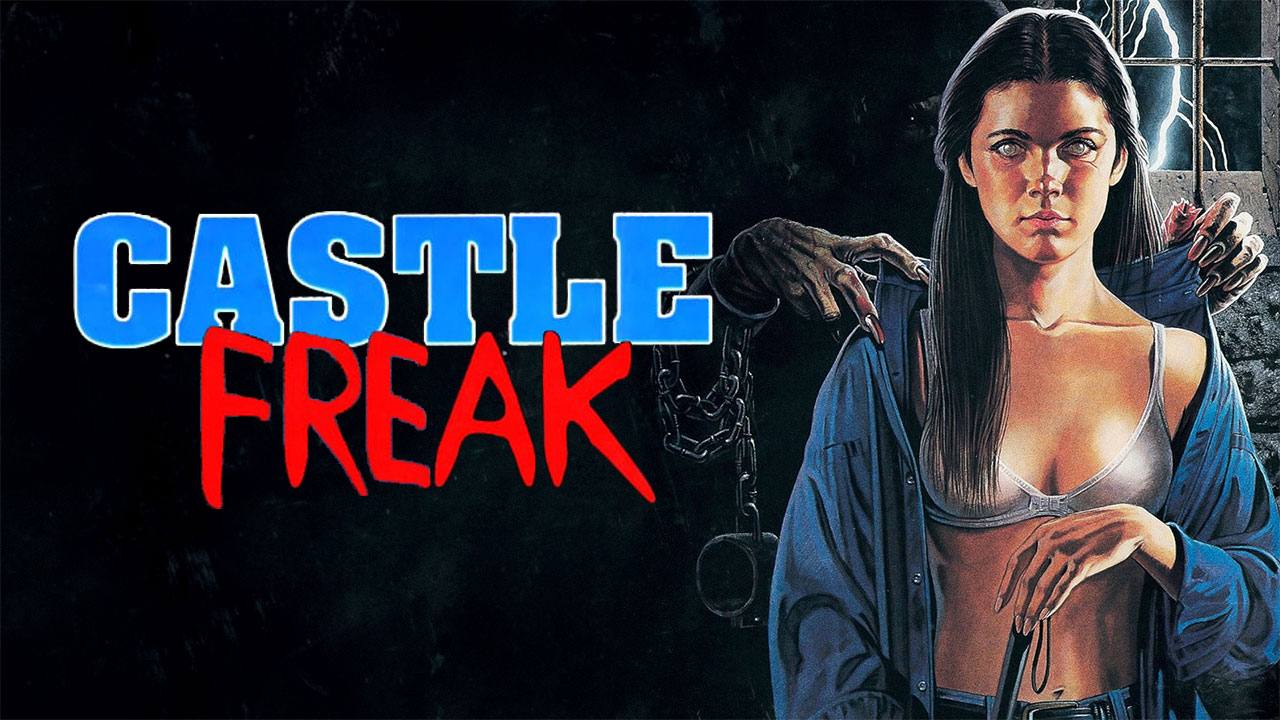
    [et_pb_section fb_built=”1″ _builder_version=”4.16″ _module_preset=”default” global_colors_info=”{}”][et_pb_row column_structure=”2_3,1_3″ _builder_version=”4.16″ _module_preset=”default” global_colors_info=”{}”][et_pb_column type=”2_3″ _builder_version=”4.16″ _module_preset=”default” global_colors_info=”{}”][et_pb_text _builder_version=”4.16″ _module_preset=”default” global_colors_info=”{}”]As mentioned in previous Full Moon Fridays, Charles Band typically sold a film on a poster and a title. While visiting the Full Moon offices, Stuart Gordon saw a poster with a chained-up Quasimodo-like figure being whipping a woman. Gordon expressed interest in filming, so Band gave him carte blanche if it featured a castle and a freak. Gordon wrote the film alongside his writing partner Dennis Paoli, taking inspiration from the H.P. Lovecraft story “The Outsider”. The film was shot in an Italian castle owned by Charles Band where they shot The Pit and The Pendulum. Gordon cast regulars Jeffrey Combs, Barbara Crampton, and Jonathan Fuller, and it would be his first unrated film since Re-Animator. Unfortunately, Full Moon was going through financial problems since their Paramount deal ended in 1994, so the film was delayed. Eventually, Stuart Gordon’s Castle Freak was released direct-to-video in November of 1995.

    [/et_pb_text][/et_pb_column][et_pb_column type=”1_3″ _builder_version=”4.16″ _module_preset=”default” global_colors_info=”{}”][et_pb_circle_counter title=”Rating” number=”85″ bar_bg_color=”#7CDA24″ _builder_version=”4.16″ _module_preset=”default” global_colors_info=”{}”][/et_pb_circle_counter][/et_pb_column][/et_pb_row][et_pb_row _builder_version=”4.16″ _module_preset=”default” global_colors_info=”{}”][et_pb_column type=”4_4″ _builder_version=”4.16″ _module_preset=”default” global_colors_info=”{}”][et_pb_text _builder_version=”4.27.4″ _module_preset=”default” hover_enabled=”0″ global_colors_info=”{}” sticky_enabled=”0″]

    Synopsis

    John Reilly (Jeffrey Combs) has just inherited a 12-century castle that was previously owned by a famed Duchess. He moves in with his wife Susan (Barbara Crampton) and blind daughter Rebecca (Jessica Dollarhide), though things have gone bad. Years ago, John was drunk driving and got into an accident that killed their son and blinded Rebecca. Because of this, Susan has not forgiven him and blames him for the death, though she’s still with him. Unbeknownst to the family, the Duchess’ deformed son Giorgio (Jonathan Fuller) has been living in the castle dungeons. He manages to escape from his shackles and roams the castle, eventually finding Rebecca and freaking her out. She tries telling her parents, but Susan doesn’t believe her, though John decides to investigate further and learn more. With tensions between John and Susan rising further, it’s only a matter of time before the Castle Freak strikes.


    Review

    For what ended up being his last collaboration with Charles Band, Castle Freak is a superb send-off for Stuart Gordon. Gordon manages to construct a well-directed and very atmospheric modern-day gothic horror film even with a limited budget. It helps that they filmed at a real castle, which adds plenty of production value much like with Subspecies. Admittedly, compared to Gordon’s other films which added some humor, this one is largely humorous and much more serious. Granted, it’s better than The Pit and The Pendulum, where the humor clashed with the more serious elements. Jeffrey Combs and Barbara Crampton give some of their best performances here, both sympathetic and in some way tragic. Relative newcomer Jessica Dollarhide does a solid job as a blind girl whose disability is treated respectfully and honestly. However, Jonathan Fuller steals the show as the title character, giving a very expressive and emotive performance.

    Fuller’s performance is very reminiscent of how Lon Chaney portrayed the various monsters he played, using body and facial expressions. The creature and makeup effects from Optic Nerve are wonderfully gruesome and Giorgio’s design ranks among the best practical monsters. Richard Band’s score is a delightful mix of terror and playfulness that fits right alongside his score for Dolls. At roughly 90 minutes, the film goes by fairly quickly without feeling like it’s rushing or having padding added. In terms of flaws, one problem with the film is that some of the characters act rather irrationally. No one really seems to entertain the thought that something more is going on and just act on instinct. Still, given the tensions going on and how emotional everyone is, it’s fair to expect people wouldn’t be thinking straight. Overall, Castle Freak is a solidly underrated gothic horror film that deserves your attention.


    Buy Castle Freak from

    Disclosure: The above link is an affiliate link, which means that, at zero cost to you, I will earn a commission if you click through the link and finalize a purchase.

    [/et_pb_text][/et_pb_column][/et_pb_row][/et_pb_section]
  • Prison (1987)

    Prison (1987)

    [et_pb_section fb_built=”1″ _builder_version=”4.9.4″ _module_preset=”default”][et_pb_row column_structure=”2_3,1_3″ _builder_version=”4.9.4″ _module_preset=”default”][et_pb_column type=”2_3″ _builder_version=”4.9.4″ _module_preset=”default”][et_pb_text _builder_version=”4.9.4″ _module_preset=”default” hover_enabled=”0″ sticky_enabled=”0″]

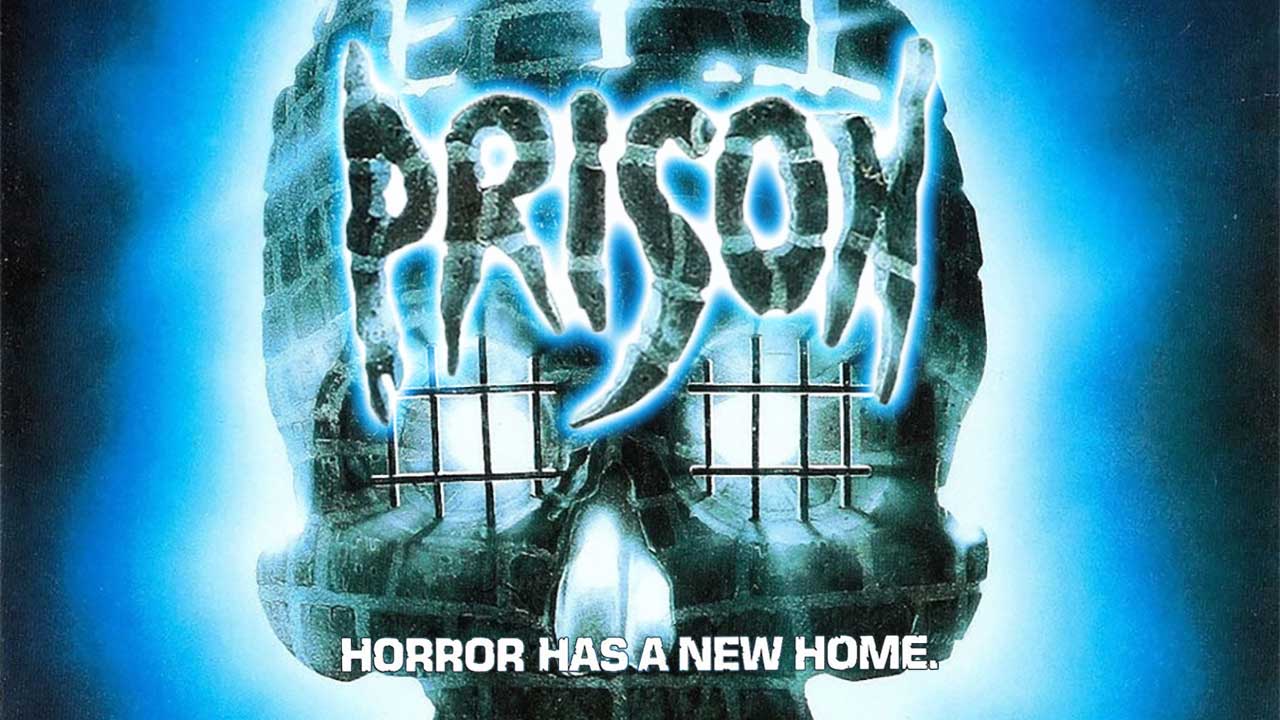
    Irwin Yablans, who produced the 1978 classic Halloween, was thinking of new ideas for a horror film. Feeling that just about every idea had been exhausted, he started thinking of setting a horror film in a prison. He pitched the idea to Charles Band, and he agreed to produce it under his company, Empire Pictures. They hired C. Courtney Joyner to pen the script, but he decided to make it more of a ghost story. Yablans wanted a young, up-and-coming director to helm the project, someone who could be the next John Carpenter. Off the strength of his debut feature Born American, Finnish filmmaker Renny Harlin was hired for his first American film. With a budget of around $1-$4 million, they went to the former Wyoming State Penitentiary to shoot this horrifying production. Eventually, Prison was released in 1987 in the UK and 1988 in the US.

    [/et_pb_text][/et_pb_column][et_pb_column type=”1_3″ _builder_version=”4.9.4″ _module_preset=”default”][et_pb_circle_counter title=”Rating” number=”85″ bar_bg_color=”#7CDA24″ _builder_version=”4.9.4″ _module_preset=”default” hover_enabled=”0″ sticky_enabled=”0″][/et_pb_circle_counter][/et_pb_column][/et_pb_row][et_pb_row _builder_version=”4.9.4″ _module_preset=”default”][et_pb_column type=”4_4″ _builder_version=”4.9.4″ _module_preset=”default”][et_pb_text _builder_version=”4.9.4″ _module_preset=”default” hover_enabled=”0″ sticky_enabled=”0″]

    Synopsis

    Despite the objections of inspector Katherine Walker (Chelsea Field), the prison board decides to reopen the recently condemned Creedmore Prison. Eaton Sharpe (Lane Smith), who was a guard back in the day, is hired to be the warden. Several hundred inmates are transferred in, including Burke (Viggo Mortensen), Cresus (Lincoln Kilpatrick), and Joe ‘Lasagna’ Lazano (Ivan Kane). Trouble starts brewing when one of the inmates is burned to death in a solitary confinement cell. Walker is demanding an investigation be conducted, but Sharpe declines and is vehement about reporting to the board. Turns out that back in the day, Sharpe oversaw the execution of a prisoner who was framed for murder. As more prisoners and guards are being killed in mysterious ways, Sharpe is driven mad while trying to maintain control. Soon, the prisoners band together to try escaping before they’re picked off by the vengeful spirits of the prison.


    Review

    Compared to many of the cheap quickies put out by Empire Pictures around this time, Prison is a hidden gem. Part of what makes this film stand out is the fact that they shot in an actual abandoned prison. The location has a very dark and foreboding presence on its own, enhanced by the excellent cinematography of Mac Ahlberg. For such a low budget and given that this was Renny Harlin’s second film, it looks way better than expected. There are tons of moody lighting, harsh shadows, and dynamic lighting, with some scenes feeling like a warped dream. Acting-wise, everyone does a solid job, Lane Smith in particular making for a great and complex villain. As much as he tries to act tough and stern, you get a sense that he’s haunted by his past. Plus, Hal Landon Jr. of Bill & Ted fame plays a guard.

    While he’s not given many lines, Viggo Mortensen has a very cool and charismatic presence to him. It’s easy to see how he became a major star in the Lord of the Rings films and Green Book. Chelsea Field does a good job as the female lead and has great back-and-forths with Smith and Mortensen. Also, there are plenty of notable character actors, including Tommy “Tiny” Lister, Lincoln Kilpatrick, Tom Everett, and Larry “Flash” Jenkins. Like many Charles Band productions, the late great John Carl Buechler did the effects, and it’s easily his best work. From Hal Landon Jr.’s death by razor wire to the zombified corpse played by Kane Hodder, it’s some incredible stuff. Admittedly, the film does take a while to get going, but once they’re at the prison, all hell breaks loose. Overall, Prison is a solidly creepy and atmospheric horror film worthy of rediscovering.


    Buy Prison on Amazon: https://amzn.to/3tJgcaD

    [/et_pb_text][/et_pb_column][/et_pb_row][/et_pb_section]

  • Robot Wars (1993)

    Robot Wars (1993)

    [et_pb_section fb_built=”1″ _builder_version=”4.16″ _module_preset=”default” global_colors_info=”{}”][et_pb_row column_structure=”2_3,1_3″ _builder_version=”4.16″ _module_preset=”default” global_colors_info=”{}”][et_pb_column type=”2_3″ _builder_version=”4.16″ _module_preset=”default” global_colors_info=”{}”][et_pb_text _builder_version=”4.16″ _module_preset=”default” global_colors_info=”{}”]By 1993, Full Moon Features was on a roll and had some of their biggest successes in their history. In addition to starting up many popular franchises, Full Moon launched Moonbeam Entertainment, a line of kids’ sci-fi/fantasy films. 1993 alone saw the release of Bloodstone: Subspecies IIDollman vs. Demonic Toys, and Puppet Master 4 among others. They also had plenty of other movies in production, but many of them wouldn’t see a release until after 1993. While Charles Band oversaw the films as a producer, he only directed a few, oftentimes with his father Albert Band. Though credited as co-directors on Doctor Mordrid, Albert basically filled in for Charles since he was busy running the company. For their 1993 follow-up to 1989’s Robot Jox, it was originally a father-son project before Albert had to take over. Robot Wars was released direct-to-video in April 1993.

    [/et_pb_text][/et_pb_column][et_pb_column type=”1_3″ _builder_version=”4.16″ _module_preset=”default” global_colors_info=”{}”][et_pb_circle_counter title=”Rating” number=”75″ bar_bg_color=”#EDF000″ _builder_version=”4.16″ _module_preset=”default” global_colors_info=”{}”][/et_pb_circle_counter][/et_pb_column][/et_pb_row][et_pb_row _builder_version=”4.16″ _module_preset=”default” global_colors_info=”{}”][et_pb_column type=”4_4″ _builder_version=”4.16″ _module_preset=”default” global_colors_info=”{}”][et_pb_text _builder_version=”4.27.4″ _module_preset=”default” hover_enabled=”0″ global_colors_info=”{}” sticky_enabled=”0″]

    Synopsis

    In the year 2041, Earth has been divided into two factions: the North Hemi and the Eastern Alliance. With their declining economy, the North Hemi is making a deal to manufacture defensive robots for the Eastern Alliance. Dubbed “mini-megs”, they’re smaller versions of “mega-robots”, giant military robots now used for civilian transport, including the Mega-Robotic Assault System-2. Also known as the MRAS-2, the robot is piloted by Captain Drake (Don Michael Paul) and copilot Stumpy (James Staley). During a run, they’re attacked by terrorists called “Centros”, and Drake is ordered to attack by Chief Rooney (Peter Haskell). Rooney wants to impress Eastern Alliance General Wa-Lee (Danny Kamekona) and his aide Chou-Sing (Yuji Okumoto) to negotiate the deal. Meanwhile, Dr. Leda Fanning (Barbara Crampton) and her reporter friend Annie (Lisa Rinna) suspect that there’s more going on. Soon, Drake and Stumpy join and discover something sinister being planned.


    Review

    While not as action-packed as Robot Jox, Robot Wars is still a fairly entertaining low-budget sci-fi film that’s also short. Like Stuart Gordon’s film, one of the highlights here is the stop-motion animation by the late great David Allen. Admittedly, there are only two robots in the whole movie, and they don’t do much, but the stop-motion is impressive. While it may seem archaic by today’s standards, there’s a realness to them that can’t be replicated with CGI. Plot-wise, it shares some similarities with Stuart Gordon’s film, namely the opposing factions that are essentially East vs West. For a film that’s roughly 70 minutes in length, there’s a surprising amount of world-building that adds to the story. It almost makes you wish that they’d build on it further, but it’s more window dressing than anything else. Then again, Full Moon’s not really known for its deep stories.

    Don Michael Paul makes for a fun lead, playing it as ridiculously cocky and arrogant as possible. Barbara Crampton has some decent chemistry with him, though their love story feels shoehorned in considering she initially hates him. It’s interesting to see Danny Kamekona play a bad guy considering his role in Robot Jox, where he was good. Though she isn’t given much to do, Lisa Rinna is incredibly gorgeous and makes for a good sidekick to Crampton. Additionally, some of the blue screen work is very noticeable and sticks out in a bad way. Also, there’s a sequence involving a 90s-style ghost town that’s clearly there so they wouldn’t have to build sets. Still, many of these points are mute since this is meant purely to show stop-motion robots fighting, which it delivers. Overall, Robot Wars is a fun movie that’s perfect for a Saturday afternoon.


    Buy Robot Wars from

    Disclosure: The above link is an affiliate link, which means that, at zero cost to you, I will earn a commission if you click through the link and finalize a purchase.

    [/et_pb_text][/et_pb_column][/et_pb_row][/et_pb_section]

  • Vicious Lips (1986)

    Vicious Lips (1986)

    [et_pb_section fb_built=”1″ _builder_version=”4.16″ _module_preset=”default” global_colors_info=”{}”][et_pb_row column_structure=”2_3,1_3″ _builder_version=”4.16″ _module_preset=”default” global_colors_info=”{}”][et_pb_column type=”2_3″ _builder_version=”4.16″ _module_preset=”default” global_colors_info=”{}”][et_pb_text _builder_version=”4.16″ _module_preset=”default” global_colors_info=”{}”]Originally from Hawaii, Albert Pyun got his first taste of the film industry through an internship with Akira Kurosawa. Following his time in Japan, he moved to Los Angeles to become a director and started with a bang. Made on a budget of $4 million, his 1982 debut The Sword and the Sorcerer grossed almost $40 million domestically. With this success, Pyun was hired by Dino De Laurentius to helm 1985’s Radioactive Dreams, which made a decent profit. Unfortunately, his experience shooting for De Laurentius proved too overwhelming, so he decided his next film would be smaller scale. He decided to shoot his next film on a budget of roughly $100,000 in a week using very few locations. At some point, Empire Pictures got involved and acquired the film for release, only for it to be quickly forgotten. The result was the 1986 sci-fi punk rock film, Vicious Lips.

    [/et_pb_text][/et_pb_column][et_pb_column type=”1_3″ _builder_version=”4.16″ _module_preset=”default” global_colors_info=”{}”][et_pb_circle_counter title=”Rating” number=”65″ bar_bg_color=”#EDF000″ _builder_version=”4.16″ _module_preset=”default” global_colors_info=”{}”][/et_pb_circle_counter][/et_pb_column][/et_pb_row][et_pb_row _builder_version=”4.16″ _module_preset=”default” global_colors_info=”{}”][et_pb_column type=”4_4″ _builder_version=”4.16″ _module_preset=”default” global_colors_info=”{}”][et_pb_text _builder_version=”4.27.2″ _module_preset=”default” hover_enabled=”0″ global_colors_info=”{}” sticky_enabled=”0″]

    Synopsis

    In an unspecified future, Matty Asher (Anthony Kentz) is looking for a new lead singer for his band, Vicious Lips. He lucks out when he finds Judy Jetson (Dru-Anne Perry) at a local talent show and immediately signs her on. She meets the other band members, Bree Syn (Gina Calabrese), Wynzi Krodo (Linda Kerridge), and Mandaa Uueu (Shayne Farris). While the other band members don’t take a liking to her, Judy does a good job at their first show. Matty manages to get them a gig with music mogul Maxine Mortogo (Mary-Anne Graves) at her club, the Radioactive Dream. They steal a ship to get to the show, only to hit an asteroid and crash onto a desert planet. While Matty goes to find help, the girls stay behind, unaware that a Venusian beast (Christian Andrews) is onboard. Will they escape the planet, or will the beast get them first?


    Review

    Vicious Lips is a film that has a lot going for it only to squander any potential it had. The opening 30 minutes start off really strong, but then the proceeding 40 minutes drag the pacing to a halt. While it’s clear the budget was low, the production design has a unique punk rock sci-fi style to it. It’s very grungy and rundown-looking, mixed in with some neon colors, reminiscent of night clubs you’d see in Los Angeles. Even the spaceship has a charming low-budget quality about it, though it slightly resembles the one from Galaxy of Terror. It certainly helps that the art director was Bob Ziembicki, who later worked on Dead Man and Boogie Nights. Also, there’s the solid creature effects from future Oscar winner Greg Cannom and the ever dependable John Carl Buechler. However, the best part of the film is the awesome soundtrack by Sue Saad.

    Unfortunately, that’s where most of my positives for Vicious Lips stop since the majority of it doesn’t work. Even though I said the first 30 minutes were the best part, there’s some quick-cut editing that’s choppy and disorienting. However, once they’re on the desert planet, the next 40 minutes of the film grind to a screeching halt. Most of it consists of the girls sitting around the ship talking about inane stuff that doesn’t advance the plot. It doesn’t help that, with the exception of Anthony Kentz, Christian Andrews, and maybe Dru-Anne Perry, everyone comes off lifeless. Even Linda Kerridge, who was fantastic in Fade to Black, seems like she’d rather be anywhere else than here. It all culminates in an ending so abrupt and confusing, you’ll be left baffled as to what actually happened. Overall, Vicious Lips is a film that could’ve been fun but instead is just boring.


    Buy Vicious Lips from Amazon: https://amzn.to/3NPVcvl.

    Disclosure: The above link is an affiliate link, which means that, at zero cost to you, I will earn a commission if you click through the link and finalize a purchase.

    [/et_pb_text][/et_pb_column][/et_pb_row][/et_pb_section]
  • The Vampire Journals (1997)

    The Vampire Journals (1997)

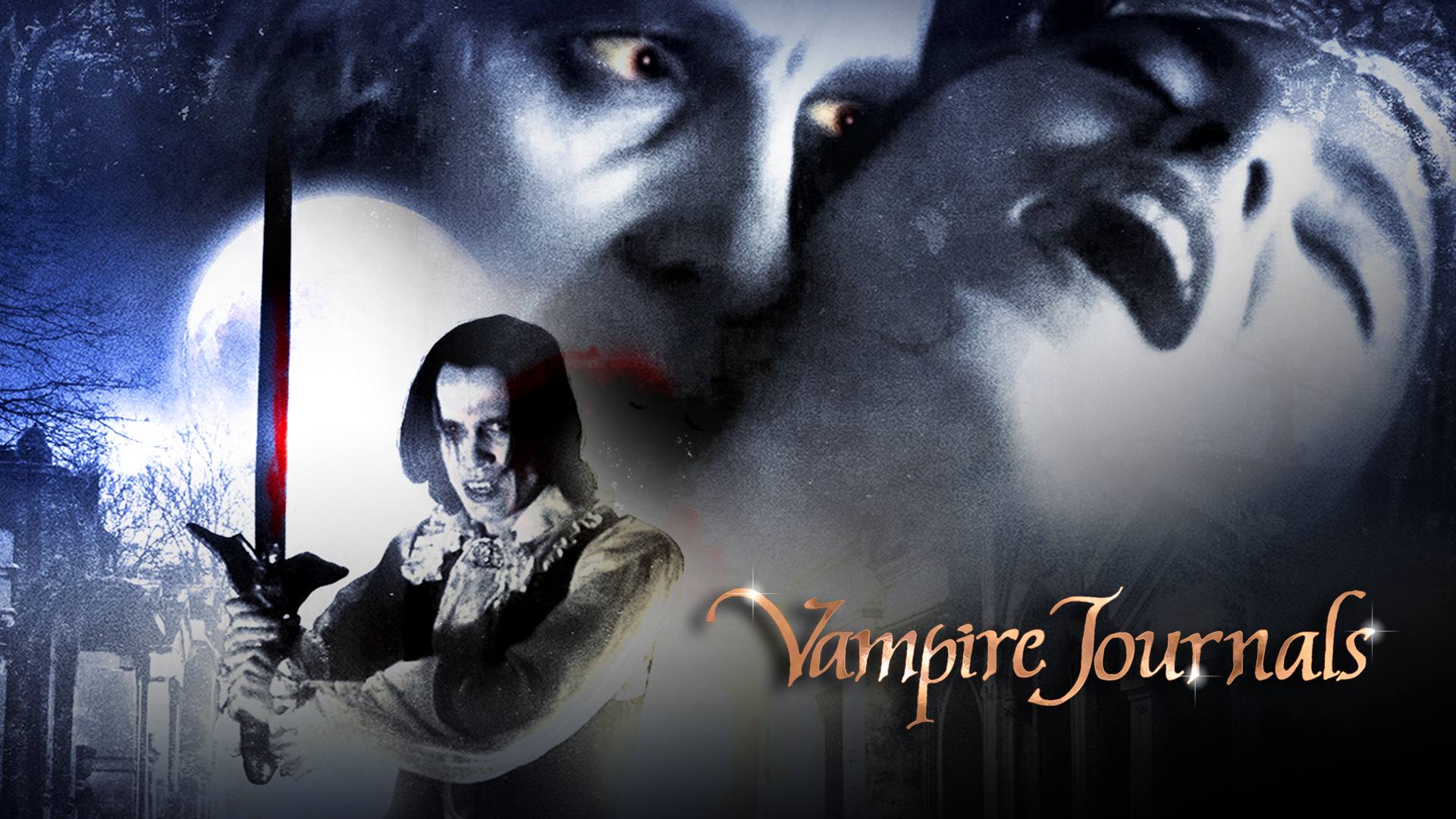
    [et_pb_section fb_built=”1″ _builder_version=”4.16″ _module_preset=”default” global_colors_info=”{}”][et_pb_row column_structure=”2_3,1_3″ _builder_version=”4.16″ _module_preset=”default” global_colors_info=”{}”][et_pb_column type=”2_3″ _builder_version=”4.16″ _module_preset=”default” global_colors_info=”{}”][et_pb_text _builder_version=”4.16″ _module_preset=”default” global_colors_info=”{}”]Following the production of Bloodlust: Subspecies III, Charles Band proposed to director Ted Nicolaou with an idea for a spin-off. Band suggested doing a more classical, sophisticated vampire movie that was more urban versus Subspecies being in the country. Nicolaou accepted though it would be years before the film got off the ground following Full Moon’s fallout with Paramount. Around this time, 1994’s Interview with the Vampire, based on Anne Rice’s novel, was a critical and financial hit. This might’ve inspired Band’s decision, as it’s typical of him to chase after a trend while it’s still popular. Regardless, Nicolaou was interested in making a more elegant vampire movie that would be filmed in Romania. It helped that he really enjoyed shooting there, so after an extensive series of auditions, Nicolaou shot his vampire spinoff. Finally, in February 1997, The Vampire Journals was released to a ravenous fanbase.

    [/et_pb_text][/et_pb_column][et_pb_column type=”1_3″ _builder_version=”4.16″ _module_preset=”default” global_colors_info=”{}”][et_pb_circle_counter title=”Rating” number=”80″ bar_bg_color=”#7CDA24″ _builder_version=”4.16″ _module_preset=”default” global_colors_info=”{}”][/et_pb_circle_counter][/et_pb_column][/et_pb_row][et_pb_row _builder_version=”4.16″ _module_preset=”default” global_colors_info=”{}”][et_pb_column type=”4_4″ _builder_version=”4.16″ _module_preset=”default” global_colors_info=”{}”][et_pb_text _builder_version=”4.27.4″ _module_preset=”default” hover_enabled=”0″ global_colors_info=”{}” sticky_enabled=”0″]

    Synopsis

    In Bucharest, the vampiric Zachary (David Gunn) is hunting down fellow vampire Ash (Johnathan Morris) for a revenge quest. Back in the 1800s, Zachary killed the woman who turned him and his hunting down everyone in her bloodline. He tracks Ash down to Club Muse, a nightclub that he owns alongside its manager Iris (Starr Andreeff). One night, Zach and Ash come across an aspiring pianist named Sofia (Kirsten Cerre) and fall in love with her. Ash sends Iris to invite Sofia to the club with the promise of $1,000 for a live solo performance. Zach warns her not to go, but she does and ends up getting turned by Ash. While she’s being held hostage until agreeing to accept Ash as her master, Zach infiltrates the club to rescue her. But will it be too late to save her before Ash fully turns her into one of his brides?


    Review

    While not the most original vampire film, The Vampire Journals is easily one of Full Moon’s most well-made movies. Like the Subspecies films, Ted Nicolaou takes full advantage of filming in Bucharest and chooses some fantastic locations. Not only do they use the historic architecture, but the wintertime conditions help the film stand out. Nicolaou makes great use of shadows and harsh lighting to establish mood much as he did in previous films. Adding to the film’s mood is the haunting score by Richard Kosinski, evoking the same emotions as his Subspecies score. Long-time collaborator Adolfo Bartoli uses some creative angles and lighting to help accentuate the film’s more gothic nature. In a way, the style and look are very similar to the Hammer Films of the 1960s and 1970s. Adding to the old school feel is the extensive use of fog and very dim lighting, which are excellent.

    Though the cast is comprised mostly of unknowns and character actors, they all do a surprisingly great job. David Gunn makes for a solid, moody lead, though his voiceovers can get somewhat grating, sounding super emotional and archaic. It reminds me of Harrison Ford’s voiceovers in Blade Runner, but at least here Gunn puts some emotion in it. Kirsten Cerre, on top of being adorable, brings some emotional weight with her performance and works well off of Gunn. However, it’s Johnathan Morris’ Ash who stands out as the malevolent vampire, adding some class and an element of tragedy. Even though it’s billed as a Subspecies spinoff, there’s only a one-line mention of Radu and Transylvania. In a way, this works in the film’s favor in that you can enjoy it as a standalone vampire film. Overall, The Vampire Journals is a well-made and solidly entertaining gothic horror film.


    Buy The Vampire Journals from

    Disclosure: The above link is an affiliate link, which means that, at zero cost to you, I will earn a commission if you click through the link and finalize a purchase.

    [/et_pb_text][/et_pb_column][/et_pb_row][/et_pb_section]
  • Crawlspace (1986)

    Crawlspace (1986)

    [et_pb_section fb_built=”1″ _builder_version=”4.16″ _module_preset=”default” global_colors_info=”{}”][et_pb_row column_structure=”2_3,1_3″ _builder_version=”4.16″ _module_preset=”default” global_colors_info=”{}”][et_pb_column type=”2_3″ _builder_version=”4.16″ _module_preset=”default” global_colors_info=”{}”][et_pb_text _builder_version=”4.16″ _module_preset=”default” global_colors_info=”{}”]

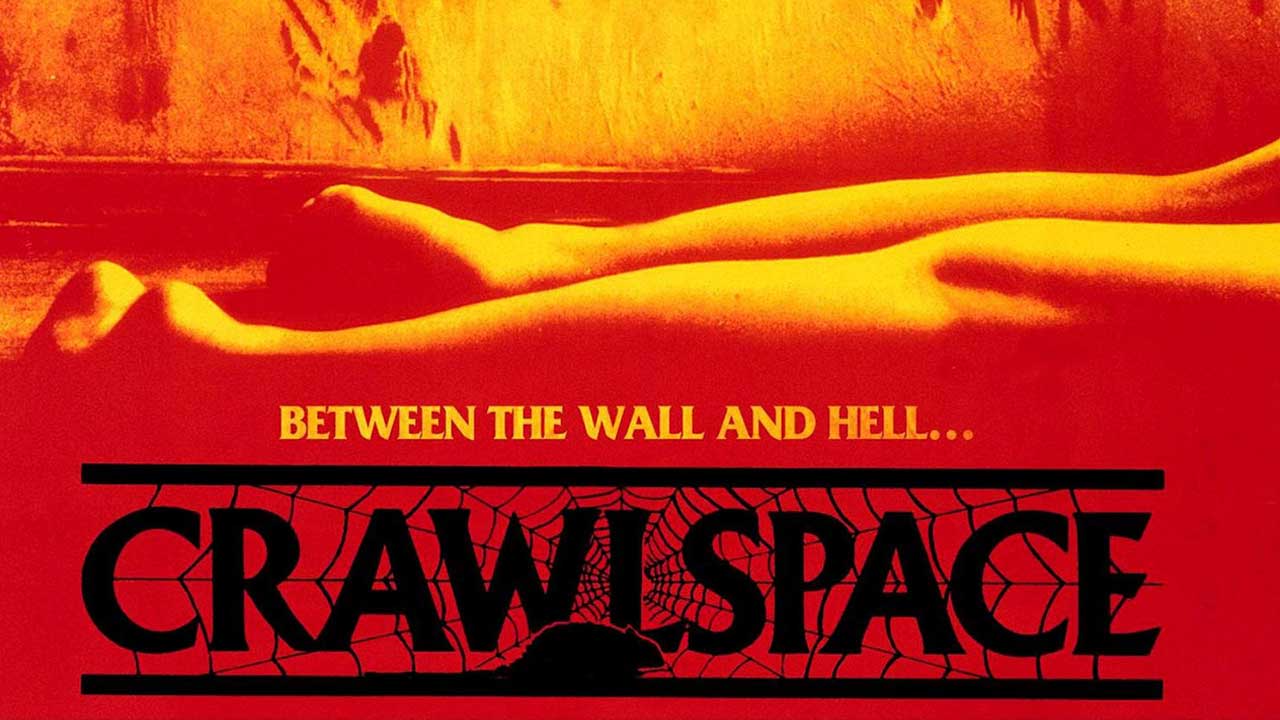
    Though it wasn’t a hit at the time, Tourist Trap has since developed a cult following among hardcore horror fans. Following its release, filmmaker David Schmoeller moved onto what was supposed to be his big breakthrough into mainstream Hollywood. 1982’s The Seduction, featuring Morgan Fairchild in her feature film debut, unfortunately received negative reviews and earned three Razzie nominations. Looking to bounce back, Schmoeller turned to Charles Band, who had since formed his production company, Empire Pictures. Schmoeller had a script about a former POW in Vietnam building a homemade prison camp, but Band had other ideas. Band promised he’d get character actor Klaus Kinski to star if Schmoeller changed the script to be about a Nazi. Schmoeller agreed, but nothing could’ve prepared him for how much of a disaster working with Kinski would be. After a very troubled production, Crawlspace was finally released in May of 1986.

    [/et_pb_text][/et_pb_column][et_pb_column type=”1_3″ _builder_version=”4.16″ _module_preset=”default” global_colors_info=”{}”][et_pb_circle_counter title=”Rating” number=”85″ bar_bg_color=”#7CDA24″ _builder_version=”4.16″ _module_preset=”default” global_colors_info=”{}”][/et_pb_circle_counter][/et_pb_column][/et_pb_row][et_pb_row _builder_version=”4.16″ _module_preset=”default” global_colors_info=”{}”][et_pb_column type=”4_4″ _builder_version=”4.16″ _module_preset=”default” global_colors_info=”{}”][et_pb_text _builder_version=”4.27.4″ _module_preset=”default” hover_enabled=”0″ global_colors_info=”{}” sticky_enabled=”0″ admin_label=”Text”]

    Synopsis

    Lori Bancroft (Talia Balsam) is looking into a new apartment and meets with the landlord Karl Gunther (Klaus Kinski). After he gives her a tour and talks about the apartment, Lori decides to move in, much to Karl’s delight. Turns out Karl has some dark secrets, as he regularly kidnaps and tortures his female tenants in the attic. He has various crawlspaces and passageways within the building that he uses to spy on and kill his tenants. One day, he’s visited by Josef Steiner (Kenneth Robert Shippy), whose brother was a patient of Gunther’s that he killed. Steiner has been working to try and prove that Gunther was responsible for the deaths of several other patients. Soon, Gunther’s already warped mental state starts deteriorating, as he kills the other tenants and embraces his family’s Nazi roots. What horrors will Lori stumble across as she navigates her way through the crawlspace?


    Review

    Crawlspace is a film that works despite its production problems, most of them revolving around Klaus Kinski. According to David Schmoeller, Kinski had started six fistfights with the crew after only three days of filming. It got to the point where the Italian producers were even considering killing Kinski for the insurance money. All of this and more is detailed in Schmoeller’s 1999 mini-doc Please Kill Mr. Kinski, which I highly recommend watching. That said, while it’s easy to villainize Kinski for being so troublesome on set, he still delivers a great performance. Even when he’s trying to act normal and charming, he comes off creepy and menacing, like something’s wrong with him. His performance is almost on par with Jack Nicholson’s performance in The Shining, though not quite as off-the-wall. Still, Kinski manages to be captivating even when there isn’t much happening on screen.

    Talia Balsam, as our protagonist, fills her role pretty well, coming off as fairly normal and somewhat demure. Her shyness perfectly contrasts with Kinski’s creepiness, and she’s easy to root for when things start going crazy. The other female tenants, played by Barbara Whinnery, Carole Francis, and Tane McClure work well together but aren’t very memorable. It’s easy to side with Kenneth Robert Shippy as Josef Steiner given his situation, but his subplot doesn’t go anywhere. Fans of Charles Band will recognize the set as being the same apartment set used for John Carl Buechler’s Troll. In terms of Schmoeller’s direction, it’s not as atmospheric as Tourist Trap, but there are some effectively foreboding moments. At 80 minutes, the film gets in and out fairly quickly, and it does its job without overstaying its welcome. Overall, Crawlspace is an effective horror/thriller that succeeds despite its troublesome, though talented, star.


    Buy Crawlspace from Amazon: https://amzn.to/3wIHPDo.

    Disclosure: The above link is an affiliate link, which means that, at no additional cost, I will earn a commission if you click through the link and make a purchase.

    [/et_pb_text][et_pb_code _builder_version=”4.27.4″ _module_preset=”default” hover_enabled=”0″ sticky_enabled=”0″]

    Where to watch Crawlspace (1986)

    data-api-key=”LMVDLdLSH5ZJnQ4FMGMgyJCB8cmGbfCV” data-object-type=”Movie” data-title=”Crawlspace” data-year=”1986″ data-theme=”light”>

    [/et_pb_code][/et_pb_column][/et_pb_row][/et_pb_section]
  • Trancers 5: Sudden Deth (1994)

    Trancers 5: Sudden Deth (1994)

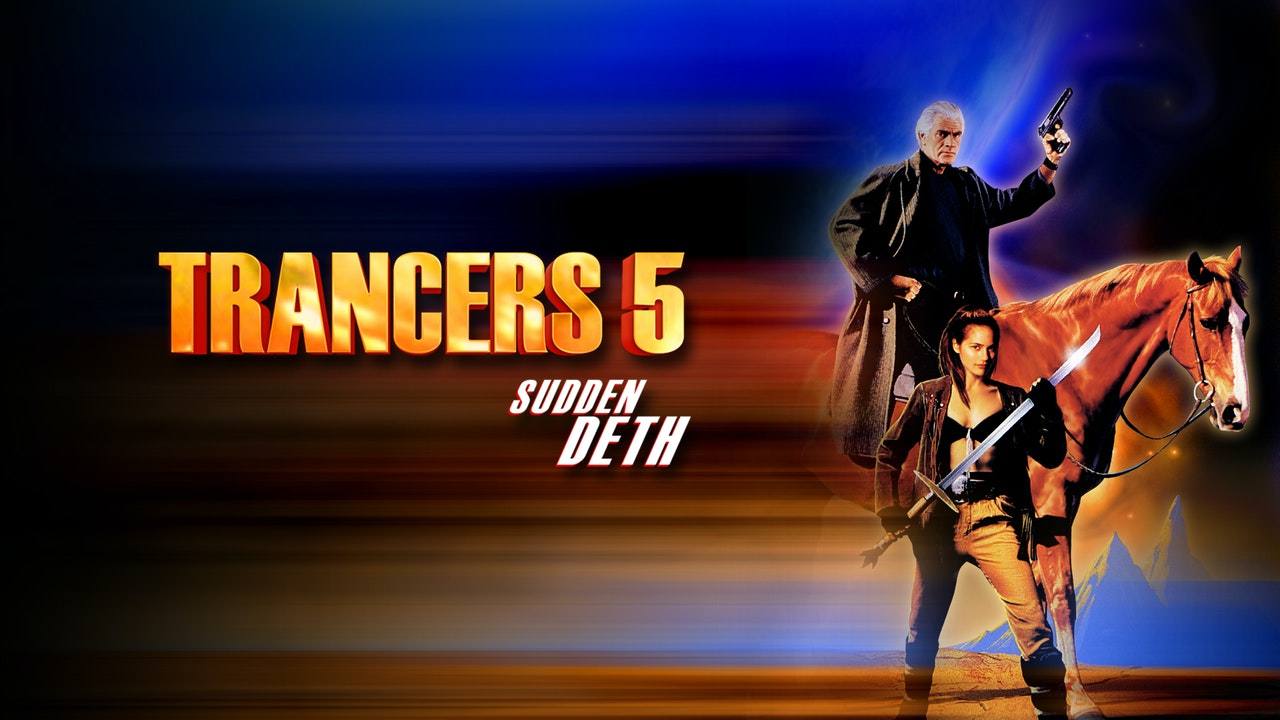
    [et_pb_section fb_built=”1″ _builder_version=”4.16″ _module_preset=”default” global_colors_info=”{}”][et_pb_row column_structure=”2_3,1_3″ _builder_version=”4.16″ _module_preset=”default” global_colors_info=”{}”][et_pb_column type=”2_3″ _builder_version=”4.16″ _module_preset=”default” global_colors_info=”{}”][et_pb_text _builder_version=”4.16″ _module_preset=”default” global_colors_info=”{}”]At this point in Full Moon’s history, many of their productions were moving over to their new Romanian studios. After Subspecies and its sequels proved to be huge hits for them, more were being filmed at Castel Films. Speaking of the saga of Radu, Full Moon was filming sequels to their other franchises back-to-back around the same time. Originally one film, Puppet Master 4 and Puppet Master 5: The Final Chapter were filmed a year apart. This approach seemed to work since, after Trancers III: Deth Lives, the next two sequels would be filmed back-to-back. However, by this point, Full Moon was starting to cut costs as their partnership with Paramount was soon ending. According to screenwriter Peter David, many sequences from his Trancers sequels were being cut left and right to save costs. With that in mind, let’s discuss Trancers 5: Sudden Deth.

    [/et_pb_text][/et_pb_column][et_pb_column type=”1_3″ _builder_version=”4.16″ _module_preset=”default” global_colors_info=”{}”][et_pb_circle_counter title=”Rating” number=”65″ bar_bg_color=”#EDF000″ _builder_version=”4.16″ _module_preset=”default” global_colors_info=”{}”][/et_pb_circle_counter][/et_pb_column][/et_pb_row][et_pb_row _builder_version=”4.16″ _module_preset=”default” global_colors_info=”{}”][et_pb_column type=”4_4″ _builder_version=”4.16″ _module_preset=”default” global_colors_info=”{}”][et_pb_text _builder_version=”4.27.4″ _module_preset=”default” hover_enabled=”0″ global_colors_info=”{}” sticky_enabled=”0″]

    Synopsis

    Picking up where the last film left off, Jack Deth (Tim Thomerson) is looking for a way back home. With some help from former trancer Prospero (Ty Miller), Jack learns of the “Tiamond”, an object capable of interdimensional travel. To retrieve it, Jack must venture to The Castle of Unrelenting Terror and pass its many difficult challenges. Meanwhile, Lord Caliban (Clabe Hartley) has been brought back and is after the Tiamond, which will give him unbridled power. As they venture towards the castle, Jack must learn to accept Prospero for who he is if he’s to succeed. Eventually, they find the Tiamond, only for Caliban to use it to launch an assault on the Tunnel Rats. As Shaleen (Terri Ivens) and Harson (Jeff Moldovan) defend the castle, Jack and Prospero race to stop Caliban. Will he be stopped, and will Jack be able to return to his own dimension?


    Review

    Much like its predecessor, Trancers 5: Sudden Deth doesn’t feel like it’s from the same franchise as the first three. Much like Puppet Master 5: The Final Chapter, this film opens with an extended recap sequence to extend the runtime. After that, it’s the same DTV-esque sword & sorcery as the last film, which is still shockingly flat and dull. Tim Thomerson delivers the same wise-ass attitude we’ve come to expect, but you can tell he’s growing tired of this. That said, you can tell that he’s still a consummate professional and makes the most of the material he’s given. Like the last film, David Nutter’s direction adds to the flatness on screen, though that could be his TV background. While the film opens on a somewhat exciting action scene, it quickly dips into slow exposition and dialogue-heavy scenes. It’s a film struggling to reach feature-length.

    Aside from Thomerson, the rest of the acting is pretty dull, though there are a few decent moments. Probably the best sequence is when Prospero is confronting Jack about how he hates him just because of his background. It’s a well-written and well-acted scene that questions Jack’s black-and-white morality and is better than this movie deserves. Most of the runtime is Jack and Prospero riding through the woods and walking through the Castle of Unrelenting Terror. Oddly, they work well together and have some decent chemistry, which makes this slightly better than the last film. But then you get to the other actors, notably Clabe Hartley and Terri Ivens, whose delivery is very stilted. It’s pretty easy to see why this was the last one Thomerson appeared in since this series pretty much died. Overall, Trancers 5: Sudden Deth isn’t nearly the swan song Jack Deth deserved.


    Buy Trancers 5: Sudden Deth from

    Disclosure: The above link is an affiliate link, which means that, at zero cost to you, I will earn a commission if you click through the link and finalize a purchase.

    [/et_pb_text][/et_pb_column][/et_pb_row][/et_pb_section]