Facebook

FilmNerd

Category: Godzilla Retrospective

  • Godzilla vs. Biollante (1989)

    Godzilla vs. Biollante (1989)

    [et_pb_section fb_built=”1″ admin_label=”section” _builder_version=”4.16″ global_colors_info=”{}”][et_pb_row column_structure=”2_3,1_3″ admin_label=”row” _builder_version=”4.16″ background_size=”initial” background_position=”top_left” background_repeat=”repeat” global_colors_info=”{}”][et_pb_column type=”2_3″ _builder_version=”4.16″ custom_padding=”|||” global_colors_info=”{}” custom_padding__hover=”|||”][et_pb_text _builder_version=”4.27.4″ _module_preset=”default” global_colors_info=”{}”]Despite The Return of Godzilla making its money back, longtime Godzilla producer Tomoyuki Tanaka was hesitant about making a follow-up. However, after seeing how successful Frank Oz’s remake of Little Shop of Horrors was, Tanaka decided to push forward. In a bold move, Tanaka held a contest where the public could submit story ideas for a potential script. Tanaka then handed the five finalists to writer/director Kazuki Ōmori, who chose the entry submitted by dentist Shinichiro Kobayashi. Using his biologist background, Ōmori modified Kobayashi’s original treatment, focusing on genetic engineering and botany while adding spy elements. After being impressed by his work on 1989’s Gunhed, Toho hired Koichi Kawakita as the special effects supervisor. With a $10.7 million budget, substantially more than the last installment, Toho hoped this would be the hit they wanted. Godzilla Vs. Biollante hit Japanese theaters in 1989 before going direct-to-video in the US in 1992.

    [/et_pb_text][/et_pb_column][et_pb_column type=”1_3″ _builder_version=”4.16″ custom_padding=”|||” global_colors_info=”{}” custom_padding__hover=”|||”][et_pb_circle_counter title=”Rating” number=”85″ bar_bg_color=”#7CDA24″ _builder_version=”4.27.4″ _module_preset=”default” global_colors_info=”{}”][/et_pb_circle_counter][/et_pb_column][/et_pb_row][et_pb_row _builder_version=”4.16″ _module_preset=”default” global_colors_info=”{}”][et_pb_column type=”4_4″ _builder_version=”4.16″ _module_preset=”default” global_colors_info=”{}”][et_pb_text _builder_version=”4.27.4″ _module_preset=”default” global_colors_info=”{}”]

    Synopsis

    Following Godzilla’s rampage, scientists find his cells scattered across Tokyo, only for Saradian agent SSS9 (Manjot Bedi) to steal them. The cells are delivered to the Saradian Institute of Technology and Science, where scientists hope to create fertile land. The Saradian government enlists Dr. Genshiro Shiragami (Kōji Takahashi), who brings along his daughter, Erika (Yasuko Sawaguchi), for the project. Unfortunately, a terrorist bombing destroys the lab where the cells were housed and kills Erika. Years later, Dr. Shiragami becomes a recluse trying to merge Erika’s cells with a rose to keep her soul. Japanese scientists are developing “Anti-Nuclear Energy Bacteria” using Godzilla’s cells, and they recruit Dr. Shiragami, to whom he reluctantly agrees. Unbeknownst to the scientists, Shiragami merges the Godzilla cells with the rose, creating the plant-like monster Biollante. With Godzilla reawakening from his volcanic tomb, it’s only a matter of time before both monsters duke it out. 


    Review

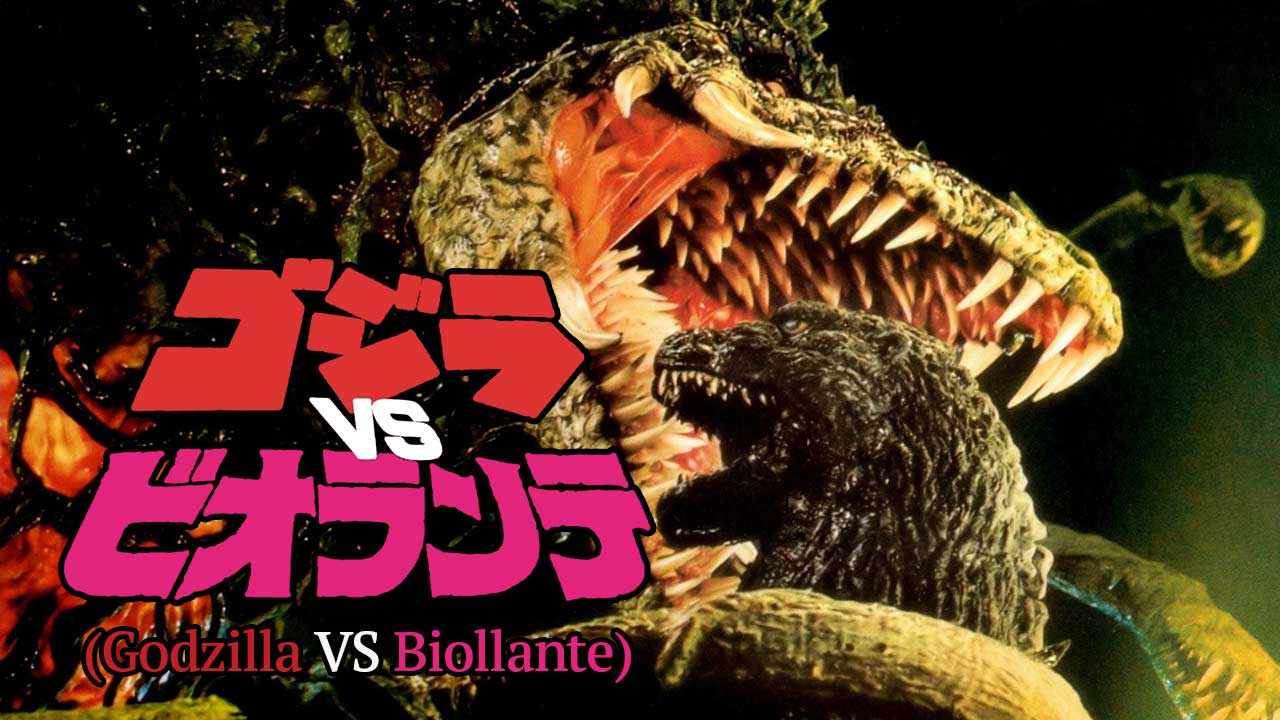
    Godzilla Vs. Biollante tends to be overlooked outside hardcore fans, which is a shame considering its uniqueness. This film not only boasts one of the series’ most original monsters, but it also features a strong human-centered storyline. Shiragami’s arc of trying to preserve his daughter echoes themes of grief and loss and offers commentary on genetic engineering. Remember that this film came out two years before Jurassic Park tackled similar issues of the dangers of science. Also, Biollante herself has a distinctive monster design, being a giant puppet instead of the tried-and-true guy-in-suit monster. From its initial appearance as a giant rose to a massive plant mass with a crocodile head, it’s truly memorable. While the limited mobility means we don’t get the knock-down drag-out fights of previous films, the battle is still unforgettable. Plus, Biollante is one of the only monsters that make Godzilla look small in comparison.

    Kōji Takahashi does a great job as the brilliant yet grief-stricken Dr. Shiragami trying to atone for his mistakes. Even if you disagree with his methods, you understand what he goes through in wanting to bring his daughter back. Another cast member worth mentioning is Megumi Odaka as Miki Saegusa, a psychic girl who becomes a recurring character. Another aspect that makes this entry stand out is establishing continuity with the previous films, which carries on throughout. Seeing how the world evolves to combat these new threats is exciting and makes you want to see what’s next. Like before, the scenes of the military fighting Godzilla are spectacular with its miniatures and guy-in-suit techniques. The Godzilla suit in this looks much more menacing and threatening than the admittedly goofy one in the last film. Unfortunately, the music sometimes lacks, trying to mix the original theme with fast-paced rock.

    As great as the human storyline is, it’s not without its flaws, namely how scattered it feels. The subplot with the Saradian agent comes and goes out of nowhere without any meaningful payoff. So many little subplots and side stories happen one after another that it’s hard to focus on what’s happening. Also, like the last film, this tries to philosophize Godzilla by asking who the real monster is, which is silly. Sure, the original explored themes of nuclear destruction in post-war Japan, but it was still a giant monster movie. The film takes a while to get going, but once it does, the final battle with Biollante is a show-stopper. Despite its flaws, this is still a unique and original Godzilla film that longtime fans and newcomers should enjoy. Overall, Godzilla Vs. Biollante is a hidden gem within the legendary monster’s historic franchise.


    Buy Godzilla Vs. Biollante from Amazon: https://amzn.to/428Peww.

    Disclosure: The above link is an affiliate link, which means that, at zero cost to you, I will earn a commission if you click through the link and finalize a purchase.

    [/et_pb_text][et_pb_code _builder_version=”4.27.4″ _module_preset=”default” hover_enabled=”0″ sticky_enabled=”0″]

    Where to watch Godzilla vs. Biollante (1989)

    data-api-key=”LMVDLdLSH5ZJnQ4FMGMgyJCB8cmGbfCV” data-object-type=”Movie” data-title=”Godzilla vs. Biollante” data-year=”1989″ data-theme=”light”>

    [/et_pb_code][/et_pb_column][/et_pb_row][/et_pb_section]
  • Godzilla x Kong: The New Empire (2024)

    Godzilla x Kong: The New Empire (2024)

    [et_pb_section fb_built=”1″ admin_label=”section” _builder_version=”4.16″ global_colors_info=”{}”][et_pb_row column_structure=”2_3,1_3″ admin_label=”row” _builder_version=”4.16″ background_size=”initial” background_position=”top_left” background_repeat=”repeat” global_colors_info=”{}”][et_pb_column type=”2_3″ _builder_version=”4.16″ custom_padding=”|||” global_colors_info=”{}” custom_padding__hover=”|||”][et_pb_text _builder_version=”4.24.2″ _module_preset=”default” global_colors_info=”{}”]Godzilla vs. Kong was a massive success, grossing $470 million worldwide against a budget of around $155 – 200 million. It was the 8th highest-grossing film of 2021, HBO Max’s most successful launch title, and a hit with critics. Naturally, with that kind of success, a sequel would follow, formally announced in March 2022. Adam Wingard agreed to direct this follow-up, with much of the last film’s cast and crew also returning. With a budget of $135 million, principal photography started in July 2022 around the Gold Coast, Queensland. Filming wrapped in November in Australia, and a year’s worth of post-production followed, with Alessandro Ongaro supervising the visual effects. Meanwhile, Toho released Godzilla Minus One, a financial and critical hit that earned an Oscar for Best Visual Effects. After premiering at Grauman’s Chinese Theater, Godzilla x Kong: The New Empire premiered in March 2024.

    [/et_pb_text][/et_pb_column][et_pb_column type=”1_3″ _builder_version=”4.16″ custom_padding=”|||” global_colors_info=”{}” custom_padding__hover=”|||”][et_pb_circle_counter title=”Rating” number=”70″ bar_bg_color=”#EDF000″ _builder_version=”4.24.2″ _module_preset=”default” global_colors_info=”{}”][/et_pb_circle_counter][/et_pb_column][/et_pb_row][et_pb_row _builder_version=”4.16″ _module_preset=”default” global_colors_info=”{}”][et_pb_column type=”4_4″ _builder_version=”4.16″ _module_preset=”default” global_colors_info=”{}”][et_pb_text _builder_version=”4.27.2″ _module_preset=”default” global_colors_info=”{}”]

    Synopsis

    Since the last movie, Kong has made Hollow Earth his home while Godzilla defends Earth from various Titans. All is well until a Monarch research station detects an unknown signal, which triggers Jia (Kaylee Hottle) to have hallucinations. Sensing that something’s wrong, Jia’s adopted mother, Dr. Ilene Andrews (Rebecca Hall), recruits Bernie Hayes (Brian Tyree Henry) for help. Alongside Titan vet Trapper (Dan Stevens), they travel to Hollow Earth to find the signal’s source and discover what’s happening. Meanwhile, Godzilla is spotted attacking nuclear power plants and absorbing their energy, possibly preparing for something big. Back in Hollow Earth, Kong discovers a group of giant apes living deep underground led by the tyrannical Skar King. It turns out that the Skar King plans to invade the surface with his apes and an ice-breathing Titan, Shimo. Kong and Godzilla must team up to save the world once again!


    Review

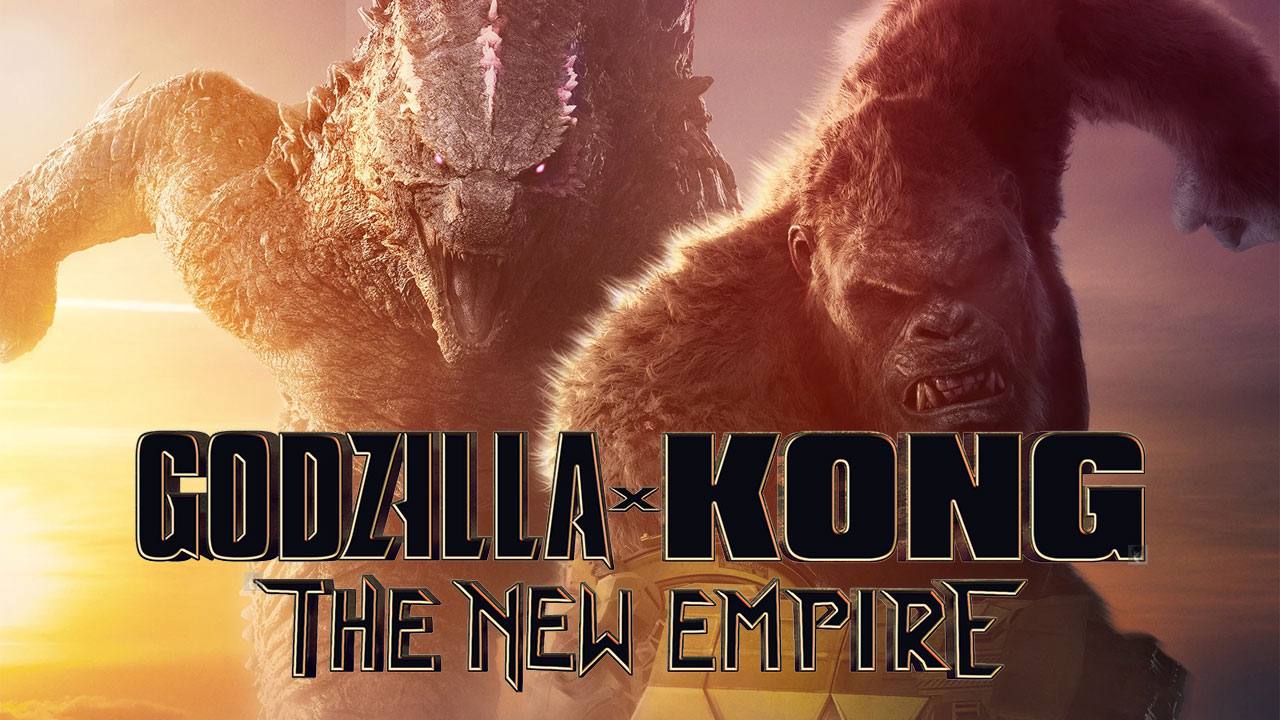
    While I wouldn’t call this movie unique or groundbreaking, Godzilla x Kong: The New Empire is at least entertaining. Honestly, entertaining is all this movie had to be, and it more or less succeeds at providing pure popcorn entertainment. Sure, this film isn’t as good as Godzilla Minus One, but it was never going to be, and that’s fine. As the last movie demonstrates, Adam Wingard knows what his audience wants and delivers on it tenfold. Admittedly, G-fans may be disappointed that Godzilla doesn’t get as much screen time as Kong, who’s more-or-less the central focus. Besides teaming up for the climax, this might as well be Kong: The New Empire with special guest star Godzilla. Granted, there are a few standout Godzilla moments, mostly him battling other monsters and even napping in the Colosseum. Seeing them team up to fight different monsters is all worth it.

    Like many other Kaiju movies, the human characters aren’t as significant as the monsters, but they’re at least well-acted. Rebecca Hall is the film’s emotional core and does a great job playing a sympathetic lead. Her scenes with Kaylee Hottle as her adopted daughter are funny and heartwarming, which helps ground the film’s reality. Brian Tyree Henry returns as the comic relief, and while his humor is hit-or-miss, he isn’t overly annoying or obnoxious. Dan Stevens, who starred in Wingard’s 2014 thriller The Guest, is also fun as the brash and arrogant Trapper. Aside from them, there’s not much else to discuss with the human cast since they’re just background noise. Admittedly, the smaller human cast is a welcome change from Godzilla vs. Kong, which had too many human characters. It shows that, sometimes, less is more, especially regarding extra human characters.

    Before writing this review, I decided to see what other critics were saying, and I’m wondering what they were expecting. Many complain that the film doesn’t explore deeper meanings or the implications of these monsters’ existence. Like I said earlier, this film would never explore any deeper meanings, and that’s fine. Not every movie needs to be a profound contemplation on life’s meaning or what being a giant ape means. Sometimes, you need a big, ridiculous, fun popcorn movie to escape from reality for two hours. While filmmakers should strive for more than surface-level entertainment, there’s nothing wrong with making pure escapism. I’m not saying this movie is a masterpiece that will sweep the Oscars, but it’s a fun watch. Overall, Godzilla x Kong: The New Empire falters in some aspects, but it’s a fun way to kill two hours.


    Buy Godzilla x Kong: The New Empire from Amazon: https://amzn.to/40q9Wc0.

    Disclosure: The above link is an affiliate link, which means that, at zero cost to you, I will earn a commission if you click through the link and finalize a purchase.

    [/et_pb_text][et_pb_code _builder_version=”4.27.4″ _module_preset=”default” hover_enabled=”0″ sticky_enabled=”0″]

    Where to watch Godzilla x Kong: The New Empire (2024)

    data-api-key=”LMVDLdLSH5ZJnQ4FMGMgyJCB8cmGbfCV” data-object-type=”Movie” data-title=”Godzilla x Kong: The New Empire” data-year=”2024″ data-theme=”light”>

    [/et_pb_code][/et_pb_column][/et_pb_row][/et_pb_section]

  • The Return of Godzilla (1984)

    The Return of Godzilla (1984)

    [et_pb_section fb_built=”1″ admin_label=”section” _builder_version=”4.16″ global_colors_info=”{}”][et_pb_row column_structure=”2_3,1_3″ admin_label=”row” _builder_version=”4.16″ background_size=”initial” background_position=”top_left” background_repeat=”repeat” global_colors_info=”{}”][et_pb_column type=”2_3″ _builder_version=”4.16″ custom_padding=”|||” global_colors_info=”{}” custom_padding__hover=”|||”][et_pb_text _builder_version=”4.24.0″ _module_preset=”default” global_colors_info=”{}”]Despite Toho’s best efforts, Terror of Mechagodzilla failed to make its budget at the box office despite receiving decent reviews. Towards the end of the 70s, producer Tomoyuki Tanaka started working on a franchise reboot that harkened to the original. Tanaka recognized that the decision to make Godzilla more kid-friendly and heroic was a mistake and wanted to correct that. Ishiro Honda was approached to direct, but he declined, so in his place, his assistant Koji Hashimoto was hired. Teruyoshi Nakano, who directed the special effects for several of the previous Godzilla movies, was brought back for this installment. New World Pictures acquired the North American distribution rights, redubbing the film and adding new scenes with Raymond Burr. The Japanese version was released as Godzilla in late 1984, though it was also known as The Return of Godzilla. The American edit came out the following year as Godzilla 1985.

    [/et_pb_text][/et_pb_column][et_pb_column type=”1_3″ _builder_version=”4.16″ custom_padding=”|||” global_colors_info=”{}” custom_padding__hover=”|||”][et_pb_circle_counter title=”Rating” number=”85″ bar_bg_color=”#7CDA24″ _builder_version=”4.24.0″ _module_preset=”default” global_colors_info=”{}”][/et_pb_circle_counter][/et_pb_column][/et_pb_row][et_pb_row _builder_version=”4.16″ _module_preset=”default” global_colors_info=”{}”][et_pb_column type=”4_4″ _builder_version=”4.16″ _module_preset=”default” global_colors_info=”{}”][et_pb_text _builder_version=”4.27.2″ _module_preset=”default” global_colors_info=”{}”]

    Synopsis

    Off the coast of Daikoku Island, a fishing boat struggles against the tides when some giant monster emerges to attack. Days later, the ship is found by reporter Goro Maki (Ken Tanaka), who finds all the occupants dead except one. The lone survivor, Naoko Okumura (Yasuko Sawaguchi), claims that Godzilla attacked the boat, but the government keeps the story secret. Meanwhile, Maki visits Professor Hayashida (Yosuke Natsuki) to learn more about Godzilla and meets Naoko’s sister Hiroshi (Shin Takuma). However, the situation escalates after a Soviet sub is destroyed near Japan, so the government reveals Godzilla’s return. Soon enough, Godzilla starts laying waste to Tokyo, so the military sends out their newest weapon, the Super X. While Hayashida tries using a homing signal to lure Godzilla into a volcano, the Soviets launch a nuke toward Japan. Will Godzilla be defeated, or will Tokyo be obliterated?


    Review

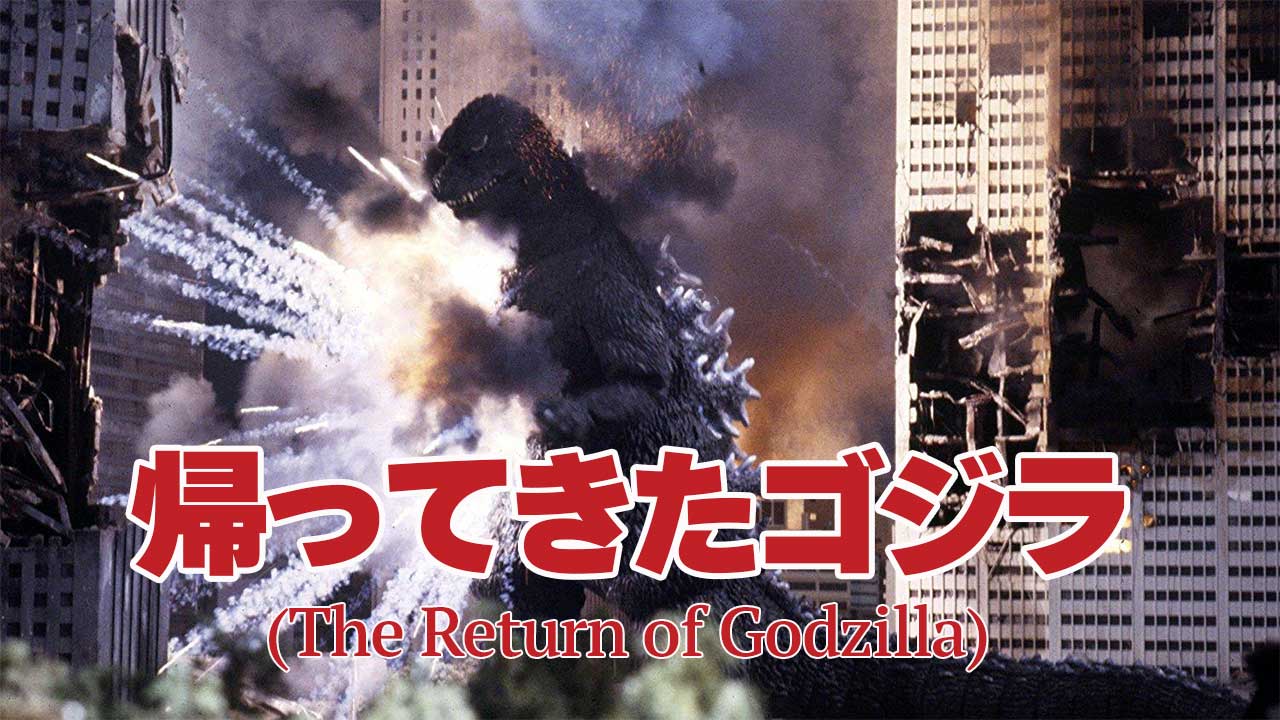
    The Return of Godzilla was an attempt by Toho to make Godzilla scary again, and it succeeded. Throughout the movie, every scene has this gloomy, almost apocalyptic feel, even during the daytime. Koji Hashimoto does a great job at capturing this look and staging the destruction sequences once Godzilla shows up. The Godzilla suit designed by Teruyoshi Nakano is a vast improvement over the ones used in past movies. Towards the end of the Showa era, the suits looked like they were falling apart and too big to wear. The suit seems slimmer, has well-defined features, and resembles a modern version of the 1954 monster. Also, the miniature and model work and some fantastic explosions are impressive, making for some fantastic scenes of destruction. For a 40-year-old movie, the effects hold up surprisingly well, even if a bit outdated. Still, you can’t beat the classics.

    Some longtime fans might be disappointed that this doesn’t have the goofy charm of the late Showa era. I prefer this film’s darker, more serious tone, though some humor is sprinkled in if you prefer that. During Godzilla’s rampage, a bum wanders the city streets and comments on the destruction, providing the film’s comic relief. Supposedly, New World wanted to make the movie more of a comedy during their edits, but Raymond Burr objected. Considering the film’s darker tone, I’m unsure how you could’ve made this a comedy unless you tried hard. The Japanese cast all do a solid job, and the movie succeeds at making you care about the human characters. Some references to the Cold War further date the film, but it works in context, considering Godzilla represents nuclear destruction. It also seems like a natural progression from the original’s post-WWII setting.

    If I had any complaints, they’d be minor, as I feel this is one of the best entries. For as good as the effects are, a few close-up shots of Godzilla look a bit goofy. Side views look menacing, wildly when he roars, but he looks like The Cookie Monster from the front. Also, the pacing sometimes drags, especially in the more human-focused scenes, though it’s not enough to ruin the experience. While it’s disappointing that Godzilla doesn’t fight another monster, focusing solely on Godzilla was the right call. While I haven’t watched the Godzilla 1985 version, I can say that this is an excellent reintroduction to the character. Though the 1954 original is better, this is still a great starting point if you want to get into Godzilla. Overall, The Return of Godzilla succeeds at reminding audiences why Godzilla is the King of the Monsters!


    Buy The Return of Godzilla from Amazon: https://amzn.to/4hwmmoM.

    Disclosure: The above link is an affiliate link, which means that, at zero cost to you, I will earn a commission if you click through the link and finalize a purchase.

    [/et_pb_text][et_pb_code _builder_version=”4.27.4″ _module_preset=”default” hover_enabled=”0″ global_colors_info=”{}” sticky_enabled=”0″]

    Where to watch The Return of Godzilla (1984)

    data-api-key=”LMVDLdLSH5ZJnQ4FMGMgyJCB8cmGbfCV” data-object-type=”Movie” data-title=”The Return of Godzilla” data-year=”1984″ data-theme=”light”>

    [/et_pb_code][/et_pb_column][/et_pb_row][/et_pb_section]
  • Godzilla Minus One (2023)

    Godzilla Minus One (2023)

    [et_pb_section fb_built=”1″ admin_label=”section” _builder_version=”4.16″ global_colors_info=”{}”][et_pb_row column_structure=”2_3,1_3″ admin_label=”row” _builder_version=”4.16″ background_size=”initial” background_position=”top_left” background_repeat=”repeat” global_colors_info=”{}”][et_pb_column type=”2_3″ _builder_version=”4.16″ custom_padding=”|||” global_colors_info=”{}” custom_padding__hover=”|||”][et_pb_text _builder_version=”4.23.4″ _module_preset=”default” global_colors_info=”{}”]While 2016’s Shin Godzilla was a critical and commercial hit, Toho could only release another Godzilla film after some years. This was due to their agreement with Legendary Pictures not to make a Godzilla film alongside them. Meanwhile, Toho set up an office to discuss plans for the Godzilla series and hired Takashi Yamazaki to direct. For a dream sequence, Yamazaki had previously incorporated Godzilla in his 2007 film Always: Sunset on Third Street 2. Many news outlets reported that the budget was $15 million, less than 10% of Godzilla vs. Kong’s $155-200 million budget. Yamazaki set the film in post-WWII Japan and took influence from Godzilla, Mothra, and King Ghidorah: Giant Monsters All-Out Attack. The movie was shot in Honshu’s Kantō and Chūbu regions between March and June 2022, with effects by Shirogumi Inc. After its Japanese release in November, Godzilla Minus One hit American shores in December 2023.

    [/et_pb_text][/et_pb_column][et_pb_column type=”1_3″ _builder_version=”4.16″ custom_padding=”|||” global_colors_info=”{}” custom_padding__hover=”|||”][et_pb_circle_counter title=”Rating” number=”95″ bar_bg_color=”#7CDA24″ _builder_version=”4.23.4″ _module_preset=”default” global_colors_info=”{}”][/et_pb_circle_counter][/et_pb_column][/et_pb_row][et_pb_row _builder_version=”4.16″ _module_preset=”default” global_colors_info=”{}”][et_pb_column type=”4_4″ _builder_version=”4.16″ _module_preset=”default” global_colors_info=”{}”][et_pb_text _builder_version=”4.27.2″ _module_preset=”default” global_colors_info=”{}”]

    Synopsis

    Towards the end of WWII, kamikaze pilot Kōichi Shikishima (Ryunosuke Kamiki) flees his duties by flying to Odo Island. That night, he witnesses the entire base of technicians get wiped out by a giant dinosaur the locals call “Godzilla.” He returns home to find that his parents are dead, and his house was destroyed in the bombings. Kōichi inadvertently takes in Noriko Ōishi (Minami Hamabe), a local whose parents also died, and orphaned child Akiko (Sae Nagatani). While he tries to move on and works as a minesweeper, the dinosaur from before is mutated by atomic bombs. Now bigger and more powerful than ever, Godzilla makes his way to Ginza and goes on a rampage. In his wake, thousands are killed, including Noriko, and Kōichi swears revenge as the country struggles to rebuild. Will our heroes rise to take on this new threat, or will Japan be obliterated once again?


    Review

    In a time where we’re inundated with multi-million-dollar blockbusters with mediocre effects, along comes Godzilla Minus One to rival them. It says a lot when an under $15 million movie has better effects than The Flash, which had $300 million. Granted, $15 million isn’t a low budget, but it might as well be compared to today’s movies. While I generally prefer practical effects over CGI, I can’t deny that the digital effects in this movie are jaw-dropping. Sure, there’s a charm to the tried-and-true guys in rubber suits technique, but I’ll admit it wouldn’t have worked here. This is a much more serious, heartfelt, and emotional film on par with the original 1954 Godzilla. This is less of a kaiju movie and more of a human-focused drama featuring a kaiju. If you go into this expecting something like Godzilla vs. Kong, you will be disappointed.

    As much as I enjoyed that movie, this trumps Adam Wingard’s monster mash-up and then some. While that film had so many characters and subplots, this one keeps it simple and focuses on one central character. It helps that the human storyline is captivating, and the characters are well-developed to the point where they feel real. You care about the guilt that Kōichi feels for seemingly betraying his country and letting so many people die. Additionally, Takashi Yamazaki does an excellent job of giving the film a somber, almost apocalyptic feel. Seeing the characters wander the ruined streets of Tokyo after the bombings and Godzilla’s rampage adds to the tone. Like the Ishirō Honda original, this one depicts Godzilla as a force of destruction that wreaks havoc without mercy. As incredible as it is watching Godzilla fire his atomic breath, you also dread what he will do.

    At the heart of the film is a story of redemption, recovery, and people coming together to overcome significant obstacles. You could take Godzilla out of the movie, and it would still work as a drama about post-war Japan. That said, this film also celebrates the 70-year legacy of Godzilla, even including snippets of Akira Ifukube’s original score. If I had any criticisms, I admit that the characters can come off a bit one-note and stereotypical. Also, the acting can seem overdramatic and overly emotional, but it fits the film’s tone. Honestly, there is so much about this movie that works that it’s hard to find anything worth criticizing. Even if you’ve never seen a Godzilla movie, you’ll get something out of this and maybe want to see more. Overall, Godzilla Minus One should be a wake-up call for Hollywood to improve and put more care into their movies.


    Buy Godzilla: Minus One from Amazon: https://amzn.to/3CbWSNh.

    Disclosure: The above link is an affiliate link, which means that, at zero cost to you, I will earn a commission if you click through the link and finalize a purchase.

    [/et_pb_text][et_pb_code _builder_version=”4.27.4″ _module_preset=”default” hover_enabled=”0″ global_colors_info=”{}” sticky_enabled=”0″]

    Where to watch Godzilla Minus One (2023)

    data-api-key=”LMVDLdLSH5ZJnQ4FMGMgyJCB8cmGbfCV” data-url-path=”/us/movie/godzilla-minus-one”>

    [/et_pb_code][/et_pb_column][/et_pb_row][/et_pb_section]
  • Terror of Mechagodzilla (1975)

    Terror of Mechagodzilla (1975)

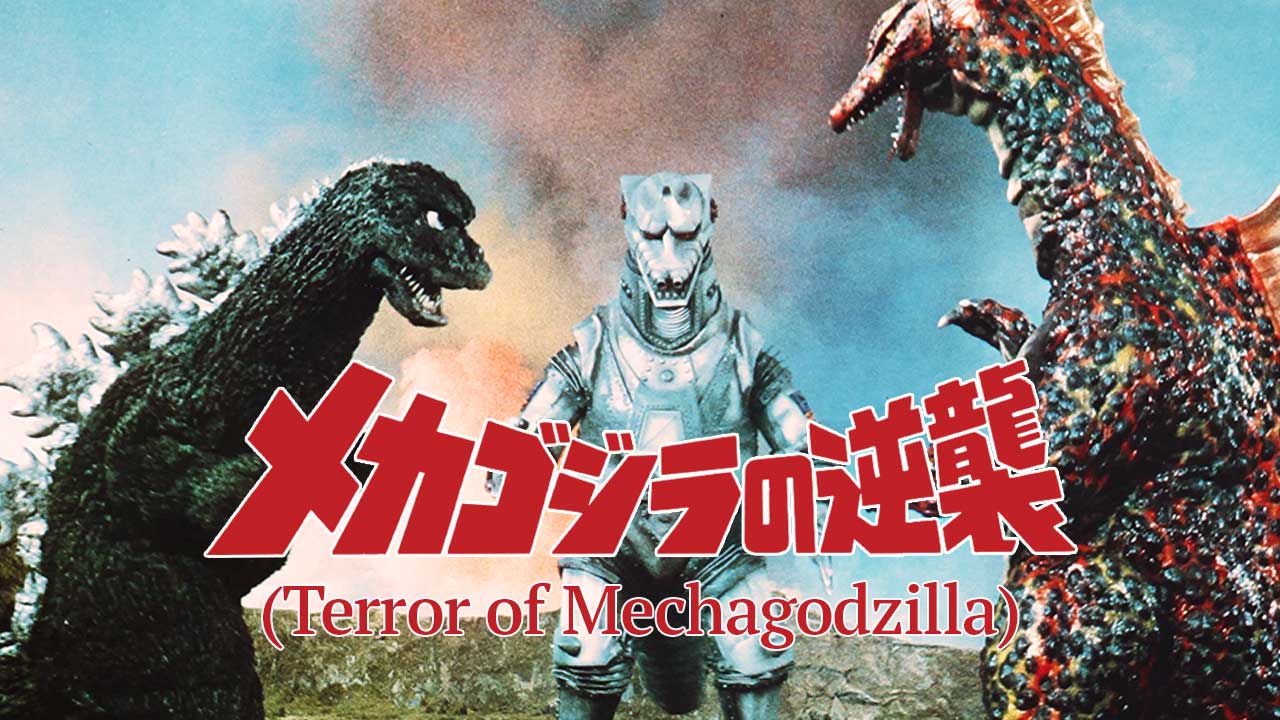
    [et_pb_section fb_built=”1″ admin_label=”section” _builder_version=”4.16″ global_colors_info=”{}”][et_pb_row column_structure=”2_3,1_3″ admin_label=”row” _builder_version=”4.16″ background_size=”initial” background_position=”top_left” background_repeat=”repeat” global_colors_info=”{}”][et_pb_column type=”2_3″ _builder_version=”4.16″ custom_padding=”|||” global_colors_info=”{}” custom_padding__hover=”|||”][et_pb_text _builder_version=”4.21.2″ _module_preset=”default” global_colors_info=”{}”]

    Months after the release of Godzilla vs. Mechagodzilla, assistant producer Kenji Tokoro selected Yukiko Takayama to write the next film. Having won a writing contest held by Toho, Takayama had to submit three subsequent rewrites before getting final approval. Jun Fukuda was asked to return to direct, but he refused, saying he had enough of the series. There were rumors that Godzilla vs. Hedorah director Yoshimitsu Banno was considered, but series veteran Ishiro Honda was eventually hired. Having been absent from the series since 1969’s All Monsters Attack, this was Honda’s final film before retiring. This was meant to be darker than the previous entries in the series, which were more lighthearted and goofy. The film was released in March 1975 as Terror of Mechagodzilla in Japan, while the US got it years later. Independent distributor Bob Conn Enterprises released the movie as The Terror of Mechagodzilla in March 1978.

    [/et_pb_text][/et_pb_column][et_pb_column type=”1_3″ _builder_version=”4.16″ custom_padding=”|||” global_colors_info=”{}” custom_padding__hover=”|||”][et_pb_circle_counter title=”Rating” number=”70″ bar_bg_color=”#EDF000″ _builder_version=”4.21.2″ _module_preset=”default” global_colors_info=”{}”][/et_pb_circle_counter][/et_pb_column][/et_pb_row][et_pb_row _builder_version=”4.16″ _module_preset=”default” global_colors_info=”{}”][et_pb_column type=”4_4″ _builder_version=”4.16″ _module_preset=”default” global_colors_info=”{}”][et_pb_text _builder_version=”4.22.0″ _module_preset=”default” hover_enabled=”0″ global_colors_info=”{}” sticky_enabled=”0″]

    Synopsis

    After the last film, Interpol agents take a submarine to search the ocean depths for the remains of Mechagodzilla. Unfortunately, the sub is attacked by a giant sea monster named Titanosaurus, leading to Interpol starting an investigation. They enlist the aid of marine biologist Akira Ichinose (Katsuhiko Sasaki), who tracks down where Titanosaurus came from. It’s revealed that Titanosaurus is controlled by reclusive scientist Dr. Shinzo Mafune (Akihiko Hirata), who’s allied with The Simeons. Under the leadership of Mugal (Gorō Mutsumi), Mafune is helping the aliens rebuild Mechagodzilla so they can wipe out humanity. Also, Mafune has a daughter named Katsura (Tomoko Ai), who is revealed to be a cyborg with Mechagodzilla’s controller implanted. As Interpol and the army try taking down Titanosaurus and Mechagodzilla, Godzilla arrives to do battle once again. Like the last film, it’s a two-on-one fight, except Godzilla is alone this time.


    Review

    It’s a shame the Showa era of Godzilla movies had to end with Terror of Mechagozilla because it’s not bad. This was Toho’s attempt at something more serious after years of pandering to kids, and I think they did ok. While it does have the same alien invader plot we’ve seen in other installments, it’s not nearly as ridiculous here. Also, Dr. Mafune’s backstory of a disgraced scientist shunned by society is handled well and makes him sympathetic. Sure, Akihiko Hirata’s performance is somewhat over-the-top, and he’s given a bad wig to wear, but it doesn’t ruin anything. It’s also nice that this film is a direct sequel to the last one, whereas the others were loosely connected. Ishiro Honda’s direction is top-notch, and Akira Ifukube’s score fits the somewhat darker tone of the movie well. Plus, it has one of Godzilla’s most awesome introductions.

    As for the monsters, Mechagodzilla is just as cool as before, even if there’s nothing new to him. Titanosaurus is one of Godzilla’s most interesting-looking monsters, but his roar can sometimes be grating, if not laughable. Like many Godzilla movies from this period, it takes a while to get going, but the fight scenes are entertaining. Unfortunately, they’re a step down from how wild and crazy the fights in the last movie were. Godzilla vs. Mechagodzilla had that campy, Saturday matinee feel of other late Showa movies, but it worked there. I’m not saying the film should’ve been goofier, but the fights should’ve matched the last film’s energy. While it’s not great, it’s easily one of the better films from this era, despite being the last one. Overall, Terror of Mechagodzilla isn’t as fun as the last one, but it’s a decent effort.


    Buy Terror of Mechagodzilla from Amazon: https://amzn.to/3DUqEDG.

    Disclosure: The above link is an affiliate link, which means that, at zero cost to you, I will earn a commission if you click through the link and finalize a purchase.

    [/et_pb_text][/et_pb_column][/et_pb_row][/et_pb_section]
  • Godzilla vs. Mechagodzilla (1974)

    Godzilla vs. Mechagodzilla (1974)

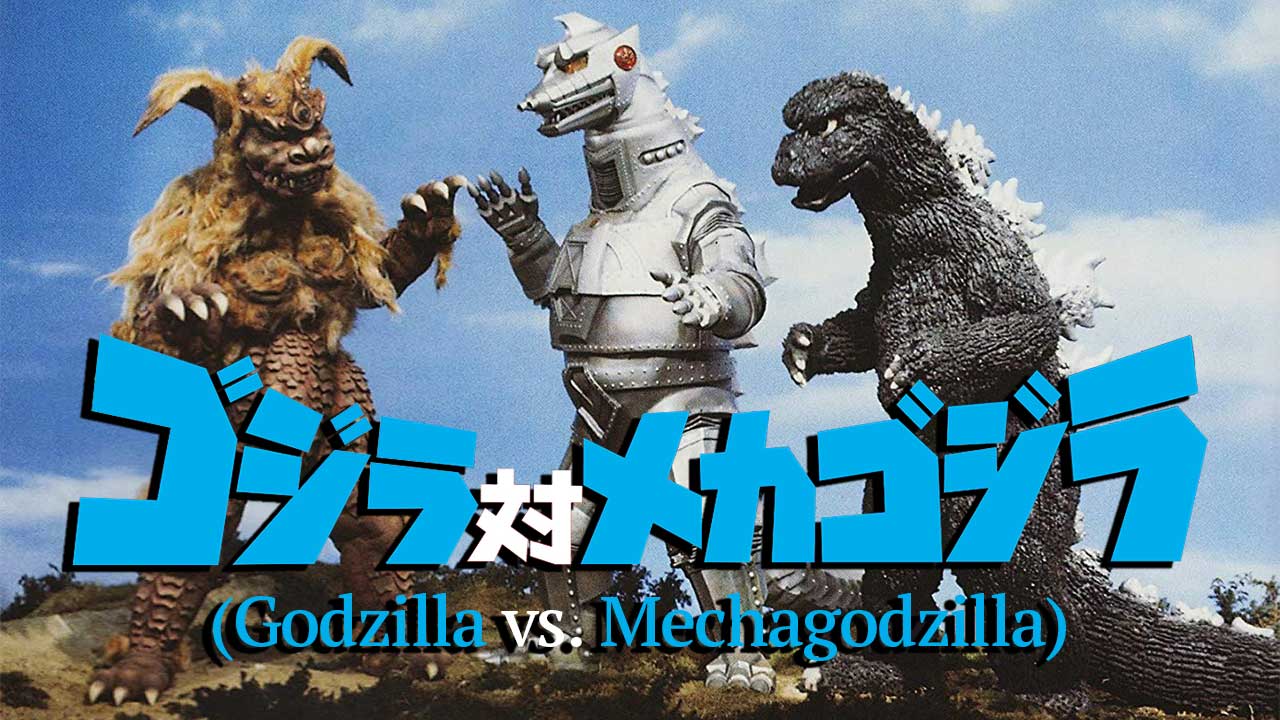
    [et_pb_section fb_built=”1″ admin_label=”section” _builder_version=”4.16″ global_colors_info=”{}”][et_pb_row column_structure=”2_3,1_3″ admin_label=”row” _builder_version=”4.16″ background_size=”initial” background_position=”top_left” background_repeat=”repeat” global_colors_info=”{}”][et_pb_column type=”2_3″ _builder_version=”4.16″ custom_padding=”|||” global_colors_info=”{}” custom_padding__hover=”|||”][et_pb_text _builder_version=”4.21.0″ _module_preset=”default” global_colors_info=”{}”]1973’s Godzilla vs. Megalon was an all-time low for the series, selling less than one million tickets in Japan. Despite the declining popularity, producer Tomoyuki Tanaka still saw some potential in keeping the series going. While staying in Okinawa, Tanaka felt that the Pacific island would make for an excellent setting for a Godzilla movie. With the growing popularity of giant robots in Japanese media, Toho decided to pit Godzilla against a robotic enemy. Series regular Jun Fukuda returned to direct, and the cast featured returning actors Akihiko Hirata, Hiroshi Koizumi, and Kenji Sahara. While the previous films appealed more to kids, Toho made this entry with nostalgic audiences in mind. In March 1974, Godzilla vs. Mechagodzilla roared onto Japanese screens, followed by a US release in 1977. In America, the film was released as Godzilla vs. the Bionic Monster and Godzilla vs. the Cosmic Monster.

    [/et_pb_text][/et_pb_column][et_pb_column type=”1_3″ _builder_version=”4.16″ custom_padding=”|||” global_colors_info=”{}” custom_padding__hover=”|||”][et_pb_circle_counter title=”Rating” number=”80″ bar_bg_color=”#7CDA24″ _builder_version=”4.21.0″ _module_preset=”default” global_colors_info=”{}”][/et_pb_circle_counter][/et_pb_column][/et_pb_row][et_pb_row _builder_version=”4.16″ _module_preset=”default” global_colors_info=”{}”][et_pb_column type=”4_4″ _builder_version=”4.16″ _module_preset=”default” global_colors_info=”{}”][et_pb_text _builder_version=”4.27.2″ _module_preset=”default” hover_enabled=”0″ global_colors_info=”{}” sticky_enabled=”0″]

    Synopsis

    On Okinawa, Princess Nami (Beru-Bera Lin) has a prophecy that a giant monster will destroy the city. Meanwhile, Masahiko Shimizu (Kazuya Aoyama) discovers a new type of metal and has Professor Hideto Miyajima (Akihiko Hirata) examine it. Elsewhere, Godzilla emerges from Mt. Fuji, goes on a rampage, and fights Anguirus, who chips away Godzilla’s skin, revealing metal. Later, the real Godzilla shows up, revealing the imposter as Mechagodzilla, a giant robot duplicate with advanced weaponry. Miyajima determines that Mechagodzilla is made of the same strange metal, which turns out to be “space titanium.” Our heroes are confronted by a group of ape-like aliens led by Kuronuma (Gorō Mutsumi), who controls Mechagodzilla. To aid in the fight, Nami summons the guardian monster, King Caesar, to team up with Godzilla. As the monsters battle, our heroes must stop the aliens from using their advanced technology to rule the world!


    Review

    After several underwhelming entries in the Showa Era, Godzilla vs. Mechagodzilla is a godsend and a refreshing change of pace. Sure, the film has that campy Saturday matinee feel like the earlier ones, but it’s done much better here. This film doesn’t use any stock footage from previous movies to compensate for the lack of budget. Also, there’s no annoying child character added in an attempt to further appeal to kids, which is a big plus. Of Godzilla’s many adversaries, Mechagodzilla is one of the most memorable, with his array of missiles, rainbow lasers, and forcefield. Masaru Sato’s score perfectly complements Mechagodzilla, having a vibrant, jazzy feel that instantly sticks in your mind. His theme more than makes up for some of the other music cues, which sound ill-fittingly lighthearted and whimsical. Plus, there’s the song Nami sings to awaken King Caesar, which goes on for what feels like forever.

    Speaking of King Caesar, he’s one of Toho’s most unique kaiju, having been inspired by Chinese legends. It’s a shame he didn’t return until Godzilla: Final Wars because his tag-team match with Godzilla against Mechagodzilla is entertaining. It’s a visual onslaught of lasers, explosions, WWE-style smackdowns, and other crazy stuff that makes the film worth watching. Regarding the human plot, it’s an odd mix of a sci-fi movie and a spy thriller with some mysticism. Unlike the human stories in other Godzilla films, this one is more engaging and works with the monster fights well. It’s also lovely to see several actors from previous kaiju films return for this one, and they’re all great. Yes, this movie is goofy and reuses elements from other films, but it’s still an entertaining thrill ride. Overall, Godzilla vs. Mechagodzilla ranks as one of the best films of the Showa era.


    Buy Godzilla vs. Mechagodzilla from Amazon: https://amzn.to/4f7RrxC.

    Disclosure: The above link is an affiliate link, which means that, at zero cost to you, I will earn a commission if you click through the link and finalize a purchase.

    [/et_pb_text][/et_pb_column][/et_pb_row][/et_pb_section]
  • Godzilla vs. Megalon (1973)

    Godzilla vs. Megalon (1973)

    [et_pb_section fb_built=”1″ admin_label=”section” _builder_version=”4.16″ global_colors_info=”{}”][et_pb_row column_structure=”2_3,1_3″ admin_label=”row” _builder_version=”4.16″ background_size=”initial” background_position=”top_left” background_repeat=”repeat” global_colors_info=”{}”][et_pb_column type=”2_3″ _builder_version=”4.16″ custom_padding=”|||” global_colors_info=”{}” custom_padding__hover=”|||”][et_pb_text _builder_version=”4.19.5″ _module_preset=”default” hover_enabled=”0″ global_colors_info=”{}” sticky_enabled=”0″]

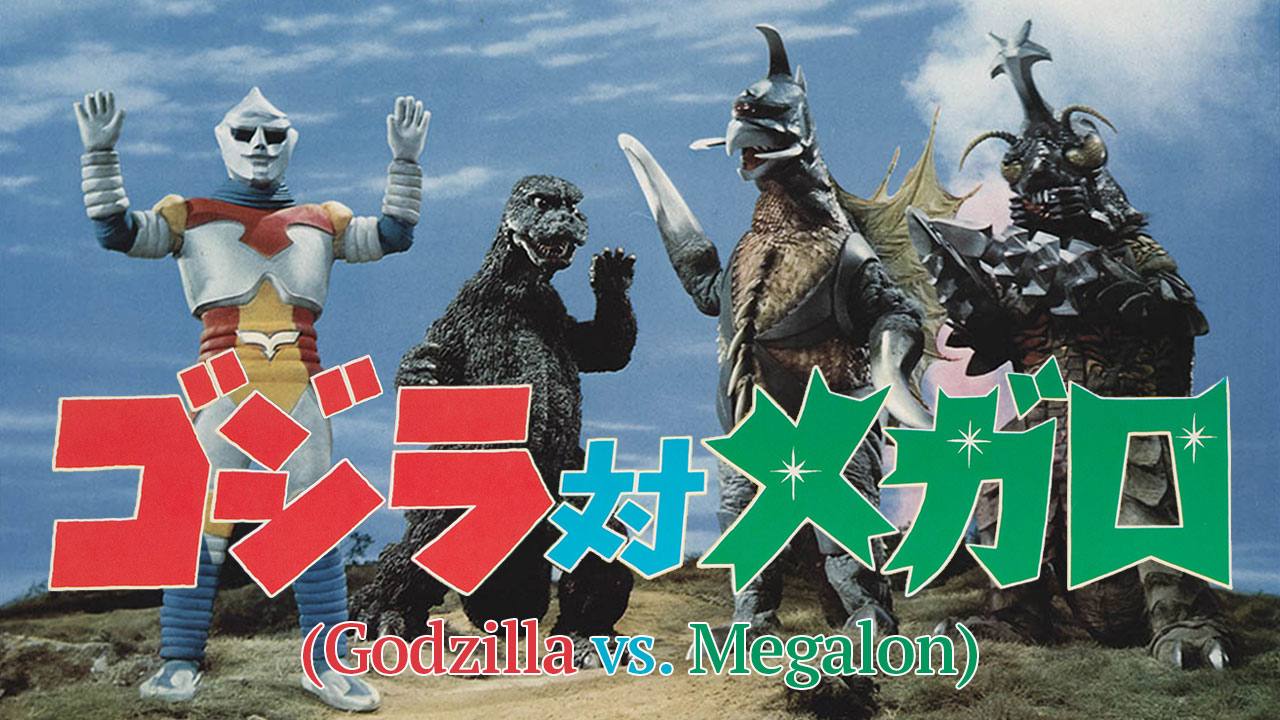
    While working on All Monsters Attack, the original idea for the antagonist monster was a giant bug called Gebara. Eventually, Gebara became a giant cockroach named Megalon for a treatment called Godzilla vs. the Space Monsters: Earth Defense Directive. The proposal would have Megalon pair with Gigan and King Ghidorah to fight against Godzilla, Anguirus, and newcomer Majin Tuol. While Gigan made the final cut, Ghidorah, Anguirus, and Majin Tuol were replaced by a robot superhero, Jet Jaguar. Jet Jaguar resulted from a contest that Toho held for kids to design superheroes for future projects. By this point, the series was on its last legs, so the studio had to cut costs and rush production. After a three-week shoot, Godzilla vs. Megalon premiered in Japan in 1973, followed by a US release in 1976. Over the years, this became one of the most well-known kaiju films in the US.

    [/et_pb_text][/et_pb_column][et_pb_column type=”1_3″ _builder_version=”4.16″ custom_padding=”|||” global_colors_info=”{}” custom_padding__hover=”|||”][et_pb_circle_counter title=”Rating” number=”50″ bar_bg_color=”#E09900″ _builder_version=”4.19.5″ _module_preset=”default” global_colors_info=”{}”][/et_pb_circle_counter][/et_pb_column][/et_pb_row][et_pb_row _builder_version=”4.16″ _module_preset=”default” global_colors_info=”{}”][et_pb_column type=”4_4″ _builder_version=”4.16″ _module_preset=”default” global_colors_info=”{}”][et_pb_text _builder_version=”4.19.5″ _module_preset=”default” hover_enabled=”0″ global_colors_info=”{}” sticky_enabled=”0″]

    Synopsis

    Due to several nuclear tests near the Aleutians, Monster Island is severely damaged, but Godzilla escapes before it collapses. In addition, the citizens of an underground civilization called Seatopia aren’t too happy about the above-ground tests. In retaliation, the Seatopians send out their guardian monster Megalon to wreak havoc on Japan. Meanwhile, inventor Goro (Katsuhiko Sasaki), his friend Hiroshi (Yutaka Hayashi), and his little brother Rokuro (Hiroyuki Kawase) are ambushed. Goro and Hiroshi have been working on Jet Jaguar, a humanoid robot that the Seatopians want to guide Megalon. The Seatopians capture the three main characters, but they manage to escape and regain control of Jet Jaguar. They send out Jet Jaguar to get Godzilla’s help to fight Megalon, who is now fighting alongside Gigan. A massive kaiju tag-team rumble follows as Godzilla and Jet Jaguar fight against Megalon and Gigan.


    Review

    Godzilla vs. Megalon is often cited as one of the worst entries in the franchise, which isn’t entirely true. I’d argue that All Monsters Attack is the worst, but there is an argument to be made for this one. As the series progressed, you could see all the cost-saving measures Toho took to keep it going. There’s the overuse of stock footage, the flimsy suits, and the final battle being staged in an open field. Like the other late 60s/early 70s Showa era movies, this one once again was catered more toward kids. It’s especially apparent with the use of Jet Jaguar, obviously influenced by the likes of Ultraman and Kamen Rider. What’s even worse is that, for a Godzilla movie, Godzilla disappears for most of the film. It’s mainly about the humans evading the Seatopians and trying to reclaim Jet Jaguar.

    To give some credit, Megalon is one of the more interesting monsters in the series, with unique abilities. He can shoot lightning from his horn and spit bombs, which makes him one of Godzilla’s oddest but unique opponents. While most of the film’s effects-heavy scenes are stock footage, the sequence where Megalon destroys a dam is impressive. Of course, the film’s most infamous moment is when Godzilla performs a dropkick while sliding on his tail. It’s right up there with Godzilla using his atomic breath to fly in Godzilla vs. Hedorah for its ridiculousness. Unfortunately, these scenes can’t save the film’s otherwise mediocre quality in terms of the effects and the story. What’s worse is that this film cemented the West’s perception of Godzilla in general, so thanks for that. Overall, Godzilla vs. Megalon isn’t the worst, but it’s still another low point for the series.


    Buy Godzilla vs. Megalon on Amazon: https://amzn.to/3RDWY47.

    Disclosure: The above link is an affiliate link, which means that, at zero cost to you, I will earn a commission if you click through the link and finalize a purchase.

    [/et_pb_text][/et_pb_column][/et_pb_row][/et_pb_section]
  • Godzilla vs. Gigan (1972)

    Godzilla vs. Gigan (1972)

    [et_pb_section fb_built=”1″ admin_label=”section” _builder_version=”4.16″ global_colors_info=”{}”][et_pb_row column_structure=”2_3,1_3″ admin_label=”row” _builder_version=”4.16″ background_size=”initial” background_position=”top_left” background_repeat=”repeat” global_colors_info=”{}”][et_pb_column type=”2_3″ _builder_version=”4.16″ custom_padding=”|||” global_colors_info=”{}” custom_padding__hover=”|||”][et_pb_text _builder_version=”4.19.0″ _module_preset=”default” global_colors_info=”{}”]

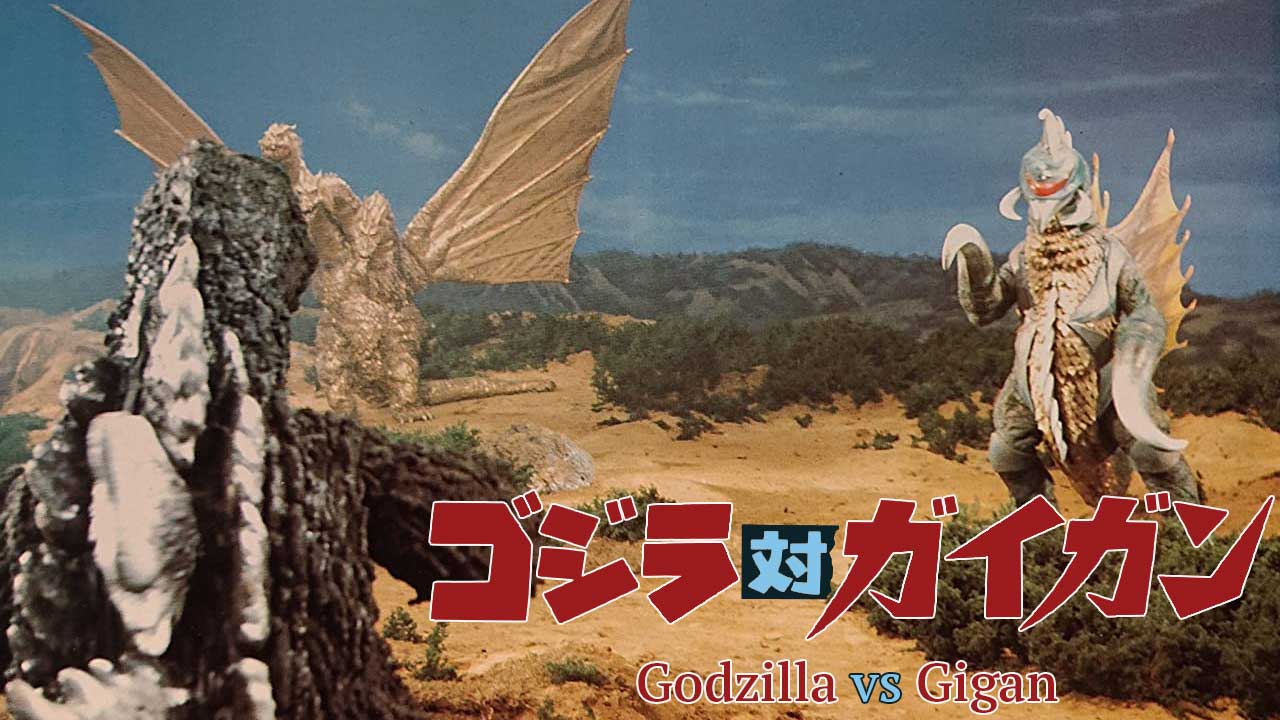
    After the disappointment of Godzilla vs. Hedorah, long-time producer Tomoyuki Tanaka wanted to take the series back to its roots. In the early 1970s, Ghidorah, the Three-Headed Monster and Invasion of Astro-Monster were rereleased and drew a large audience. From this, Tanaka decided the best thing was not to try new things but bring back fan-favorite King Ghidorah. Shinichi Sekizawa and Kaoru Mabuchi were hired to write two different drafts, stipulating that Ghidorah and a new monster, Gigan, were included. Jun Fukuda, who previously helmed Ebirah, Horror of the Deep and Son of Godzilla, was hired to direct. The filmmakers used tons of stock footage and music from previous entries and other Toho productions to keep costs down. This ended up being Haruo Nakajima’s last time donning the Godzilla suit, a role he had played since 1954. Godzilla vs. Gigan hit Japanese theaters in 1972 and American theaters in 1977.

    [/et_pb_text][/et_pb_column][et_pb_column type=”1_3″ _builder_version=”4.16″ custom_padding=”|||” global_colors_info=”{}” custom_padding__hover=”|||”][et_pb_circle_counter title=”Rating” number=”40″ bar_bg_color=”#E09900″ _builder_version=”4.19.0″ _module_preset=”default” global_colors_info=”{}”][/et_pb_circle_counter][/et_pb_column][/et_pb_row][et_pb_row _builder_version=”4.16″ _module_preset=”default” global_colors_info=”{}”][et_pb_column type=”4_4″ _builder_version=”4.16″ _module_preset=”default” global_colors_info=”{}”][et_pb_text _builder_version=”4.19.0″ _module_preset=”default” hover_enabled=”0″ global_colors_info=”{}” sticky_enabled=”0″]

    Synopsis

    Manga artist Gengo Kotaka (Hiroshi Ishikawa) has gotten a job as a concept artist for World Children’s Land. Unbeknownst to Gengo, the park is a front for a group of cockroach-like aliens from the M Space Hunter Nebula. Using the park’s centerpiece, a giant “Godzilla tower,” they take control of the monsters King Ghidorah and Gigan. When Gengo accidentally finds out about the plan, Godzilla and Anguirus hear the aliens’ signal and decide to investigate. Unfortunately, the Japanese Special Forces mistakenly attack Anguirus, but he reports back to Godzilla before it’s too late. Godzilla goes to fight King Ghidorah and Gigan while Gengo and his friends try to stop the aliens. Things go south for the King of the Monsters when the aliens use a laser in their tower against him. Will the cockroach-like aliens wipe out humanity, or will the monsters stop King Ghidorah and Gigan?


    Review

    Sadly, Godzilla vs. Gigan marks another low point for the franchise, though it’s at least better than All Monsters Attack. At least the monsters fight for real instead of being the dreams of a young boy getting bullied. Unfortunately, the monsters don’t even show up until the halfway mark, and even then, it’s incredibly underwhelming. You can tell the budgets got lower due to the overuse of stock footage and the monster suits falling apart. For instance, there’s a shot where King Ghidorah and Gigan fly around the Godzilla Tower, looking like parade floats. There are also moments where you can see the Godzilla suit falling apart, having been reused in three movies. Considering Tanaka decided to bring in King Ghidorah, it’s odd that Ghidorah ended up not even participating in the fight. This movie does a first in the series: it shows Godzilla bleeding.

    If there’s anything positive I can say about this movie, it’s the design of the titular monster: Gigan. Despite the overall quality, Gigan’s design is one of the more unique monster designs in the series. It’s a shame that Gigan’s first movie ended up being one of the worst in the series. The movie’s biggest flaw is that it’s dreadfully boring, even with cockroach aliens disguised as humans. The human actors do their best with the material they’re given, but they don’t have anything interesting to do. Usually, the human story is secondary in a Godzilla movie, but even then, this one is exceptionally forgettable. Even at 90 minutes, the film moves at a snail’s pace to get to anything exciting. Overall, Godzilla vs. Gigan is not the worst movie in the series, but it’s up there. Hopefully, things will improve from here.


    Buy Godzilla vs. Gigan on Amazon: https://amzn.to/3zKqwoG.

    Disclosure: The above link is an affiliate link, which means that, at zero cost to you, I will earn a commission if you click through the link and finalize a purchase.

    [/et_pb_text][/et_pb_column][/et_pb_row][/et_pb_section]
  • Godzilla vs. Hedorah (1971)

    Godzilla vs. Hedorah (1971)

    [et_pb_section fb_built=”1″ _builder_version=”4.14.6″ _module_preset=”default” global_colors_info=”{}”][et_pb_row column_structure=”2_3,1_3″ _builder_version=”4.14.6″ _module_preset=”default” global_colors_info=”{}”][et_pb_column type=”2_3″ _builder_version=”4.14.6″ _module_preset=”default” global_colors_info=”{}”][et_pb_text _builder_version=”4.14.7″ _module_preset=”default” hover_enabled=”0″ global_colors_info=”{}” sticky_enabled=”0″]

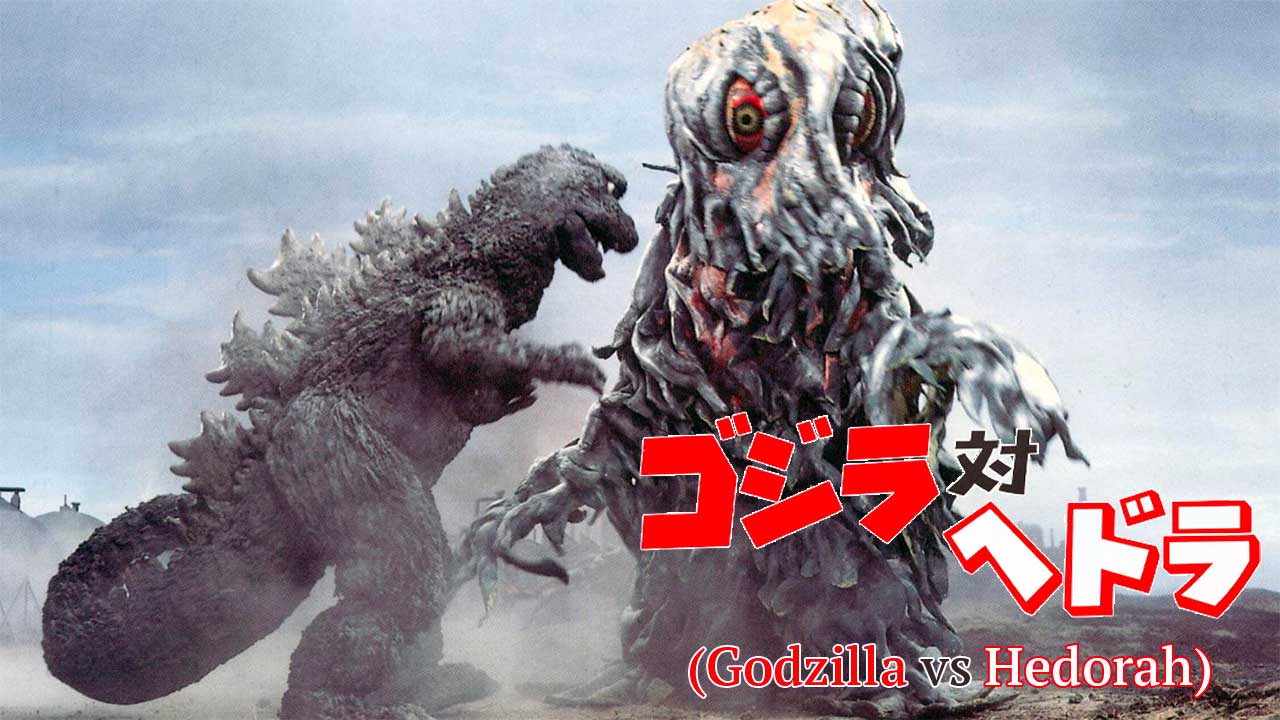
    Following the release of All Monsters Attack, director Ishiro Honda left Toho, and special effects creator Eiji Tsuburaya passed away. With nowhere left to go with the series, Toho decided to hire newcomer Yoshimitsu Banno to helm the next installment. After driving through cities like Yokkaichi and seeing all the pollution, Banno chose to add an environmental message. He previously worked with filmmaker Akira Kurosawa as an assistant director on Throne of Blood and The Hidden Fortress. Unfortunately, the studio gave Banno a meager budget to work with due to how the previous films performed financially. In addition, the film ran into some production problems, most notably one of the suit actors contracting appendicitis. Sadly, this would be the only Godzilla film Banno would helm since producer Tomoyuki Tanaka hated the finished product. In 1971, Godzilla vs. Hedorah, aka Godzilla vs. The Smog Monster, landed in Japanese theaters.

    [/et_pb_text][/et_pb_column][et_pb_column type=”1_3″ _builder_version=”4.14.6″ _module_preset=”default” global_colors_info=”{}”][et_pb_circle_counter title=”Rating” number=”50″ bar_bg_color=”#E09900″ _builder_version=”4.14.7″ _module_preset=”default” hover_enabled=”0″ global_colors_info=”{}” sticky_enabled=”0″][/et_pb_circle_counter][/et_pb_column][/et_pb_row][et_pb_row _builder_version=”4.14.6″ _module_preset=”default” global_colors_info=”{}”][et_pb_column type=”4_4″ _builder_version=”4.14.6″ _module_preset=”default” global_colors_info=”{}”][et_pb_text _builder_version=”4.14.7″ _module_preset=”default” hover_enabled=”0″ global_colors_info=”{}” sticky_enabled=”0″]

    Synopsis

    A small tadpole-like creature has been cited feeding off Japan’s pollution and growing into an enormous sea monster. Dr. Toru Yano (Akira Yamauchi) and his young son Ken Yano (Hiroyuki Kawase) narrowly survive an attack from the creature. Ken insists that Godzilla will save them from the pollution-spewing horror, which the public dubs “Hedorah” after its reveal. Soon enough, Godzilla arrives to do battle with Hedorah, quickly taking down the sludge creature and forcing it to retreat. Unfortunately, Hedorah soon grows to an even larger size and causes several people to die from its poisonous fumes. A group decides to throw a party on Mt. Fuji, thinking the world’s ending, though Godzilla and Hedorah soon arrive. While Godzilla puts up a good fight, Hedorah soon overpowers him and tries drowning him in toxic sludge. Will Godzilla stop this gross horror, or will Hedorah consume the earth in its poisonous gases?


    Review

    Even by Showa era standards, Godzilla vs. Hedorah is one of the strangest entries to date, and that’s saying something. Considering that Banno wanted to showcase the horrors of pollution, he certainly succeeded at showing how gross it is. Hedorah is undoubtedly one of the more unique monsters Godzilla’s ever faced, taking multiple forms that get stronger over time. The movie also includes one of the more infamous moments of the series: Godzilla using his atomic breath to fly. This leads to one of the film’s biggest problems: it doesn’t seem to know who its audience is. There are plenty of goofy moments more in line with this era of films appealing to kids. However, there are also tons of nightmarish and trippy imagery that seem more suited for adults. It’s like the film can’t decide if it wants to promote an anti-pollution message or be a 1970’s anti-drug PSA.

    Even Godzilla’s entrance is accompanied by music that sounds like what you’d hear when a cartoon character is drunk. There are also these weird animated segments sprinkled throughout the film that add to the tonal dissonance. Speaking of Godzilla, the suit works well for what’s required, and the Hedorah suit is also well-made. Unlike the last film, this one has plenty of monster fights that are easily the highlights, though they end quickly. Like other kaiju films from the time, the lead is a kid who seems to know more than he should. Thankfully, the kid is nowhere near as annoying as the child lead from the previous installment. If nothing else, this entry is worth a watch for just how downright weird it is. Overall, Godzilla vs. Hedorah is a mid-tier installment that’s most noteworthy for how bizarre everything is.


    Buy Godzilla vs. Hedorah on Amazon: https://amzn.to/32HTKr0.

    Disclosure: The above link is an affiliate link, which means that, at zero cost to you, I will earn a commission if you click through the link and finalize a purchase.

    [/et_pb_text][/et_pb_column][/et_pb_row][/et_pb_section]
  • All Monsters Attack (1969)

    All Monsters Attack (1969)

    [et_pb_section fb_built=”1″ _builder_version=”4.13.0″ _module_preset=”default” global_colors_info=”{}”][et_pb_row column_structure=”2_3,1_3″ _builder_version=”4.13.0″ _module_preset=”default” global_colors_info=”{}”][et_pb_column type=”2_3″ _builder_version=”4.13.0″ _module_preset=”default” global_colors_info=”{}”][et_pb_text _builder_version=”4.14.2″ _module_preset=”default” hover_enabled=”0″ global_colors_info=”{}” sticky_enabled=”0″]

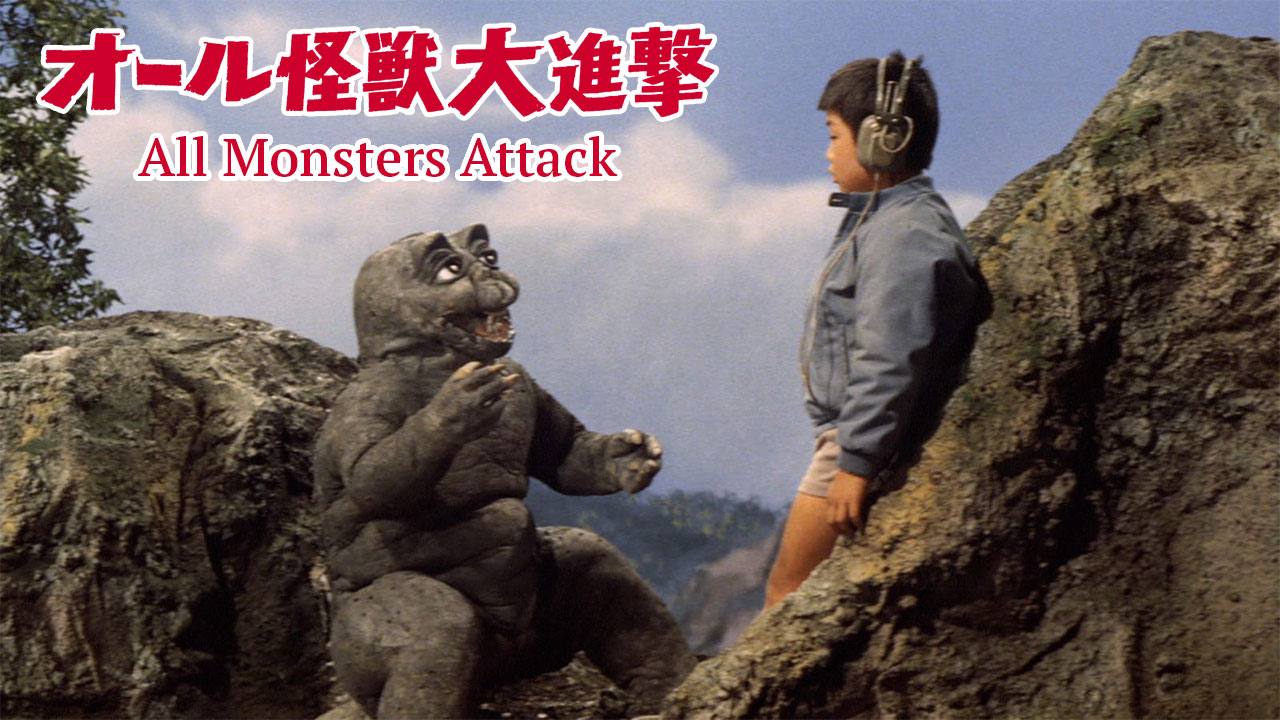
    While Destroy All Monsters was meant to be the last film in the series, Toho decided to continue forward. Around this time, rival studio Daiei Film was successful with their Gamera series of monster movies directed towards children. In response, Toho tried to target their films more towards a younger audience, such as with Son of Godzilla. Even then, Toho chose to lean further into appealing to kids by having their next entry centered around child characters. Ishiro Honda returned to direct this entry, which would play at the Toho Champion Festival, a program of children’s content. Unfortunately, the filmmakers resorted to stock footage from previous entries like Ebirah, Horror of the Deep due to budgetary constraints. Also, long-time special effects director Eiji Tsuburaya was in failing health, so Honda had to direct those sequences. In 1969, All Monsters Attack, also known as Godzilla’s Revenge, rampaged into theaters worldwide.

    [/et_pb_text][/et_pb_column][et_pb_column type=”1_3″ _builder_version=”4.13.0″ _module_preset=”default” global_colors_info=”{}”][et_pb_circle_counter title=”Rating” number=”40″ bar_bg_color=”#E09900″ _builder_version=”4.14.2″ _module_preset=”default” global_colors_info=”{}”][/et_pb_circle_counter][/et_pb_column][/et_pb_row][et_pb_row _builder_version=”4.13.0″ _module_preset=”default” global_colors_info=”{}”][et_pb_column type=”4_4″ _builder_version=”4.13.0″ _module_preset=”default” global_colors_info=”{}”][et_pb_text _builder_version=”4.14.2″ _module_preset=”default” hover_enabled=”0″ global_colors_info=”{}” sticky_enabled=”0″]

    Synopsis

    Young Ichiro Miki (Tomonori Yazaki) isn’t living in the best of circumstances, especially when his parents are away at work. On top of that, a group of schoolchildren led by Sanko Gabara (Junichi Ito) constantly bully him after school. To escape from his struggles, Ichiro dreams about being on Monster Island with Godzilla’s son Minilla (‘Little Man’ Machan). While on Monster Island, Ichiro and Minilla watch Godzilla fight off Ebirah, Kumonga, and three Kamacuras all at once. Meanwhile, bank robbers Sembayashi (Sachio Sakai) and Okuda (Kazuo Suzuki) are running from the law and end up kidnapping Ichiro. Back in the dreams, Ichiro’s bully manifests as a giant monster called Gabara, who attacks him and Minilla. Godzilla tries teaching Minilla to defend himself against Gabara, much like how Ichiro has to stand up to his bullies. In the end, our real-life bullies might be the actual kaiju.


    Review

    Most Godzilla fans say All Monsters Attack is the worst Showa era film, and it’s easy to see why. While the series never had the most incredible special effects, they could make the most out of very little. The fact that they had to use stock footage from previous entries shows how far they’ve gone downhill. It doesn’t help either that the original monster fights we get are not exciting and involve no city destruction. Once again, Minilla is obnoxious with his loud donkey noises, his exaggerated movements, and his weirdly high-pitched voice. I watched the original version, so I didn’t have to listen to whatever voice he had in the American dub. Thus far, Gabara is one of the weaker monsters than Godzilla’s other rivals, though he has his moments. Anytime he uses his electrocution abilities to shock Minilla, it’s pretty funny.

    Supposedly, this was one of Ishiro Honda’s favorite entries, which is hard to believe given his thoughts on previous entries. Considering that he liked mixing serious issues into a monster movie, it’s weird that he’d willingly make something so goofy. Here, it seems he wanted to throw in a message about the importance of family and standing up for yourself. I can see what Honda was going for, but I don’t think the execution worked quite as well. I will say that for a kid’s movie made in the 1960s, it’s not as condescending as many others. Still, I can’t help but feel like this was a major stepdown compared to the dark and grim 1954 Godzilla. Thankfully, the film only clocks in at roughly 70 minutes, but it will feel like the longest 70 minutes ever. Overall, there are worse kaiju films, but All Monsters Attack still isn’t good.


    Buy All Monsters Attack on Amazon: https://amzn.to/3EZzNt9.

    [/et_pb_text][/et_pb_column][/et_pb_row][/et_pb_section]