Facebook

FilmNerd

Category: Kaiju

  • King Kong vs. Godzilla (1962)

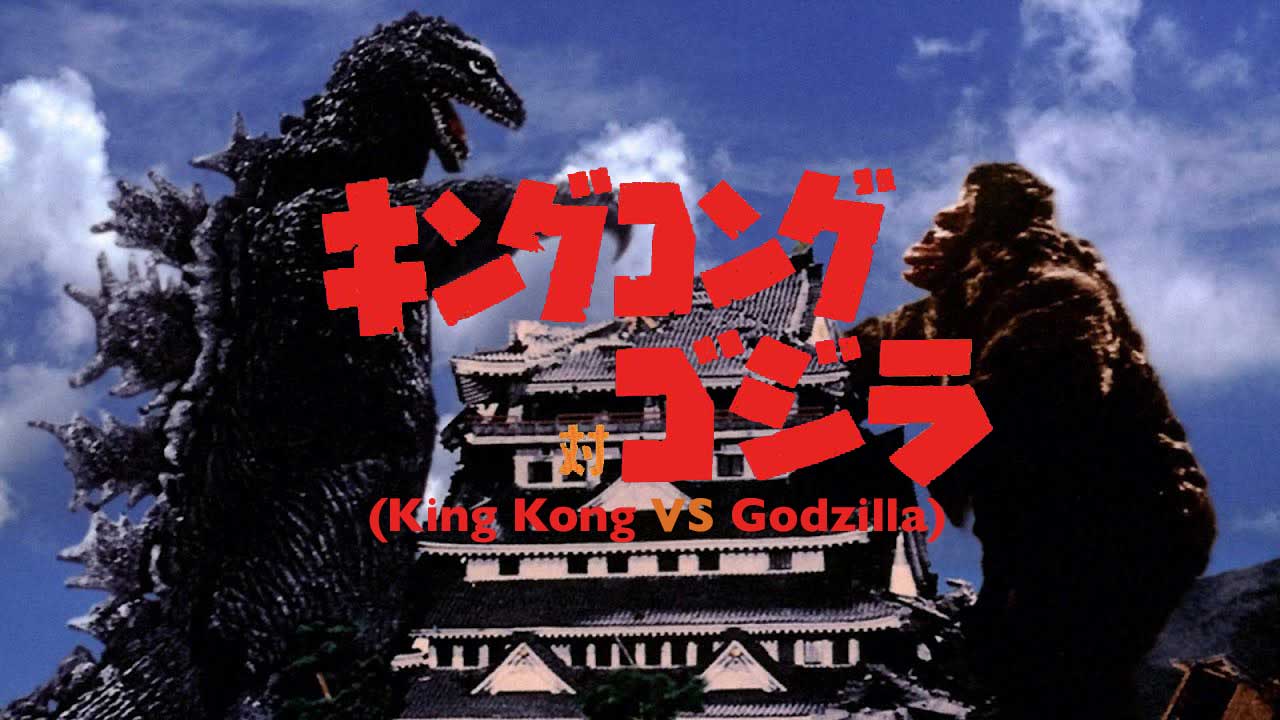
    King Kong vs. Godzilla (1962)

    [et_pb_section fb_built=”1″ _builder_version=”4.16″ _module_preset=”default” global_colors_info=”{}”][et_pb_row column_structure=”2_3,1_3″ _builder_version=”4.16″ _module_preset=”default” global_colors_info=”{}”][et_pb_column type=”2_3″ _builder_version=”4.16″ _module_preset=”default” global_colors_info=”{}”][et_pb_text _builder_version=”4.16″ _module_preset=”default” global_colors_info=”{}”]

    Following the release of Godzilla Raids Again, the series was put on hiatus while Toho decided to expand their horizons. In 1956, Toho produced Rodan, which happened to also be their first color film and reached an audience outside Japan. Toho also produced 1957’s The Mysterians, which introduced Moguera, a robot that would later appear during the Heisei era. Both films were directed by the original’s director Ishiro Honda, who also helmed 1958’s Varan and 1961’s Mothra. In the meantime, stop-motion animator Willis O’Brien pitched a concept for King Kong Meets Frankenstein, which went through various studios. Eventually, the script ended up at Toho, who decided to replace Frankenstein’s Monster with Godzilla to celebrate their 30th anniversary. Ishiro Honda returned to direct and effects director Eiji Tsuburaya was brought on to help bring Godzilla after seven years. In 1962, Toho released the first color Godzilla film, King Kong vs. Godzilla.

    [/et_pb_text][/et_pb_column][et_pb_column type=”1_3″ _builder_version=”4.16″ _module_preset=”default” global_colors_info=”{}”][et_pb_circle_counter title=”Rating” number=”85″ bar_bg_color=”#7CDA24″ _builder_version=”4.16″ _module_preset=”default” global_colors_info=”{}”][/et_pb_circle_counter][/et_pb_column][/et_pb_row][et_pb_row _builder_version=”4.16″ _module_preset=”default” global_colors_info=”{}”][et_pb_column type=”4_4″ _builder_version=”4.16″ _module_preset=”default” global_colors_info=”{}”][et_pb_text _builder_version=”4.27.4″ _module_preset=”default” hover_enabled=”0″ global_colors_info=”{}” sticky_enabled=”0″]

    Synopsis

    The head of Pacific Pharmaceuticals, Mr. Tako (Ichirō Arishima), is frustrated that the company’s TV channels are losing ratings. He sends two employees, Osamu Sakurai (Tadao Takashima) and Kinsaburo Furue (Yū Fujiki), to Faro Island to investigate monster sightings. Meanwhile, an American submarine, the Sea Hawk, crashes into an iceberg, releasing Godzilla from his slumber from the last film. Back on Faro Island, Osamu and Kinsaburo discover that the monster is King Kong and transport him back to Japan. As Godzilla rampages through the Japanese countryside, Kong wakes up, breaks free from his transport raft, and fights Godzilla. While the military struggles to fight off Godzilla, Mr. Tako is wanting to see King Kong win to boost his ratings. The army tries using explosives, poison gas, and electricity, but nothing is able to stop Godzilla as he fights Kong. It’s East vs. West as both kings fight to the end!


    Review

    Coming seven years after the somewhat lackluster Godzilla Raids AgainKing Kong vs. Godzilla is a welcome change of pace. Pairing two iconic cinematic monsters was a stroke of genius, even if they had to change some things. Namely, King Kong, who’s normally about 50 feet tall, was enlargened to 150 feet so he’d stack up to Godzilla. Given that this is a Japanese monster movie, such details aren’t important or impact the film negatively at all. In terms of Honda’s direction, while this lacks the gritty feel of the original, it’s still pretty spot on here. This one has a more comedic aspect to it, especially in how Honda works in a satire of Japanese television. Mr. Tako’s obsession with boosting his ratings is similar to Carl Denham’s obsession with filmmaking in the 1933 King Kong. Whether coincidental or not, it’s an interesting aspect to mention.

    While it’s disappointing this one lacks the dark and dreary realism of 1954’s Godzilla, it’s good they did something different. It’s great to see both Godzilla and Kong in color, even if the suits look somewhat goofy and raggedy. Even still, the fight scenes are a definite highlight, especially with all the miniatures, pyrotechnics, and forced perspective used. Speaking of suits, some will see that as a downgrade from the stop-motion effects of the 1933 original. However, given the circumstances behind this film, it’s easy to see why they went with the men-in-suit route. It also helps that Godzilla and Kong fight throughout the majority of the film as opposed to the last film. This film marks a major turning point in the franchise since Toho decided to prioritize their new money-making franchise. Overall, King Kong vs. Godzilla is an entertaining early 60s monster movie that’ll please any kaiju fan.


    Buy King Kong vs. Godzilla from Amazon: https://amzn.to/33cQTma.

    Disclosure: The above link is an affiliate link, which means that, at no additional cost, I will earn a commission if you click through the link and make a purchase.

    [/et_pb_text][et_pb_code _builder_version=”4.27.4″ _module_preset=”default” hover_enabled=”0″ sticky_enabled=”0″]

    Where to watch King Kong vs. Godzilla (1962)

    data-api-key=”LMVDLdLSH5ZJnQ4FMGMgyJCB8cmGbfCV” data-object-type=”Movie” data-title=”King Kong vs. Godzilla” data-year=”1962″ data-theme=”light”>

    [/et_pb_code][/et_pb_column][/et_pb_row][/et_pb_section]
  • Godzilla Raids Again (1955)

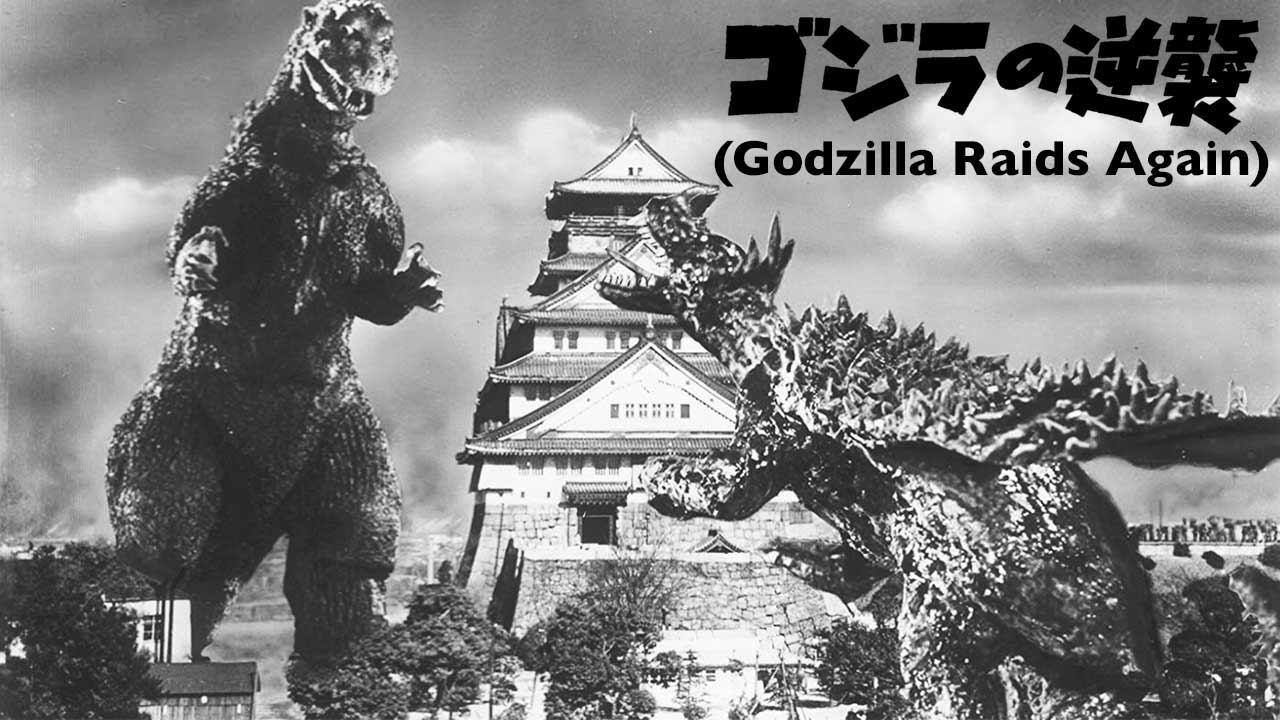
    Godzilla Raids Again (1955)

    [et_pb_section fb_built=”1″ _builder_version=”4.16″ _module_preset=”default” global_colors_info=”{}”][et_pb_row column_structure=”2_3,1_3″ _builder_version=”4.16″ _module_preset=”default” global_colors_info=”{}”][et_pb_column type=”2_3″ _builder_version=”4.16″ _module_preset=”default” global_colors_info=”{}”][et_pb_text _builder_version=”4.16″ _module_preset=”default” global_colors_info=”{}”]

    Against a budget of ¥100 million, Godzilla grossed ¥183 million, or $2.1 million, at the Japanese box office. In 1956, the film was re-edited and released in the US as Godzilla, King of the Monsters featuring Raymond Burr. Though lacking much of the original’s political themes, it was successful enough to further establish Godzilla’s popularity worldwide. Following its success, producer Tomoyuki Tanaka was asked by executive producer Iwao Mori to start producing a sequel. However, original director Ishiro Honda couldn’t return as he was working on 1955’s Love Makeup, so Oda Motoyoshi was hired. For the sequel, they decided to include a new monster, which established the trope of having a monster fight Godzilla. Not wanting to lose the momentum of the original film’s success, the sequel was released one year later. On April 24, 1955, Godzilla Raids Again was released in Japan and Japanse American cinemas.

    [/et_pb_text][/et_pb_column][et_pb_column type=”1_3″ _builder_version=”4.16″ _module_preset=”default” global_colors_info=”{}”][et_pb_circle_counter title=”Rating” number=”80″ bar_bg_color=”#7CDA24″ _builder_version=”4.16″ _module_preset=”default” global_colors_info=”{}”][/et_pb_circle_counter][/et_pb_column][/et_pb_row][et_pb_row _builder_version=”4.16″ _module_preset=”default” global_colors_info=”{}”][et_pb_column type=”4_4″ _builder_version=”4.16″ _module_preset=”default” global_colors_info=”{}”][et_pb_text _builder_version=”4.27.4″ _module_preset=”default” global_colors_info=”{}”]

    Synopsis

    Two Japanese pilots, Shoichi Tsukioka (Hiroshi Koizumi) and Koji Kobayashi (Minoru Chiaki) are hunting fish for a cannery company. When Kobayashi starts losing control of his plane, he lands on Iwato Island, where he sees Godzilla fighting another monster. After Kobayashi’s rescued by Tsukioka, they report what they saw to the authorities, who dub the new monster Anguirus. Dr. Kyohei Yamane (Takashi Shimura), who witnessed Godzilla’s rampage beforehand, confirms that this Godzilla is another member of its species. While the monsters continue their rampage, the Japanese military tries to keep Godzilla away from shore and wreaking further havoc. Eventually, Godzilla wins the fight by killing Anguirus and returns to the sea, leading the military to search for him. After Godzilla takes out some fishing boats, the military tries everything they can to bring the monster down. Will they succeed, or will Godzilla continue his rampage throughout Japan?


    Review

    While the original film may have had its flaws, it was still a landmark in Japanese cinema and indeed worldwide. The film commented on the dangers of nuclear war and was a metaphor for the then-recent nuclear devastation Japan was going through. This film, however, ditches the somber tone and symbolism for a more or less fairly conventional 50s monster movie. You have regular civilians running into the monsters, the military failing to stop the monsters, and a big monster brawl. Granted, this one introduced many concepts we’d see in future Godzilla movies, and they were still figuring things out. Also, the fact that this film was rushed to a release one year later hinders the film’s quality. Though the first film’s effects were somewhat crude, the filmmakers were able to work with what they had. Here, you can tell the crew wasn’t given much time to prepare.

    That being said, there are some decent effects on display, and the monster fights are the highlight of the film. You can also tell the filmmakers learned some lessons from the last film, such as slimming down the Godzilla suit. Once again, the black and white cinematography does complement the monster scenes, even if it lacks the original’s gritty quality. Still, there are some parallels similar to the original, namely scenes of Osaka in flames symbolizing the Nagasaki bombing. Unfortunately, there are tons of filler scenes that drag the movie down and add to its more conventional nature. That’s not to say any of the performances are terrible, but the primary human scenes can get dull. This is still a fairly important entry in the series, establishing future tropes and being the last black-and-white Godzilla film. Overall, Godzilla Raids Again is a slightly disjointed yet enjoyable kaiju film worth watching.


    Buy Godzilla Raids Again from Amazon: https://amzn.to/49yvlUT.

    Disclosure: The above link is an affiliate link, which means that, at no additional cost, I will earn a commission if you click through the link and make a purchase.

    [/et_pb_text][et_pb_code _builder_version=”4.27.4″ _module_preset=”default” hover_enabled=”0″ global_colors_info=”{}” sticky_enabled=”0″]

    Where to watch Godzilla Raids Again (1955)

    data-api-key=”LMVDLdLSH5ZJnQ4FMGMgyJCB8cmGbfCV” data-object-type=”Movie” data-title=”Godzilla Raids Again” data-year=”1955″ data-theme=”light”>

    [/et_pb_code][/et_pb_column][/et_pb_row][/et_pb_section]
  • Godzilla (1954)

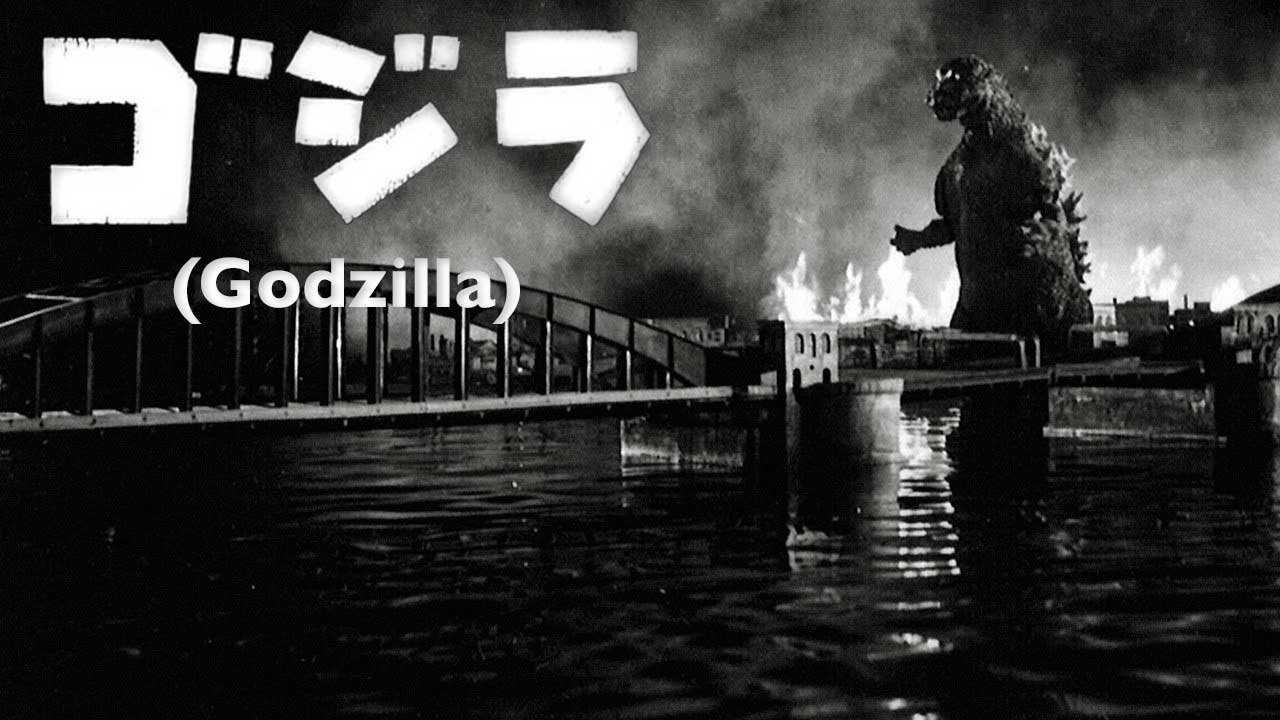
    Godzilla (1954)

    [et_pb_section fb_built=”1″ admin_label=”section” _builder_version=”4.16″ global_colors_info=”{}”][et_pb_row column_structure=”2_3,1_3″ admin_label=”row” _builder_version=”4.16″ background_size=”initial” background_position=”top_left” background_repeat=”repeat” global_colors_info=”{}”][et_pb_column type=”2_3″ _builder_version=”4.16″ custom_padding=”|||” global_colors_info=”{}” custom_padding__hover=”|||”][et_pb_text _builder_version=”4.16″ _module_preset=”default” global_colors_info=”{}”]On August 6, 1945, the United States dropped an atomic bomb on the Japanese city of Hiroshima, claiming 135,000 lives. Three days later, the US dropped another atomic bomb, this time on Nagasaki, which claimed an additional 64,000 casualties. Following this, Japan officially surrendered to the US, and the effects of both bombs are still being felt today. As part of the American occupation of Japan, the film industry was drastically changed to portray more Western ideals. Around this time, Japan entered a golden age of cinema thanks to filmmaker Akira Kurosawa of Rashomon and Yojimbo fame. Meanwhile, producer Tomoyuki Tanaka of Toho Studios was inspired by these nuclear attacks to work on a giant monster movie. Tanaka hired filmmaker Ishiro Honda to direct given his war-time experience, who decided to make this monster movie completely serious. So in 1954, Gojira aka Godzilla roared its way into Japanese cinemas.
    [/et_pb_text][/et_pb_column][et_pb_column type=”1_3″ _builder_version=”4.16″ custom_padding=”|||” global_colors_info=”{}” custom_padding__hover=”|||”][et_pb_circle_counter title=”Rating” number=”95″ bar_bg_color=”#7CDA24″ _builder_version=”4.16″ _module_preset=”default” global_colors_info=”{}”][/et_pb_circle_counter][/et_pb_column][/et_pb_row][et_pb_row _builder_version=”4.16″ _module_preset=”default” global_colors_info=”{}”][et_pb_column type=”4_4″ _builder_version=”4.16″ _module_preset=”default” global_colors_info=”{}”][et_pb_text _builder_version=”4.27.4″ _module_preset=”default” global_colors_info=”{}”]

    Synopsis

    Several freighters off the coast of Japan are being destroyed, one survivor claiming that a giant monster was responsible. Dubbed “Godzilla”, the monster destroys an entire village and the villagers demand answers and assistance from the government. Paleontologist Kyohei Yamane (Takashi Shimura) is hired to investigate and findings massive amounts of radiation before the monster reappears. While Yamane wants to study the creature, the military wants to destroy it, but nothing seems to kill it. Meanwhile, Yamane’s daughter Emiko (Momoko Kōchi) tells her fiance Hideto Ogata (Akira Takarada) about a possible way to destroy Godzilla. Her former lover, Daisuke Serizawa (Akihiko Hirata) has developed a weapon called the “Oxygen Destroyer”, which kills via asphyxiation. Serizawa is conflicted about using it fearing the superpowers will exploit it, but he’s convinced otherwise after seeing Godzilla’s rampage. Will the monster be stopped, or will Tokyo be crushed and destroyed by Godzilla?


    Review

    Godzilla is not only one of the most important films in Japanese cinema, but also in worldwide cinema. While not the first (Godzilla was inspired by The Beast from 20,000 Fathoms), the film started the kaiju genre. For the next several decades, movies with guys in rubber monster suits destroying miniatures became a mainstay of Japanese cinema. However, while the later films got more ridiculous, this one stands out for how gloomy and foreboding it is. Given that Japan had fairly recently experienced nuclear war firsthand, the film perfectly shows the horrors of atomic fallout. We see tons of ruined cityscapes and people injured or dying in hospitals, and the black-and-white cinematography enhances the mood. Even when the monster’s off-screen, the overall film has a very foreboding feel that gives a feeling of dread. The film somehow manages to make a scene of schoolgirls singing off-setting and slightly creepy.

    Though somewhat crude by American standards, the effects used here are impressive given the circumstances at the time. The film makes effective use of miniatures and camera angles to show Godzilla’s size and make the monster a threat. Today’s audiences will probably criticize the effects, but keep in mind, the filmmakers had a fraction of an American budget. If there are any complaints I have, I will say that though the performances are solid, there’s isn’t much characterization. Granted, the film is more so focused on symbolizing years of atomic destruction than on giving us fully developed characters. In that sense, Godzilla more than succeeds, and it’s easy to see how this started a whole new subgenre. While the film can be slow at times, the scenes of Godzilla’s rampage are the highlight and make it watch-worthy. Overall, Godzilla more than earns its place in history as a Japanese classic.


    Buy Godzilla from Amazon: https://amzn.to/4qFU5AM.

    Disclosure: The above link is an affiliate link, which means that, at no additional cost, I will earn a commission if you click through the link and make a purchase.

    [/et_pb_text][et_pb_code _builder_version=”4.27.4″ _module_preset=”default” hover_enabled=”0″ global_colors_info=”{}” sticky_enabled=”0″]

    Where to watch Godzilla (1954)

    data-api-key=”LMVDLdLSH5ZJnQ4FMGMgyJCB8cmGbfCV” data-object-type=”Movie” data-title=”Godzilla” data-year=”1954″ data-theme=”light”>

    [/et_pb_code][/et_pb_column][/et_pb_row][/et_pb_section]