Facebook

FilmNerd

Category: Western

  • Mad Dog Morgan (1976)

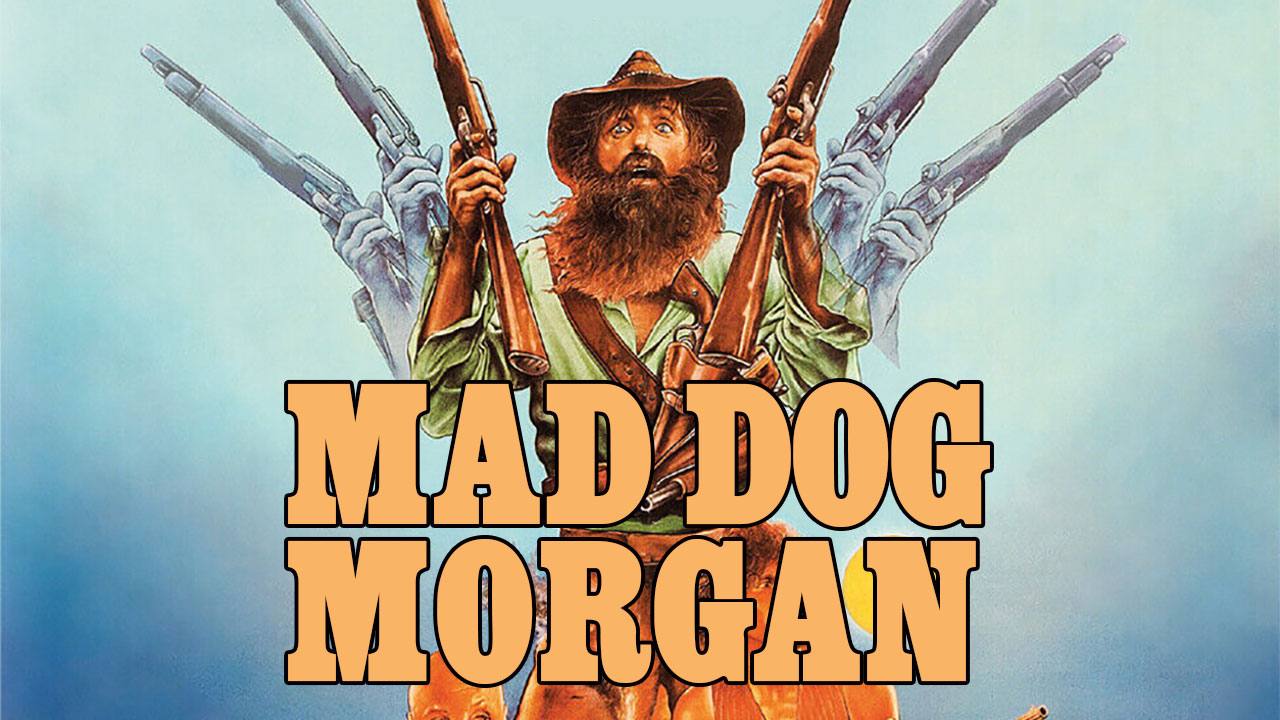
    Mad Dog Morgan (1976)

    [et_pb_section fb_built=”1″ admin_label=”section” _builder_version=”4.16″ global_colors_info=”{}”][et_pb_row column_structure=”2_3,1_3″ admin_label=”row” _builder_version=”4.16″ background_size=”initial” background_position=”top_left” background_repeat=”repeat” global_colors_info=”{}”][et_pb_column type=”2_3″ _builder_version=”4.16″ custom_padding=”|||” global_colors_info=”{}” custom_padding__hover=”|||”][et_pb_text _builder_version=”4.19.2″ _module_preset=”default” global_colors_info=”{}”]

    In 1974, Australian author Margaret Carnegie wrote Morgan: The Bold Bushranger about the life of notorious outlaw Daniel Morgan. Around this time, documentary filmmaker Phillipe Mora wanted to move into narrative filmmaking and chose to adapt Carnegie’s book. After writing the screenplay, Mora acquired a budget of $400,000 from the Australian Film Commission and some private investors. Mora and producer Jeremy Thomas wanted to hire Stacey Keach, but they ultimately went with Dennis Hopper. Hopper had been blacklisted from Hollywood due to his drug and alcohol abuse, so he took whatever jobs he could. Despite a rough shoot, the film was finished and released in Australia and the US in 1976. Due to copyright technicalities, various low-budget companies were able to license the film for home video, including Troma. After releasing heavily edited versions on VHS and DVD, Troma released Mad Dog Morgan uncut in 2009.

    [/et_pb_text][/et_pb_column][et_pb_column type=”1_3″ _builder_version=”4.16″ custom_padding=”|||” global_colors_info=”{}” custom_padding__hover=”|||”][et_pb_circle_counter title=”Rating” number=”85″ bar_bg_color=”#7CDA24″ _builder_version=”4.19.2″ _module_preset=”default” global_colors_info=”{}”][/et_pb_circle_counter][/et_pb_column][/et_pb_row][et_pb_row _builder_version=”4.16″ _module_preset=”default” global_colors_info=”{}”][et_pb_column type=”4_4″ _builder_version=”4.16″ _module_preset=”default” global_colors_info=”{}”][et_pb_text _builder_version=”4.19.2″ _module_preset=”default” hover_enabled=”0″ global_colors_info=”{}” sticky_enabled=”0″]

    Synopsis

    In 1850s Australia, Irishman Daniel Morgan (Dennis Hopper) is looking to strike rich during a gold rush. Failing that, he turns to a life of crime, only to be arrested and sentenced to serve a six-year sentence. After being brutalized and raped in prison, Morgan emerges a broken man and becomes an outlaw looking to plunder. With his aboriginal accomplice Billy (David Gulpilil), Morgan tears through the Australian countryside and becomes a local legend. Meanwhile, Superintendent Cobham (Frank Thring) enlists Detective Manwaring (Jack Thompson) to track down Morgan and bring him to justice. As tensions mount, Morgan’s legendary status continues to grow as more and more people talk about his exploits. However, it’s only a matter of time before the long arm of the law catches up to him. While his grip on reality continues to slip, Daniel “Mad Dog” Morgan continues his rampage in pursuit of fortune.


    Review

    Mad Dog Morgan is one of the most beautiful, brutal, and mind-bending movies I’ve ever seen in quite some time. For such a small budget, what Phillipe Mora and his crew accomplished is spectacular, especially given the filming conditions. Much of the film was shot in the eastern Riverina and northeast Victoria to give it some authenticity. With cinematographer Mike Molloy, Mora takes full advantage of the locations and stages some beautiful landscape shots. Contrasting with these gorgeous long shots are scenes of brutal violence that, while not overly graphic, are disturbing. From the Chinese camp early on being burned to the final standoff with Morgan, there are some memorable set pieces. It reminds me of how Heaven’s Gate had gruesome violence set against beautiful landscapes on a fraction of the budget. Thankfully, the shoot of this film was nowhere near as problematic as Michael Cimino’s infamous flop.

    While the rest of the cast does a great job, Dennis Hopper is on a whole other level. Hopper gives one of his best performances as Daniel Morgan, who goes from innocent everyman to a crazed outlaw. Granted, it’s not the most historically accurate depiction of Morgan, but his performance is impressive. His right-hand man, David Gulpilil, has excellent chemistry with Hopper and helps balance out the insanity. Jack Thompson also delivers as the stern police detective hellbent on either capturing or killing Morgan. It’s worth noting that a pre-Mad Max Hugh Keays-Byrne and a pre-Road Warrior Bruce Spence have minor roles. My only main gripe is that, despite its hour and 42-minute runtime, it can sometimes feel slow and disjointed. Despite that, Mad Dog Morgan is an underrated Australian Western that will stick with you long after the movie ends.


    Buy Mad Dog Morgan from Amazon: https://amzn.to/3V3PMyk.

    Disclosure: The above link is an affiliate link, which means that, at zero cost to you, I will earn a commission if you click through the link and finalize a purchase.

    [/et_pb_text][/et_pb_column][/et_pb_row][/et_pb_section]
  • Heaven’s Gate (1980)

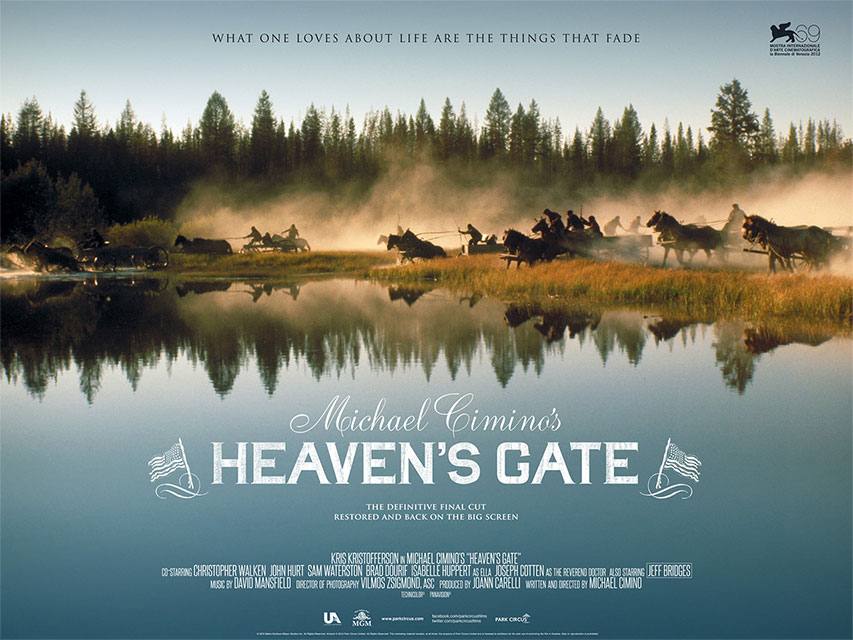
    Heaven’s Gate (1980)

    [et_pb_section fb_built=”1″ _builder_version=”4.5.1″ _module_preset=”default”][et_pb_row column_structure=”2_3,1_3″ _builder_version=”4.5.1″ _module_preset=”default”][et_pb_column type=”2_3″ _builder_version=”4.5.1″ _module_preset=”default”][et_pb_text _builder_version=”4.5.1″ _module_preset=”default”]

    Filmmaking can have its own set of challenges, and sometimes a film’s production history can even transcend the film itself. Films like CleopatraWaterworldApocalypse Now, Alien 3World War Z, and even Jaws are prime examples of troubled productions. While a film can overcome its troubled production and earn classic status, it more often than not ends in disaster. Enter Michael Cimino, a TV commercial director who made his cinematic debut with Thunderbolt and Lightfoot in 1974. While that did well, his next film, 1978’s The Deer Hunter, sent him into superstardom and made him a name. On a $15-million budget, the film grossed $49-million and earned five Academy Awards, including Best Director and Best Picture. With that success, United Artists gave Cimino free rein for his next film, so he set out to make his epic. That film wound up being the notorious box office flop, Heaven’s Gate.

    [/et_pb_text][/et_pb_column][et_pb_column type=”1_3″ _builder_version=”4.5.1″ _module_preset=”default”][et_pb_circle_counter title=”Rating” number=”80″ bar_bg_color=”#7CDA24″ _builder_version=”4.5.1″ _module_preset=”default”][/et_pb_circle_counter][/et_pb_column][/et_pb_row][et_pb_row _builder_version=”4.5.1″ _module_preset=”default”][et_pb_column type=”4_4″ _builder_version=”4.5.1″ _module_preset=”default”][et_pb_text _builder_version=”4.5.1″ _module_preset=”default” hover_enabled=”0″]

    Synopsis

    In 1890, James Averill (Kris Kristofferson) has been made marshall of Johnson County, Wyoming when he stops in Casper. He gets word from his college friend Billy Irvine (John Hurt) that the Stock Growers Association is planning something big. Turns out Frank Canton (Sam Waterston), head of the association, is putting together a “death list” of 125 immigrants. Canton is putting together a group of outlaws led by enforcer Nate Champion (Christopher Walken) to hunt down these immigrants. Meanwhile, Averill reunites with old flame Ella Watson (Isabelle Huppert), a bordello madam who is also infatuated with Nate. As tensions rise between the immigrants and the association, it’s soon revealed that Ella is on the death list. Soon, it falls on Averill to lead the immigrants to fight against the association while Champion questions his loyalty. Will the immigrants survive, will the association succeed, and who will Ella end up with?


    Review

    Heaven’s Gate is a film so notorious for its production history and lasting impact that there’s nothing I can add. With a final budget of $44 million, you can see the money on the screen, given the epic production design. The sets feel like real, lived-in Western towns that are straight out of the late 1800s, every detail spot on. For everything that’s been said about him, it’s undeniable that Cimino was a talented director who could frame a scene. Working with Oscar-winning cinematographer Vilmos Zsigmond, Cimino fills the screen with wide vistas that take advantage of the filming locations. The cast does an admirable job, Kristofferson making for a strong lead, though Walken completely steals the show. Though oddly cast given her nationality, Huppert does a good job and has good chemistry between Kristofferson and Walken. Waterston and Hurt, though having limited screentime, make the most of it.

    The rest of the cast is rounded out by Brad Dourif, Joseph Cotton, Jeff Bridges, Geoffrey Lewis, and Richard Masur. There are even some early appearances from Terry O’Quinn, Mickey Rourke, Tom Noonan, and Willem Dafoe, though he was fired. As much as I admire his attention to detail, it’s easy to see why Cimino was so problematic. With its three-hour-thirty-six-minute runtime, the film feels bloated, unfocused in its plot, and like it’s dragging its feet along. For instance, Ella isn’t introduced until an hour in, and only at the one-hour-forty-five-minute mark does anything plot-related happen. However, the way it’s structured, it almost feels we’re being transported into this other time following these characters. Despite its bloated nature and troubled production, this is still a fascinating piece of cinematic history given its notoriety. Overall, Heaven’s Gate is probably more suited for hardcore cinematic connoisseurs than general audiences.


    Buy Heaven’s Gate from The Criterion Collection: https://bit.ly/3jy35VR

    [/et_pb_text][/et_pb_column][/et_pb_row][/et_pb_section]
  • Bone Tomahawk (2015)

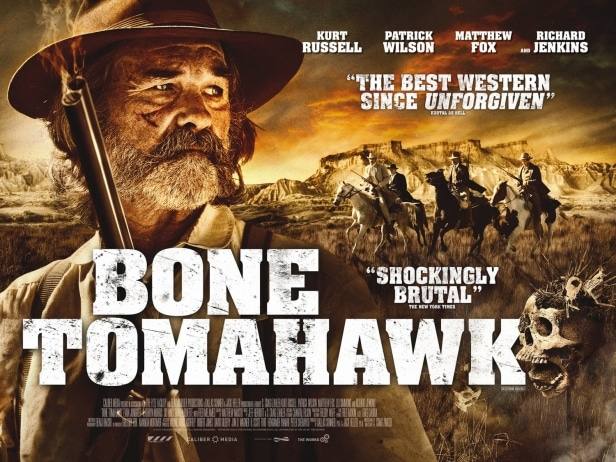
    Bone Tomahawk (2015)

    [et_pb_section bb_built=”1″ _builder_version=”3.14″][et_pb_row][et_pb_column type=”2_3″][et_pb_text _builder_version=”3.14″]

    The western is probably one of the oldest film genres, having started back in 1903 with The Great Train Robbery. However, it was in the 50s and 60s when westerns were at their peak, which many consider the golden age. Films like The SearchersRio BravoThe Magnificent Seven, and True Grit dominated the genre, though there were some exceptions. You also had the Spaghetti Western, which were known for their gritty realism and bloody violence. Some notable examples included Sergio Leone’s Man with No Name trilogy and Once Upon a Time in the West. However, as the decades rolled on and trends changed, the western started to die off. There was a resurgence in the 90s with movies like Unforgiven and Tombstone, but that slowed down in the 2000s. Then, in the 2010s, we started getting cross-genre westerns, including Cowboys and AliensDjango Unchained, and today’s feature, Bone Tomahawk.

    [/et_pb_text][/et_pb_column][et_pb_column type=”1_3″][et_pb_circle_counter _builder_version=”3.14″ title=”Rating” number=”85″ bar_bg_color=”#7cda24″ /][/et_pb_column][/et_pb_row][et_pb_row][et_pb_column type=”4_4″][et_pb_text _builder_version=”3.14″]

    Set in the 1890s, our story focuses on a group of characters in the small Western town of Bright Hope. One night, a drifter named Purvis (David Arquette) wanders into town after his partner Buddy (Sig Haig) is killed. After being spotted by deputy sheriff Chicory (Richard Jenkins), Purvis is confronted by Sheriff Hunt (Kurt Russell) at the saloon. Purvis ends up getting shot in the leg trying to escape and is subsequently thrown in jail. With the doctor indisposed, his assistant Samantha (Lilli Simmons) is brought in to treat the wounds. Unfortunately, Purvis ends up accidentally leading a group of cannibalistic natives to the town, and they kidnap him and Samantha. Hunt then assembles a rescue group, including Chicory, Samantha’s husband Arthur (Patrick Wilson) and local womanizer Brooder (Matthew Fox). They race off to try and save the kidnapped townsfolk from a horrible fate as well as survive.

    Cutting right to it, this is a fantastic film, not only as a western, but as a film in general. The first thing I have to compliment this film on is the amazing cast that’s been assembled. While Kurt Russell certainly dominates the film as he usually does, the rest of the cast is also phenomenal. Patrick Wilson, Matthew Fox, and Richard Jenkins play their parts so well that they feel like fully realized people. In addition, the story and pacing are incredibly well-done, giving plenty of time to the characters before the action starts. Admittedly, the film can be a bit slow at times, but the characters are so engaging that you’re never bored. You really get a sense of the struggles these character go through, and you want to see them survive. Once the action finally picks up, it’s a pretty intense ride.

    When the cannibals come into the story, it almost becomes a completely different movie, which might put some off. It’s almost like one minute you’re watching Shane, then the next you’re watching Cannibal Holocaust. That said, this movie mixes the two genres so well that it never feels like tonal whiplash. If anything, it raises the stakes and makes things even more intense, making you wonder how they’re going to survive. For a first-time director, S. Craig Zahler films the movie so well, you’d swear he was a veteran. You can tell he’s done his research and he clearly has a love for both the western and horror genres. But while he certainly takes influence from Sergio Leone and John Ford, it never feels like he’s just lifting elements. In the end, even if you’re not a fan of westerns, Bone Tomahawk is a remarkable film not to miss.

    [/et_pb_text][/et_pb_column][/et_pb_row][/et_pb_section]