Facebook

FilmNerd

Category: Reviews

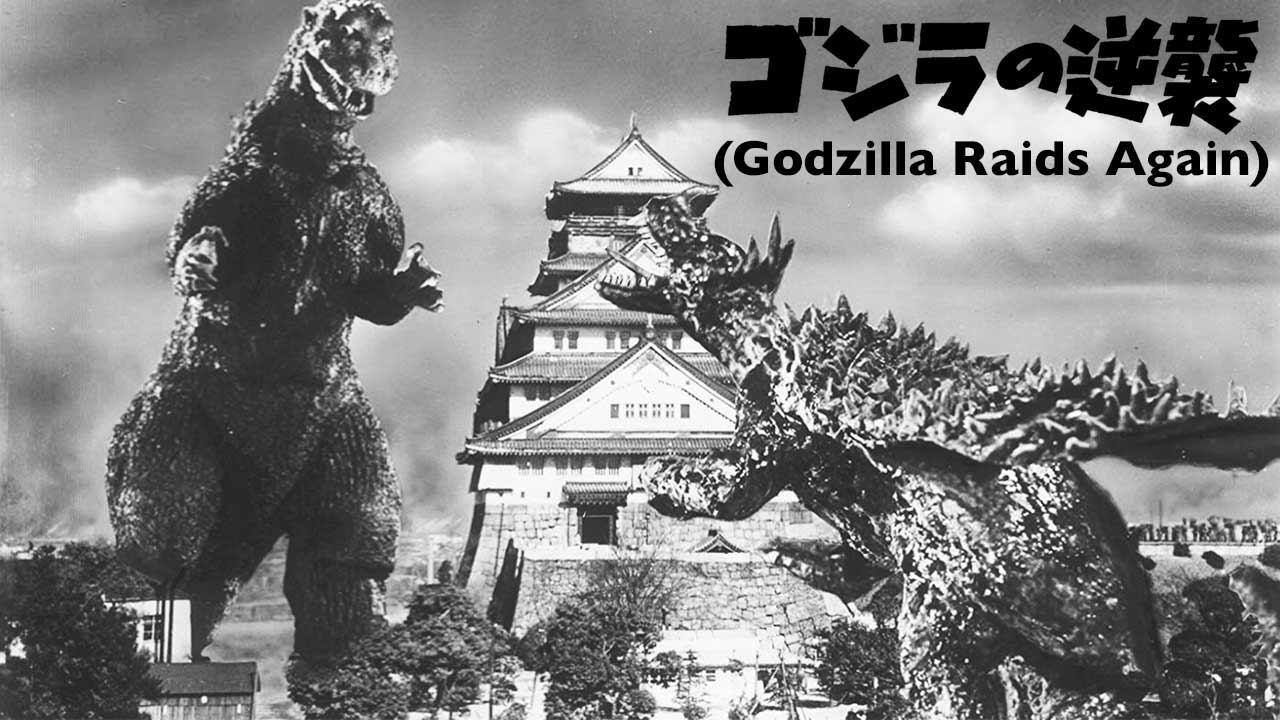
  • Godzilla Raids Again (1955)

    Godzilla Raids Again (1955)

    [et_pb_section fb_built=”1″ _builder_version=”4.16″ _module_preset=”default” global_colors_info=”{}”][et_pb_row column_structure=”2_3,1_3″ _builder_version=”4.16″ _module_preset=”default” global_colors_info=”{}”][et_pb_column type=”2_3″ _builder_version=”4.16″ _module_preset=”default” global_colors_info=”{}”][et_pb_text _builder_version=”4.16″ _module_preset=”default” global_colors_info=”{}”]

    Against a budget of ¥100 million, Godzilla grossed ¥183 million, or $2.1 million, at the Japanese box office. In 1956, the film was re-edited and released in the US as Godzilla, King of the Monsters featuring Raymond Burr. Though lacking much of the original’s political themes, it was successful enough to further establish Godzilla’s popularity worldwide. Following its success, producer Tomoyuki Tanaka was asked by executive producer Iwao Mori to start producing a sequel. However, original director Ishiro Honda couldn’t return as he was working on 1955’s Love Makeup, so Oda Motoyoshi was hired. For the sequel, they decided to include a new monster, which established the trope of having a monster fight Godzilla. Not wanting to lose the momentum of the original film’s success, the sequel was released one year later. On April 24, 1955, Godzilla Raids Again was released in Japan and Japanse American cinemas.

    [/et_pb_text][/et_pb_column][et_pb_column type=”1_3″ _builder_version=”4.16″ _module_preset=”default” global_colors_info=”{}”][et_pb_circle_counter title=”Rating” number=”80″ bar_bg_color=”#7CDA24″ _builder_version=”4.16″ _module_preset=”default” global_colors_info=”{}”][/et_pb_circle_counter][/et_pb_column][/et_pb_row][et_pb_row _builder_version=”4.16″ _module_preset=”default” global_colors_info=”{}”][et_pb_column type=”4_4″ _builder_version=”4.16″ _module_preset=”default” global_colors_info=”{}”][et_pb_text _builder_version=”4.27.4″ _module_preset=”default” global_colors_info=”{}”]

    Synopsis

    Two Japanese pilots, Shoichi Tsukioka (Hiroshi Koizumi) and Koji Kobayashi (Minoru Chiaki) are hunting fish for a cannery company. When Kobayashi starts losing control of his plane, he lands on Iwato Island, where he sees Godzilla fighting another monster. After Kobayashi’s rescued by Tsukioka, they report what they saw to the authorities, who dub the new monster Anguirus. Dr. Kyohei Yamane (Takashi Shimura), who witnessed Godzilla’s rampage beforehand, confirms that this Godzilla is another member of its species. While the monsters continue their rampage, the Japanese military tries to keep Godzilla away from shore and wreaking further havoc. Eventually, Godzilla wins the fight by killing Anguirus and returns to the sea, leading the military to search for him. After Godzilla takes out some fishing boats, the military tries everything they can to bring the monster down. Will they succeed, or will Godzilla continue his rampage throughout Japan?


    Review

    While the original film may have had its flaws, it was still a landmark in Japanese cinema and indeed worldwide. The film commented on the dangers of nuclear war and was a metaphor for the then-recent nuclear devastation Japan was going through. This film, however, ditches the somber tone and symbolism for a more or less fairly conventional 50s monster movie. You have regular civilians running into the monsters, the military failing to stop the monsters, and a big monster brawl. Granted, this one introduced many concepts we’d see in future Godzilla movies, and they were still figuring things out. Also, the fact that this film was rushed to a release one year later hinders the film’s quality. Though the first film’s effects were somewhat crude, the filmmakers were able to work with what they had. Here, you can tell the crew wasn’t given much time to prepare.

    That being said, there are some decent effects on display, and the monster fights are the highlight of the film. You can also tell the filmmakers learned some lessons from the last film, such as slimming down the Godzilla suit. Once again, the black and white cinematography does complement the monster scenes, even if it lacks the original’s gritty quality. Still, there are some parallels similar to the original, namely scenes of Osaka in flames symbolizing the Nagasaki bombing. Unfortunately, there are tons of filler scenes that drag the movie down and add to its more conventional nature. That’s not to say any of the performances are terrible, but the primary human scenes can get dull. This is still a fairly important entry in the series, establishing future tropes and being the last black-and-white Godzilla film. Overall, Godzilla Raids Again is a slightly disjointed yet enjoyable kaiju film worth watching.


    Buy Godzilla Raids Again from Amazon: https://amzn.to/49yvlUT.

    Disclosure: The above link is an affiliate link, which means that, at no additional cost, I will earn a commission if you click through the link and make a purchase.

    [/et_pb_text][et_pb_code _builder_version=”4.27.4″ _module_preset=”default” hover_enabled=”0″ global_colors_info=”{}” sticky_enabled=”0″]

    Where to watch Godzilla Raids Again (1955)

    data-api-key=”LMVDLdLSH5ZJnQ4FMGMgyJCB8cmGbfCV” data-object-type=”Movie” data-title=”Godzilla Raids Again” data-year=”1955″ data-theme=”light”>

    [/et_pb_code][/et_pb_column][/et_pb_row][/et_pb_section]
  • Trancers III: Deth Lives (1992)

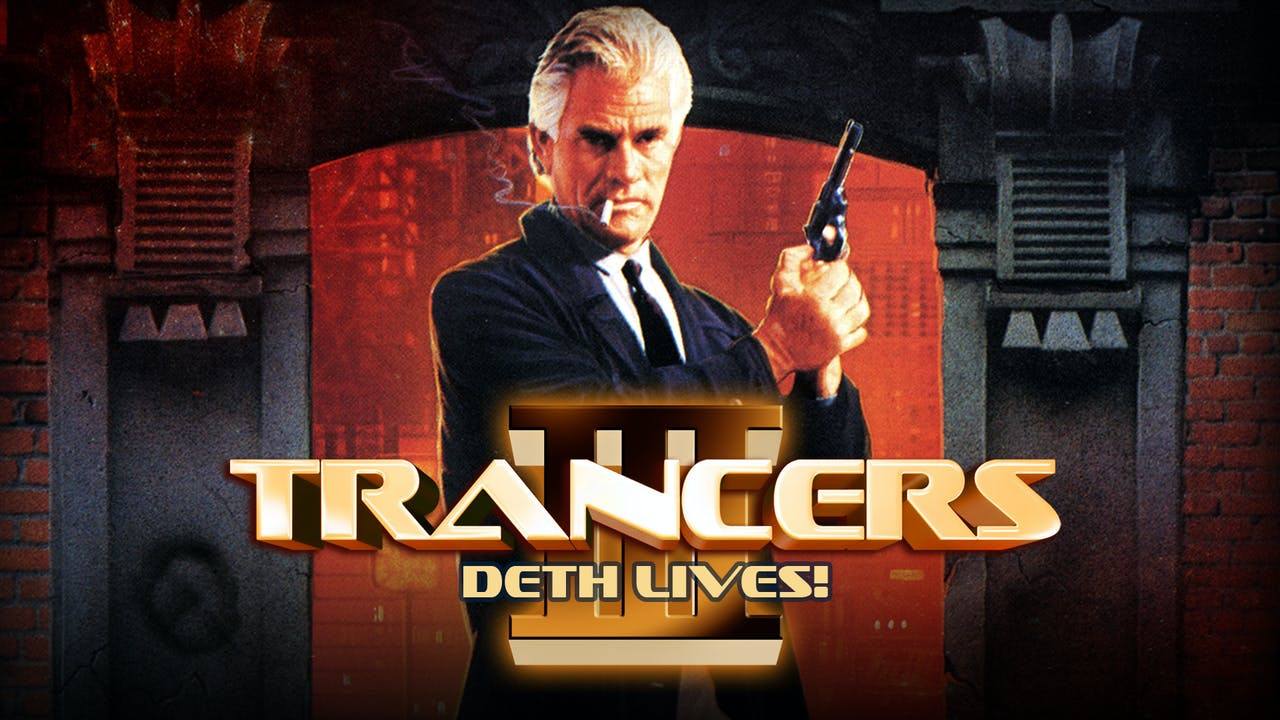
    Trancers III: Deth Lives (1992)

    [et_pb_section fb_built=”1″ _builder_version=”4.16″ _module_preset=”default” global_colors_info=”{}”][et_pb_row column_structure=”2_3,1_3″ _builder_version=”4.16″ _module_preset=”default” global_colors_info=”{}”][et_pb_column type=”2_3″ _builder_version=”4.16″ _module_preset=”default” global_colors_info=”{}”][et_pb_text _builder_version=”4.16″ _module_preset=”default” global_colors_info=”{}”]C. Courtney Joyner has had a long working relationship with Charles Band all the way back to Empire Pictures. In 1987, Joyner wrote the horror film Prison for Empire, which was directed by a then up-and-coming Renny Harlin. Unfortunately, Empire Pictures collapsed some years later, and Joyner went off to work on other projects, including Class of 1999. One day, a friend of Joyner’s went with him to the Full Moon offices, and Joyner reunited with Charles Band. While there, Band offered Joyner the chance to write three screenplays, including Puppet Master III: Toulon’s Revenge and Doctor Mordrid. For the third screenplay, Joyner wrote a Trancers sequel, but since Band wouldn’t return to direct, Joyner wanted the opportunity. Luckily for Joyner, producer Albert Band and lead Tim Thomerson supported him, so he was given the chance to direct. So in 1992, Joyner’s directorial debut, Trancers III: Deth Lives, was released.

    [/et_pb_text][/et_pb_column][et_pb_column type=”1_3″ _builder_version=”4.16″ _module_preset=”default” global_colors_info=”{}”][et_pb_circle_counter title=”Rating” number=”80″ bar_bg_color=”#7CDA24″ _builder_version=”4.16″ _module_preset=”default” global_colors_info=”{}”][/et_pb_circle_counter][/et_pb_column][/et_pb_row][et_pb_row _builder_version=”4.16″ _module_preset=”default” global_colors_info=”{}”][et_pb_column type=”4_4″ _builder_version=”4.16″ _module_preset=”default” global_colors_info=”{}”][et_pb_text _builder_version=”4.27.4″ _module_preset=”default” hover_enabled=”0″ global_colors_info=”{}” sticky_enabled=”0″]

    Synopsis

    Jack Deth (Tim Thomerson), the cop from the future, has been working as a private detective in 1992 Los Angeles. While working a case, Deth is visited by an android named Shark (R. A. Mihailoff), who takes him to 2252. Jack meets up with wife Alice Stillwell (Megan Ward) and Cmdr Raines (Thelmas Hopkins), who tell him what’s happening. At some point, some new trancers emerge and start a war, so Jack must travel back to stop them. He’s sent to 2005, where he meets up with ex-wife Lena (Helen Hunt), who reported on a top-secret government operation. Turns out these trancers are the result of experiments performed by Col “Daddy” Muthuh (Andrew Robinson) to create super soldiers. Jack teams up with R.J. (Melanie Smith), who escaped the military compound where the trancers are bred, to stop them. Will Jack and R.J. be able to stop Col Muthuh’s trancer operation?


    Review

    While Trancers II was enjoyable, Trancers III: Deth Lives is a major improvement that feels more like a legitimate sequel. Whereas the last film felt like a disposable but fun sci-fi action film, this one has more of an edge. The scenes in 2252 have a dark and gritty tone reminiscent of the future scenes from The Terminator. Megan Ward even goes from waifish and demure last film to being like Linda Hamilton in Terminator 2: Judgment Day. However, this film remembers that humor was a big staple of the series, though it’s more subtle here than previously. As Jack Deth, Tim Thomerson is just as much a cocky smart-ass as before, and he’s still great at it. While Richard Lynch made for a decent villain last time, Andrew Robinson is a much more intimidating villain here. His performance is both intense yet subdued at the same time.

    Of course, Helen Hunt had started becoming a big star, but it’s still nice she came back for this. Thankfully, she’s written out in a way that feels justified, and there are some great scenes between her and Thomerson. Relative newcomer Melanie Smith does a good job as R.J., and she has some fantastic chemistry with Thomerson. The production design is top-notch, the military compound being the highlight with a futuristic look that could possibly exist. With KNB doing the make-up effects, they look fantastic, possibly even being the best make-up effects in the whole series. My only complaints are that there are very few action scenes that stand out, and the film feels somewhat rushed. With a 74-minute runtime, not a whole lot of what’s happening is explored, so some may find that disappointing. Overall, Trancers III: Deth Lives is another high point in Full Moon’s history.


    Buy Trancers III: Deth Lives from:

    Disclosure: The above link is an affiliate link, which means that, at zero cost to you, I will earn a commission if you click through the link and finalize a purchase.​

    [/et_pb_text][/et_pb_column][/et_pb_row][/et_pb_section]
  • Big Money Rustlas (2010)

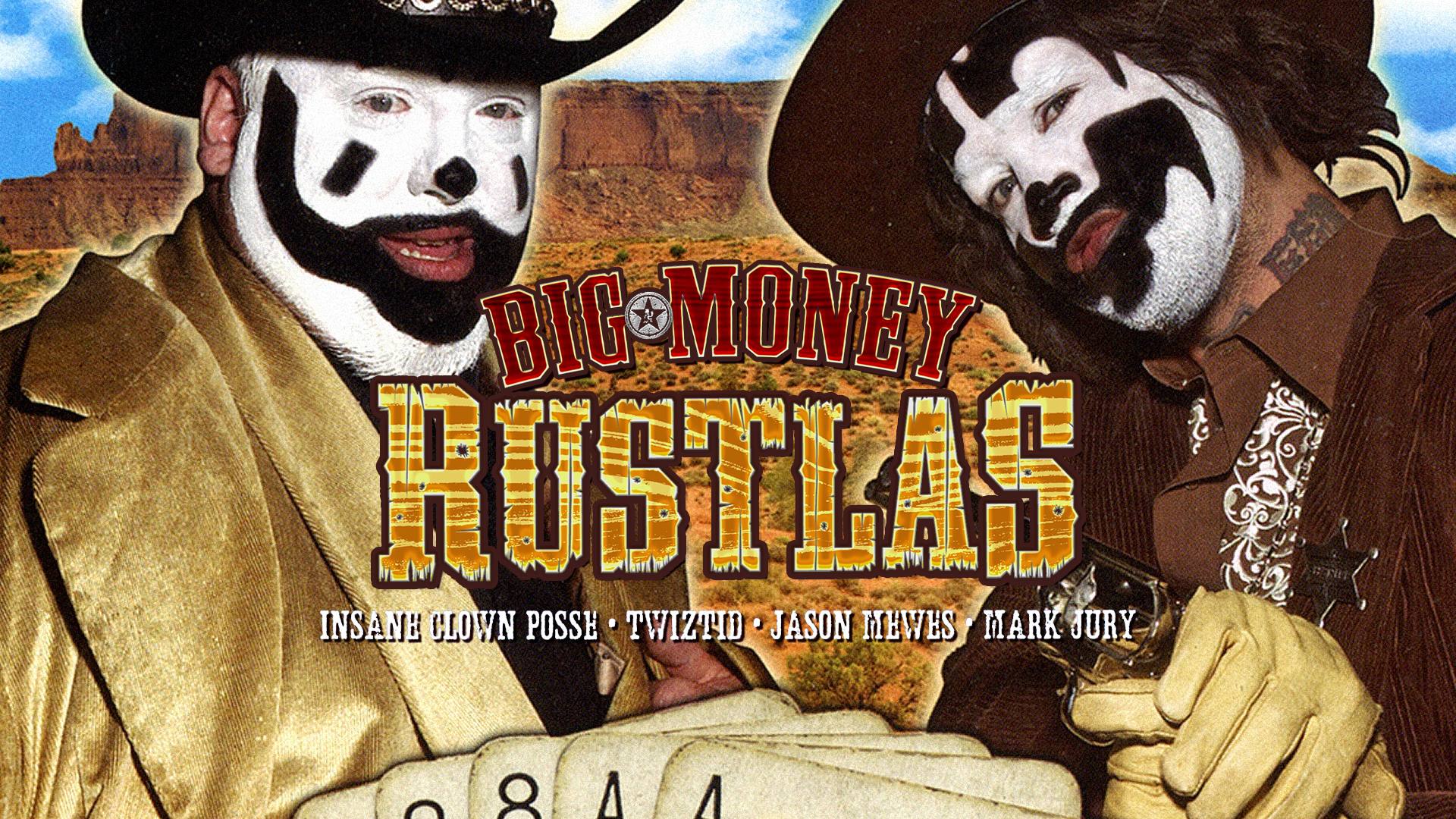
    Big Money Rustlas (2010)

    [et_pb_section fb_built=”1″ fullwidth=”on” _builder_version=”4.5.6″ _module_preset=”default” custom_margin=”||||false|false”][et_pb_fullwidth_header title=”Special Review” subhead=”This review was requested by Discord user Quantum Frankie Theory. If you’d like to join the server, click the button below.” text_orientation=”center” button_one_text=”Visit Discord” button_one_url=”https://discord.gg/sKBSX7u” background_overlay_color=”#8300E9″ _builder_version=”4.5.6″ _module_preset=”default” custom_margin=”||||false|false” custom_padding=”25px||25px||false|false”][/et_pb_fullwidth_header][/et_pb_section][et_pb_section fb_built=”1″ _builder_version=”4.5.6″ _module_preset=”default”][et_pb_row column_structure=”2_3,1_3″ _builder_version=”4.5.6″ _module_preset=”default”][et_pb_column type=”2_3″ _builder_version=”4.5.6″ _module_preset=”default”][et_pb_text _builder_version=”4.5.6″ _module_preset=”default”]

    In 1989, Detroit-based rappers Violent J (Joseph Bruce) and Shaggy 2 Dope (Joseph Utsler) formed the rap duo, JJ Boys. While initially not interested in a serious music career, they decided to take it further by signing with Psychopathic Records. They released their first EP in 1991 under the name Inner City Posse, though they couldn’t get much airtime. Around 1991, the group decided to change their name to Insane Clown Posse, don clown face paint, and make history. Despite their naysayers, the duo has earned two platinum and five gold albums, and even have their own cult fanbase. With their success, they decided to try filmmaking, starting with 2000’s Big Money Hustlas, a send-up of 70s Blaxploitation films. Years later, they decided to make another film, this time a send-up of Westerns and similar comedies, particularly Blazing Saddles. So, in 2010, ICP released their follow-up film, Big Money Rustlas.

    [/et_pb_text][/et_pb_column][et_pb_column type=”1_3″ _builder_version=”4.5.6″ _module_preset=”default”][et_pb_circle_counter title=”Rating” number=”70″ bar_bg_color=”#EDF000″ _builder_version=”4.5.6″ _module_preset=”default”][/et_pb_circle_counter][/et_pb_column][/et_pb_row][et_pb_row _builder_version=”4.5.6″ _module_preset=”default”][et_pb_column type=”4_4″ _builder_version=”4.5.6″ _module_preset=”default”][et_pb_text _builder_version=”4.5.6″ _module_preset=”default” hover_enabled=”0″]

    Synopsis

    In the small town of Mudbug, the ruthless gambling tycoon Big Baby Chips (Violent J) has taken over. He and his henchmen Raw Stank (Jamie Madrox) and Dusty Poot (Monoxide) walk over everyone and crush anyone opposing them. One day, the outlaw Sugar Wolf (Shaggy 2 Dope) rides in and is distraught over what’s become of his hometown. His mother (Cindie Haynie) explains that while Wolf was away, his father (Ron Jeremy) and his brothers were gunned down. Determined to change things, Wolf decides to become the new sheriff, hiring town local Bucky (Jason Mewes) as his deputy. The gang gets word of this and decides to send out some of their top assassins to kill Wolf. Though he’s able to make quick work of them, Wolf loses his shooting hand, and Bucky gets killed. Will Wolf be able to save the town, or will Chips take him down?


    Review

    Going into this movie, I had little to no expectations, especially since I hadn’t heard any of their music before. With that in mind, I will say that Big Money Rustlas was decent at best, but unremarkable at worst. Acting-wise, everyone does a fine enough job, though some performances are so over-the-top, they border on slightly annoying. Violent J and Shaggy 2 Dope do their jobs well, but Jamie Madrox and Monoxide, in particular, were irritating. As for the comedy, sadly many of the jokes fall flat, either being too predictable or vulgar for vulgarity’s sake. Admittedly, there were a few jokes that made me chuckle, so I have to give it credit for that. Also, while the movie is clearly low-budget, there’s some decent cinematography, and the Western town doesn’t look half bad. You can tell that there was plenty of effort put into this film.

    In addition to Jason Mewes and Ron Jeremy, there are appearances from Dustin “Screech” Diamond, Bridget Powers, and Tom Sizemore. While Diamond and Powers are having some fun, it feels like Sizemore is slumming it, which is slightly depressing. Going back to the comedy, some of the more offensive humor hasn’t aged well, particularly some gay and racial humor. While I enjoy plenty of off-color jokes and politically-incorrect humor, these jokes are weak and among the film’s worst jokes. Obviously, this movie isn’t trying to say something deep or have a lasting impact, but it’s just some disposable entertainment. While this hasn’t converted me to being a Juggalo (fan of ICP), I’m sure fans of ICP will enjoy this. Though I don’t regret watching this and somewhat enjoyed it, I can only recommend this if you have some drinks. Overall, Big Money Rustlas has its moments but isn’t for everyone.


    Buy Big Money Rustlas from Amazon: https://amzn.to/30R410z

    [/et_pb_text][/et_pb_column][/et_pb_row][/et_pb_section]
  • Island of Lost Souls (1932)

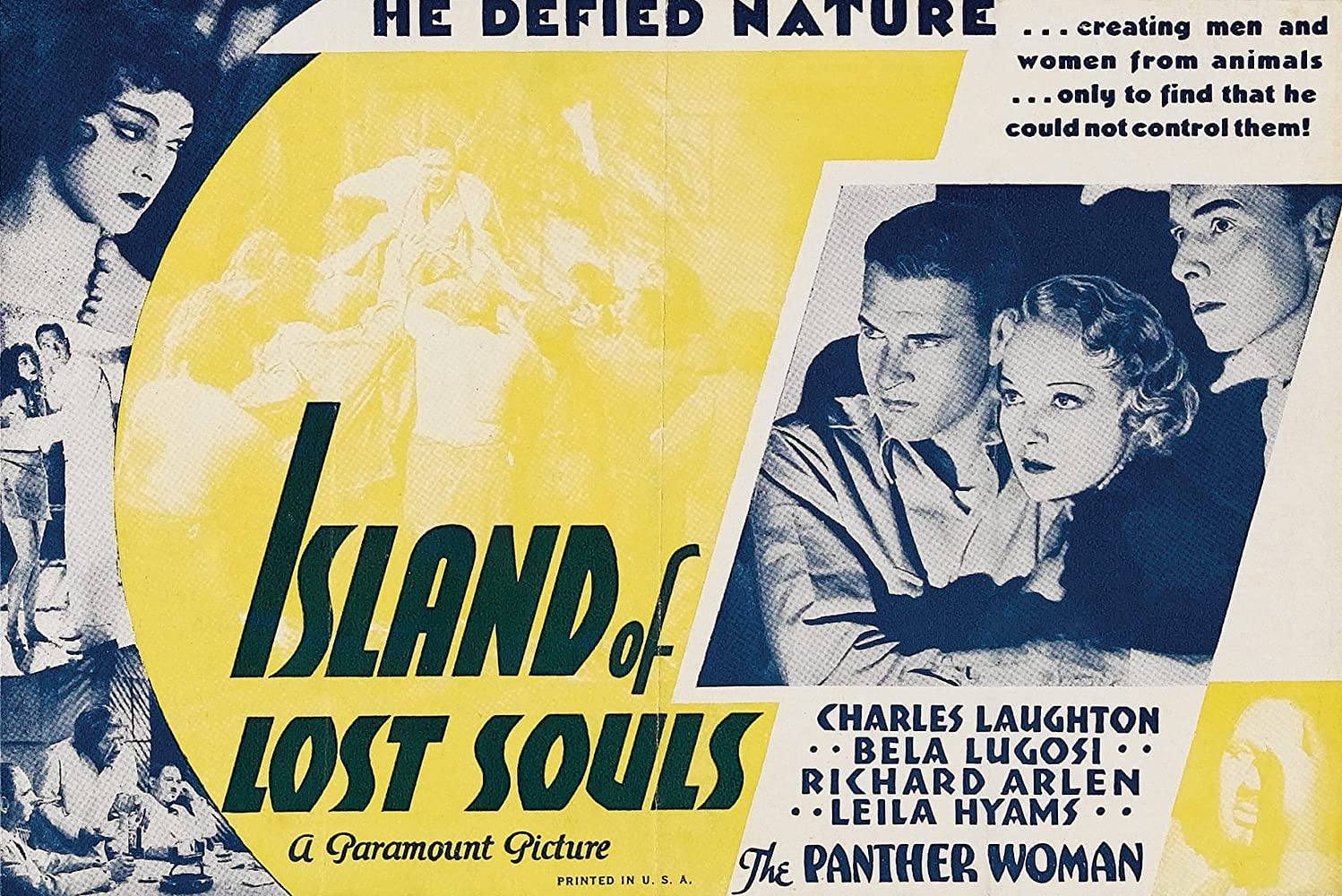
    Island of Lost Souls (1932)

    [et_pb_section fb_built=”1″ _builder_version=”4.5.5″ _module_preset=”default”][et_pb_row column_structure=”2_3,1_3″ _builder_version=”4.5.5″ _module_preset=”default”][et_pb_column type=”2_3″ _builder_version=”4.5.5″ _module_preset=”default”][et_pb_text _builder_version=”4.5.5″ _module_preset=”default”]

    In 1896, famed sci-fi novelist H. G. Wells published The Island of Dr. Moreau, a story of science gone awry. Described as “an exercise in youthful blasphemy”, it tells the story of Dr. Moreau, a mad scientist creating animal-human hybrids. In the 1930s, there was a massive boom in horror films thanks to the release of Universal’s Dracula and Frankenstein. Paramount Pictures decided to capitalize on this trend, starting with their 1931 adaptation of Dr. Jekyll and Mr. Hyde. The film was both a critical and commercial success upon release and lead Fredric March won a Best Actor Oscar. Seeing the potential, Paramount decided to follow it up with an adaptation of the H. G. Wells novel. For the adaptation, they hired Erle C. Kenton to direct, who was mostly known for comedies and crime dramas. Finally, in 1932, The Island of Lost Souls was released to theaters.

    [/et_pb_text][/et_pb_column][et_pb_column type=”1_3″ _builder_version=”4.5.5″ _module_preset=”default”][et_pb_circle_counter title=”Rating” number=”90″ bar_bg_color=”#7CDA24″ _builder_version=”4.5.5″ _module_preset=”default”][/et_pb_circle_counter][/et_pb_column][/et_pb_row][et_pb_row _builder_version=”4.5.5″ _module_preset=”default”][et_pb_column type=”4_4″ _builder_version=”4.5.5″ _module_preset=”default”][et_pb_text _builder_version=”4.5.5″ _module_preset=”default” hover_enabled=”0″]

    Synopsis

    Edward Parker (Richard Arlen) has been rescued and brought onto a freighter by its captain, Captain Davies (Stanley Fields). Unfortunately, Parker’s thrown off and left on the boat of Dr. Moreau (Charles Laughton) and his assistant Montgomery (Arthur Hohl). They arrive on Moreau’s island, where Parker is treated to his hospitality and is introduced to Lota (Kathleen Burke). Parker soon suspects something going on, so he investigates and discovers the “House of Pain”, where he discovers Moreau’s experiments. Turns out that Moreau has been creating human-animal hybrids, all of whom follow the Sayer of the Law (Bela Lugosi). Meanwhile, Parker’s fiance Ruth Thomas (Leila Hyams) hires Captain Donahue (Paul Hurst) to help her find and rescue him. As Parker spends more time with Lota, it becomes clear that Moreau wants him to mate with her. Will Moreau succeed in his experiments, and will Ruth be able to rescue her fiance?


    Review

    Island of Lost Souls is certainly one of the more interesting movies to come out of the pre-code era. While there’ve been many Dr. Moreau adaptations over the years, this one remains the definitive version, and for good reason. Firstly, the performances are top-notch, Charles Laughton being the highlight, playing more a calm, collected scientist than a mad one. He’s so charismatic and oddly charming that you almost buy into the bizarre experiments he’s performing, making a memorable villain. Arlen does a good job as the standard hero, and Burke is both captivating and seductive as the Panther Woman. Though virtually unrecognizable under heavy makeup, Lugosi delivers a great performance as always, even though his screentime is limited. Filmmaking wise, Kenton’s direction is decent, though there isn’t anything special on display, which was fairly typical of 1930s films. For its time, it’s a good looking film.

    What’s really impressive are the makeup effects used to create the human-animal hybrids, especially considering the limited budget they had. The makeup effects were done by Charles Gemora and Wally Westmore, who would work with John Ford and Alfred Hitchcock. It’s easy to see why, given how they were able to use very primitive materials to transform all these extras. Honestly, the effects are about on-par with the work Jack Pierce did for Frankenstein and The Wolf Man. Admittedly, parts of the movie tend to drag, and the action doesn’t really pick up until near the end. Thankfully, at roughly 70 minutes in length, it never outstays its welcome and is a fairly quick sit. It’s hard to recommend a movie like this to newer audiences, but it’s worth watching for any budding film historian. Overall, Island of Lost Souls is a piece of cinematic history worth uncovering.


    Buy The Island of Lost Souls from The Criterion Collection: https://bit.ly/3kn5cMV

    [/et_pb_text][/et_pb_column][/et_pb_row][/et_pb_section]
  • Godzilla (1954)

    Godzilla (1954)

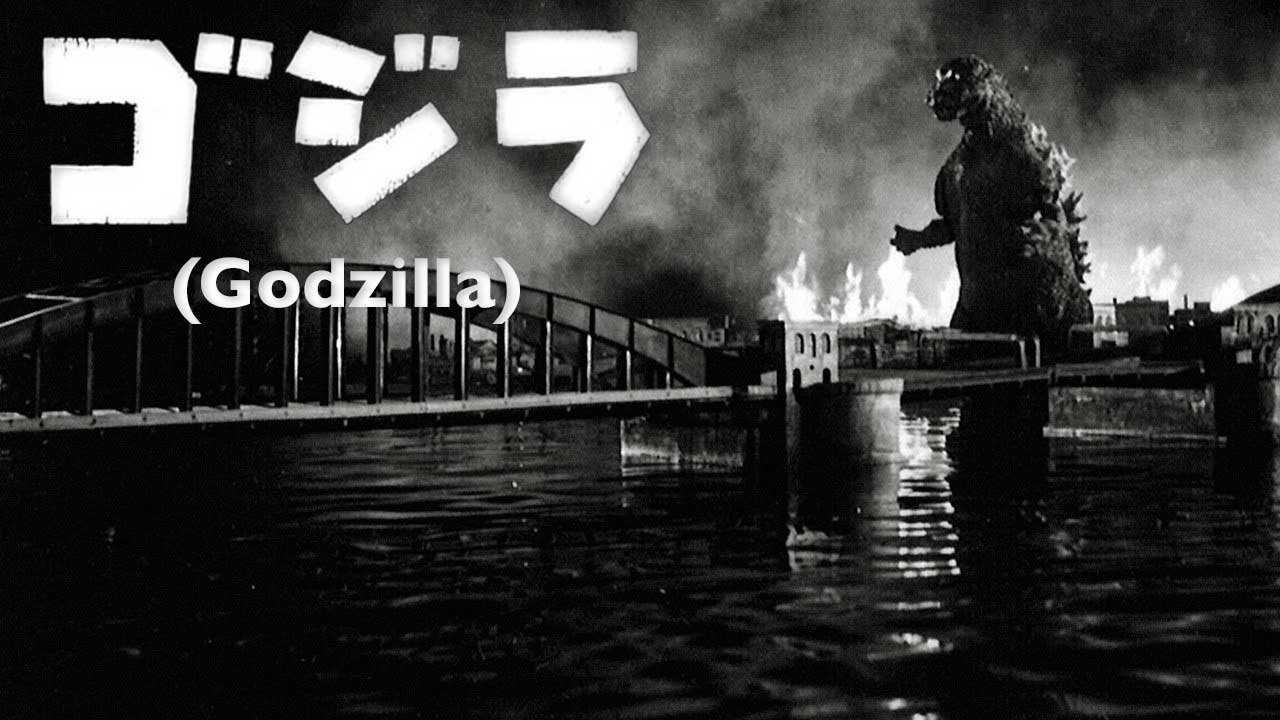
    [et_pb_section fb_built=”1″ admin_label=”section” _builder_version=”4.16″ global_colors_info=”{}”][et_pb_row column_structure=”2_3,1_3″ admin_label=”row” _builder_version=”4.16″ background_size=”initial” background_position=”top_left” background_repeat=”repeat” global_colors_info=”{}”][et_pb_column type=”2_3″ _builder_version=”4.16″ custom_padding=”|||” global_colors_info=”{}” custom_padding__hover=”|||”][et_pb_text _builder_version=”4.16″ _module_preset=”default” global_colors_info=”{}”]On August 6, 1945, the United States dropped an atomic bomb on the Japanese city of Hiroshima, claiming 135,000 lives. Three days later, the US dropped another atomic bomb, this time on Nagasaki, which claimed an additional 64,000 casualties. Following this, Japan officially surrendered to the US, and the effects of both bombs are still being felt today. As part of the American occupation of Japan, the film industry was drastically changed to portray more Western ideals. Around this time, Japan entered a golden age of cinema thanks to filmmaker Akira Kurosawa of Rashomon and Yojimbo fame. Meanwhile, producer Tomoyuki Tanaka of Toho Studios was inspired by these nuclear attacks to work on a giant monster movie. Tanaka hired filmmaker Ishiro Honda to direct given his war-time experience, who decided to make this monster movie completely serious. So in 1954, Gojira aka Godzilla roared its way into Japanese cinemas.
    [/et_pb_text][/et_pb_column][et_pb_column type=”1_3″ _builder_version=”4.16″ custom_padding=”|||” global_colors_info=”{}” custom_padding__hover=”|||”][et_pb_circle_counter title=”Rating” number=”95″ bar_bg_color=”#7CDA24″ _builder_version=”4.16″ _module_preset=”default” global_colors_info=”{}”][/et_pb_circle_counter][/et_pb_column][/et_pb_row][et_pb_row _builder_version=”4.16″ _module_preset=”default” global_colors_info=”{}”][et_pb_column type=”4_4″ _builder_version=”4.16″ _module_preset=”default” global_colors_info=”{}”][et_pb_text _builder_version=”4.27.4″ _module_preset=”default” global_colors_info=”{}”]

    Synopsis

    Several freighters off the coast of Japan are being destroyed, one survivor claiming that a giant monster was responsible. Dubbed “Godzilla”, the monster destroys an entire village and the villagers demand answers and assistance from the government. Paleontologist Kyohei Yamane (Takashi Shimura) is hired to investigate and findings massive amounts of radiation before the monster reappears. While Yamane wants to study the creature, the military wants to destroy it, but nothing seems to kill it. Meanwhile, Yamane’s daughter Emiko (Momoko Kōchi) tells her fiance Hideto Ogata (Akira Takarada) about a possible way to destroy Godzilla. Her former lover, Daisuke Serizawa (Akihiko Hirata) has developed a weapon called the “Oxygen Destroyer”, which kills via asphyxiation. Serizawa is conflicted about using it fearing the superpowers will exploit it, but he’s convinced otherwise after seeing Godzilla’s rampage. Will the monster be stopped, or will Tokyo be crushed and destroyed by Godzilla?


    Review

    Godzilla is not only one of the most important films in Japanese cinema, but also in worldwide cinema. While not the first (Godzilla was inspired by The Beast from 20,000 Fathoms), the film started the kaiju genre. For the next several decades, movies with guys in rubber monster suits destroying miniatures became a mainstay of Japanese cinema. However, while the later films got more ridiculous, this one stands out for how gloomy and foreboding it is. Given that Japan had fairly recently experienced nuclear war firsthand, the film perfectly shows the horrors of atomic fallout. We see tons of ruined cityscapes and people injured or dying in hospitals, and the black-and-white cinematography enhances the mood. Even when the monster’s off-screen, the overall film has a very foreboding feel that gives a feeling of dread. The film somehow manages to make a scene of schoolgirls singing off-setting and slightly creepy.

    Though somewhat crude by American standards, the effects used here are impressive given the circumstances at the time. The film makes effective use of miniatures and camera angles to show Godzilla’s size and make the monster a threat. Today’s audiences will probably criticize the effects, but keep in mind, the filmmakers had a fraction of an American budget. If there are any complaints I have, I will say that though the performances are solid, there’s isn’t much characterization. Granted, the film is more so focused on symbolizing years of atomic destruction than on giving us fully developed characters. In that sense, Godzilla more than succeeds, and it’s easy to see how this started a whole new subgenre. While the film can be slow at times, the scenes of Godzilla’s rampage are the highlight and make it watch-worthy. Overall, Godzilla more than earns its place in history as a Japanese classic.


    Buy Godzilla from Amazon: https://amzn.to/4qFU5AM.

    Disclosure: The above link is an affiliate link, which means that, at no additional cost, I will earn a commission if you click through the link and make a purchase.

    [/et_pb_text][et_pb_code _builder_version=”4.27.4″ _module_preset=”default” hover_enabled=”0″ global_colors_info=”{}” sticky_enabled=”0″]

    Where to watch Godzilla (1954)

    data-api-key=”LMVDLdLSH5ZJnQ4FMGMgyJCB8cmGbfCV” data-object-type=”Movie” data-title=”Godzilla” data-year=”1954″ data-theme=”light”>

    [/et_pb_code][/et_pb_column][/et_pb_row][/et_pb_section]
  • Creepozoids (1987)

    Creepozoids (1987)

    [et_pb_section fb_built=”1″ _builder_version=”4.16″ _module_preset=”default” global_colors_info=”{}”][et_pb_row column_structure=”2_3,1_3″ _builder_version=”4.16″ _module_preset=”default” global_colors_info=”{}”][et_pb_column type=”2_3″ _builder_version=”4.16″ _module_preset=”default” global_colors_info=”{}”][et_pb_text _builder_version=”4.16″ _module_preset=”default” global_colors_info=”{}”]In my review of Sorority Babes in the Slimeball Bowl-O-Rama, I talked about the early career of filmmaker David DeCoteau. After directing his first mainstream film, 1986’s Dreamanic for Charles Band, DeCoteau presented him with two pitches for his follow-up. With the popularity of post-apocalyptic movies and the recent release of Aliens, DeCoteau pitched Mutant Spawn 2000, which combined both. His other concept was a Ghoulies knock-off called Creepozoids, the film’s title being inspired by the Midnight Star song “Freak-A-Zoid”. Charles Band liked the concept of Mutant Spawn 2000 and the title Creepozoids, so he decided to combine the two. On a budget of roughly $150,000, DeCoteau assembled a small crew and filmed in a small studio in LA. Though casting Linnea Quigley fresh off of The Return of the Living Dead, most of the cast was relatively unknown. Finally, in 1987, Creepozoids was released both theatrically and direct-to-video.

    [/et_pb_text][/et_pb_column][et_pb_column type=”1_3″ _builder_version=”4.16″ _module_preset=”default” global_colors_info=”{}”][et_pb_circle_counter title=”Rating” number=”70″ bar_bg_color=”#EDF000″ _builder_version=”4.16″ _module_preset=”default” global_colors_info=”{}”][/et_pb_circle_counter][/et_pb_column][/et_pb_row][et_pb_row _builder_version=”4.16″ _module_preset=”default” global_colors_info=”{}”][et_pb_column type=”4_4″ _builder_version=”4.16″ _module_preset=”default” global_colors_info=”{}”][et_pb_text _builder_version=”4.27.4″ _module_preset=”default” hover_enabled=”0″ global_colors_info=”{}” sticky_enabled=”0″]

    Synopsis

    Years after a nuclear war, a group of survivors are wandering through a post-apocalyptic cityscape looking for supplies and shelter. Led by Jake (Richard Hawkins), the group finds an abandoned facility that they decide to hold up in for now. Jesse (Michael Aranda) checks the computer logs to see what happened to the people who were previously there. Meanwhile, Jake, Blanca (Linnea Quigley), Butch (Ken Abraham), and Kate (Kim McKamy) explore and find food, beds, and running water. Unbeknownst to them, however, a strange and deadly creature is lurking throughout the facility, along with some killer rats. One by one, the creature picks off the crew members and sprays them with acid turning them into radioactive mutants. As their numbers continue to dwindle, the remaining crew members have to find a way to survive against the creature. Who will be able to survive and fight against the Creepozoids?


    Review

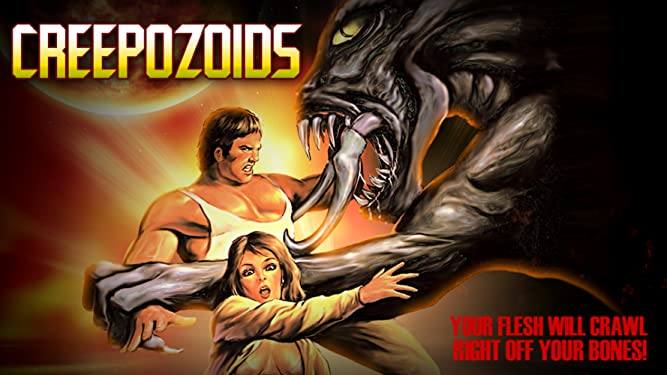
    Creepozoids is a movie that clearly “borrows” from more popular films, not the least of which being Ridley Scott’s Alien. The film also uses the trappings of post-apocalyptic films, but that’s more so for the setup rather than the plot. That said, Creepozoids is still a fine example of B-movie thrills made on a shoestring budget with plenty of creativity. The cast all put plenty of enthusiasm into their performances, even if many of them don’t do much. The main creature, though it’s clearly a knock-off of the Xenomorph, looks impressive and has a memorable design. DeCoteau is able to work around his low budget to create an effective mood using moody colors and dynamic lighting. Plus, at seventy-two minutes, the film never outstays its welcome and won’t take up too much of your time. Plus, Linnea Quigley’s in it, so you get to see her get naked.

    Probably my biggest issue with the film is how padded it is, even with its relatively short runtime. There are several reused shots and alternate takes used, and the end credits are stretched out for so long. Also, while DeCoteau is able to mostly mask the low budget, there are moments where you can see the cheapness. For instance, you can tell that they only had a few filming locations that they constantly reuse and redress. Also, some of the puppets that are used are obvious, namely, the giant rat puppet used every now and then. We’re never given much backstory other than some brief text at the beginning, and even that’s never fully explored. Still, this is the kind of movie that’s more concerned with delivering B-movie thrills than having a compelling story. Overall, Creepozoids knows exactly what kind of movie it is, and it mostly succeeds at that.


    Buy Creepozoids from:

    Disclosure: The above link is an affiliate link, which means that, at zero cost to you, I will earn a commission if you click through the link and finalize a purchase.​

    [/et_pb_text][/et_pb_column][/et_pb_row][/et_pb_section]
  • Heaven’s Gate (1980)

    Heaven’s Gate (1980)

    [et_pb_section fb_built=”1″ _builder_version=”4.5.1″ _module_preset=”default”][et_pb_row column_structure=”2_3,1_3″ _builder_version=”4.5.1″ _module_preset=”default”][et_pb_column type=”2_3″ _builder_version=”4.5.1″ _module_preset=”default”][et_pb_text _builder_version=”4.5.1″ _module_preset=”default”]

    Filmmaking can have its own set of challenges, and sometimes a film’s production history can even transcend the film itself. Films like CleopatraWaterworldApocalypse Now, Alien 3World War Z, and even Jaws are prime examples of troubled productions. While a film can overcome its troubled production and earn classic status, it more often than not ends in disaster. Enter Michael Cimino, a TV commercial director who made his cinematic debut with Thunderbolt and Lightfoot in 1974. While that did well, his next film, 1978’s The Deer Hunter, sent him into superstardom and made him a name. On a $15-million budget, the film grossed $49-million and earned five Academy Awards, including Best Director and Best Picture. With that success, United Artists gave Cimino free rein for his next film, so he set out to make his epic. That film wound up being the notorious box office flop, Heaven’s Gate.

    [/et_pb_text][/et_pb_column][et_pb_column type=”1_3″ _builder_version=”4.5.1″ _module_preset=”default”][et_pb_circle_counter title=”Rating” number=”80″ bar_bg_color=”#7CDA24″ _builder_version=”4.5.1″ _module_preset=”default”][/et_pb_circle_counter][/et_pb_column][/et_pb_row][et_pb_row _builder_version=”4.5.1″ _module_preset=”default”][et_pb_column type=”4_4″ _builder_version=”4.5.1″ _module_preset=”default”][et_pb_text _builder_version=”4.5.1″ _module_preset=”default” hover_enabled=”0″]

    Synopsis

    In 1890, James Averill (Kris Kristofferson) has been made marshall of Johnson County, Wyoming when he stops in Casper. He gets word from his college friend Billy Irvine (John Hurt) that the Stock Growers Association is planning something big. Turns out Frank Canton (Sam Waterston), head of the association, is putting together a “death list” of 125 immigrants. Canton is putting together a group of outlaws led by enforcer Nate Champion (Christopher Walken) to hunt down these immigrants. Meanwhile, Averill reunites with old flame Ella Watson (Isabelle Huppert), a bordello madam who is also infatuated with Nate. As tensions rise between the immigrants and the association, it’s soon revealed that Ella is on the death list. Soon, it falls on Averill to lead the immigrants to fight against the association while Champion questions his loyalty. Will the immigrants survive, will the association succeed, and who will Ella end up with?


    Review

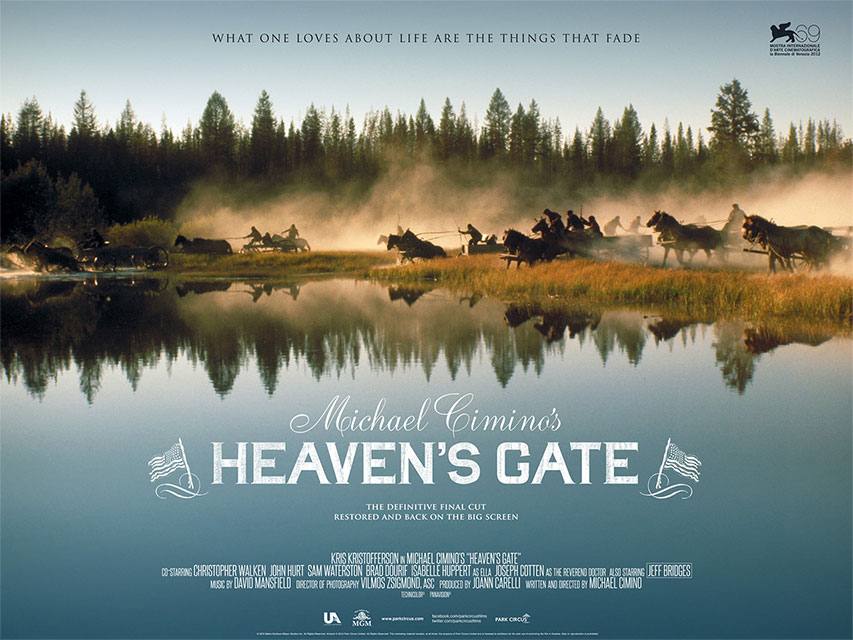
    Heaven’s Gate is a film so notorious for its production history and lasting impact that there’s nothing I can add. With a final budget of $44 million, you can see the money on the screen, given the epic production design. The sets feel like real, lived-in Western towns that are straight out of the late 1800s, every detail spot on. For everything that’s been said about him, it’s undeniable that Cimino was a talented director who could frame a scene. Working with Oscar-winning cinematographer Vilmos Zsigmond, Cimino fills the screen with wide vistas that take advantage of the filming locations. The cast does an admirable job, Kristofferson making for a strong lead, though Walken completely steals the show. Though oddly cast given her nationality, Huppert does a good job and has good chemistry between Kristofferson and Walken. Waterston and Hurt, though having limited screentime, make the most of it.

    The rest of the cast is rounded out by Brad Dourif, Joseph Cotton, Jeff Bridges, Geoffrey Lewis, and Richard Masur. There are even some early appearances from Terry O’Quinn, Mickey Rourke, Tom Noonan, and Willem Dafoe, though he was fired. As much as I admire his attention to detail, it’s easy to see why Cimino was so problematic. With its three-hour-thirty-six-minute runtime, the film feels bloated, unfocused in its plot, and like it’s dragging its feet along. For instance, Ella isn’t introduced until an hour in, and only at the one-hour-forty-five-minute mark does anything plot-related happen. However, the way it’s structured, it almost feels we’re being transported into this other time following these characters. Despite its bloated nature and troubled production, this is still a fascinating piece of cinematic history given its notoriety. Overall, Heaven’s Gate is probably more suited for hardcore cinematic connoisseurs than general audiences.


    Buy Heaven’s Gate from The Criterion Collection: https://bit.ly/3jy35VR

    [/et_pb_text][/et_pb_column][/et_pb_row][/et_pb_section]
  • Puppet Master III: Toulon’s Revenge (1991)

    Puppet Master III: Toulon’s Revenge (1991)

    [et_pb_section fb_built=”1″ admin_label=”section” _builder_version=”4.16″ global_colors_info=”{}”][et_pb_row column_structure=”2_3,1_3″ admin_label=”row” _builder_version=”4.16″ background_size=”initial” background_position=”top_left” background_repeat=”repeat” global_colors_info=”{}”][et_pb_column type=”2_3″ _builder_version=”4.16″ custom_padding=”|||” global_colors_info=”{}” custom_padding__hover=”|||”][et_pb_text _builder_version=”4.16″ global_colors_info=”{}”]After helming several projects during the Empire days, director David DeCoteau worked as a producer during Full Moon’s early years. He produced Crash and BurnTrancers II, and Puppet Master II when he got a call about directing again. Paramount, who was distributing Full Moon’s films, was happy with how Puppet Master II did and immediately wanted a sequel. For the installment, they hired writer C. Courtney Joyner, who previously wrote the Charles Band produced Prison in 1987. They decided that rather than a straight-up sequel, this third film would be a prequel set in WWII Germany. After filming Subspecies in Romania, they wanted to film there but decided against it due to political turmoil. Instead, they shot for two days at the Universal Backlot, while the rest was filmed at their Los Angeles studio. Released months after IIPuppet Master III: Toulon’s Revenge hit video store shelves in 1991.

    [/et_pb_text][/et_pb_column][et_pb_column type=”1_3″ _builder_version=”4.16″ custom_padding=”|||” global_colors_info=”{}” custom_padding__hover=”|||”][et_pb_circle_counter title=”Rating” number=”85″ bar_bg_color=”#7CDA24″ _builder_version=”4.16″ global_colors_info=”{}”][/et_pb_circle_counter][/et_pb_column][/et_pb_row][et_pb_row _builder_version=”4.16″ global_colors_info=”{}”][et_pb_column type=”4_4″ _builder_version=”4.16″ global_colors_info=”{}”][et_pb_text _builder_version=”4.27.4″ global_colors_info=”{}”]

    Synopsis

    In 1941 Berlin, puppeteer Andre Toulon (Guy Rolfe) and his wife Elsa (Sarah Douglas) are entertaining children with their shows. However, during their shows, they make fun of Hitler, which catches the attention of Major Kraus (Richard Lynch). Kraus has Lieutenant Stein (Kristopher Logan) investigate, and he discovers that Toulon has found a way to animate his puppets. This catches the attention of Dr. Hess (Ian Abercrombie), who’s been researching reanimating dead soldiers to create an immortal army. Kraus and his men raid Toulon’s home, kill his wife, and capture him with his puppets to be executed. The puppets manage to kill some of their captors, and Toulon makes his escape with them, plotting his revenge. Meanwhile, Kraus’ superior, General Mueller (Walter Gotell) orders him to find Toulon at once while Hess wants Toulon’s help. Will Toulon succeed in avenging his wife’s death, or will the Nazis kill him first?


    Review

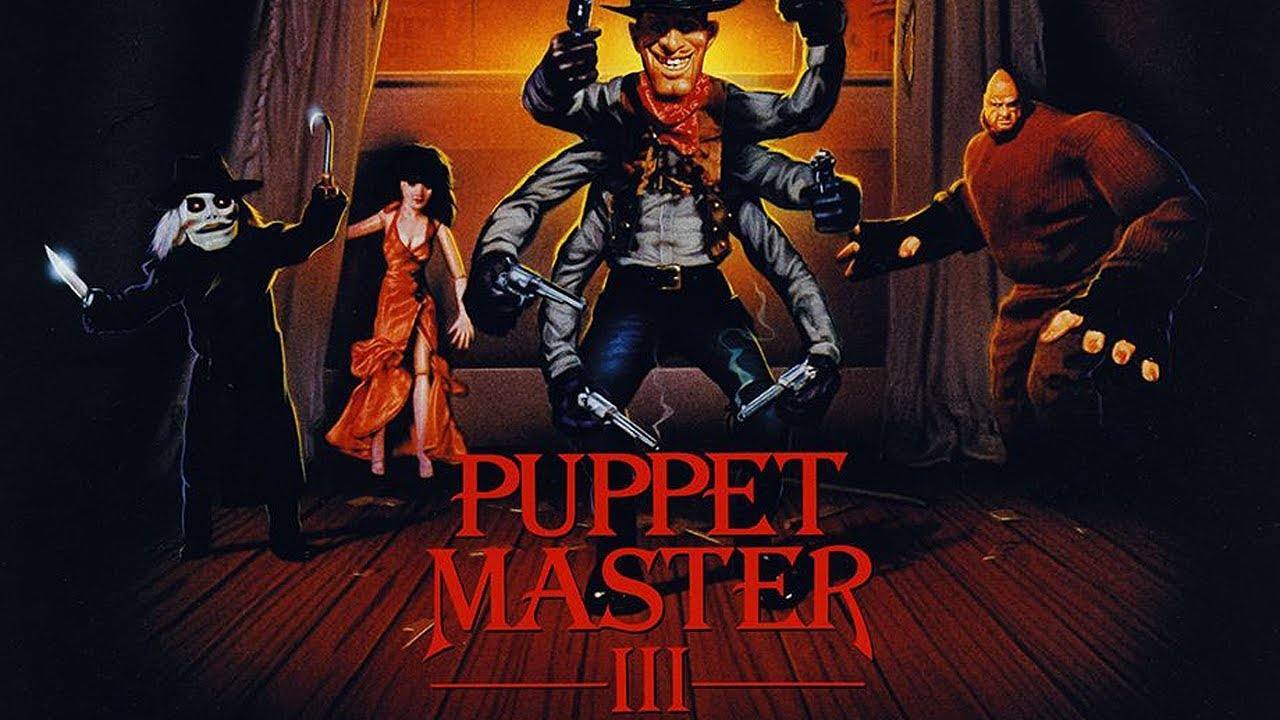
    Of the films in the series so far, Puppet Master III: Toulon’s Revenge is easily the strongest entry. First off, the decision to film on the Universal Backlot greatly enhances the production value and adds to the authenticity. It’s also worth mentioning that the backlot sets used were the same ones used for the 1931 Frankenstein. Cast-wise, this has some of the best actors in any Full Moon film, including veterans Rolfe, Lynch, Abercrombie, Gotell, and Douglas. Much like in Trancers II, Lynch plays a very compelling villain who’s very sinister and determined while also showing humility. Rolfe, who you might remember from Stuart Gordon’s Dolls, delivers another solid performance, and his relationship with Douglas is touching. While he doesn’t have much screen time, Gotell also delivers a strong performance and adds to the pedigree on display. Also noteworthy is a brief appearance by famous scream queen Michelle Bauer.

    While the first two films were enjoyable, they had essentially the same plot of puppets killing people at a hotel. This film, however, stands out by having a plot centered on revenge that also makes the puppets the heroes. The one slip-up with the story is that the film takes place in 1941, while the original opened in 1939. Admittedly, it’s not a huge deterrent, but it’s kind of funny to point out and a glaring oversight. Also, while the puppetry and stop-motion hold up, there are some shots where you can see the strings. Even with that said, this is still an impressive entry in the series and a highlight in Full Moon’s catalog. Though the series would have its ups and downs going forward, this still stands as a milestone for Full Moon. Overall, Puppet Master III: Toulon’s Revenge is the best film in the franchise so far.


    Buy Puppet Master III: Toulon’s Revenge from:

    Disclosure: The above link is an affiliate link, which means that, at zero cost to you, I will earn a commission if you click through the link and finalize a purchase.

    [/et_pb_text][et_pb_code _builder_version=”4.27.4″ _module_preset=”default” hover_enabled=”0″ global_colors_info=”{}” sticky_enabled=”0″]

    Where to watch Puppet Master III: Toulon’s Revenge (1991)

    data-api-key=”LMVDLdLSH5ZJnQ4FMGMgyJCB8cmGbfCV” data-url-path=”/us/movie/puppet-master-iii-toulons-revenge” data-theme=”light”>

    [/et_pb_code][/et_pb_column][/et_pb_row][/et_pb_section]
  • VFW (2019)

    VFW (2019)

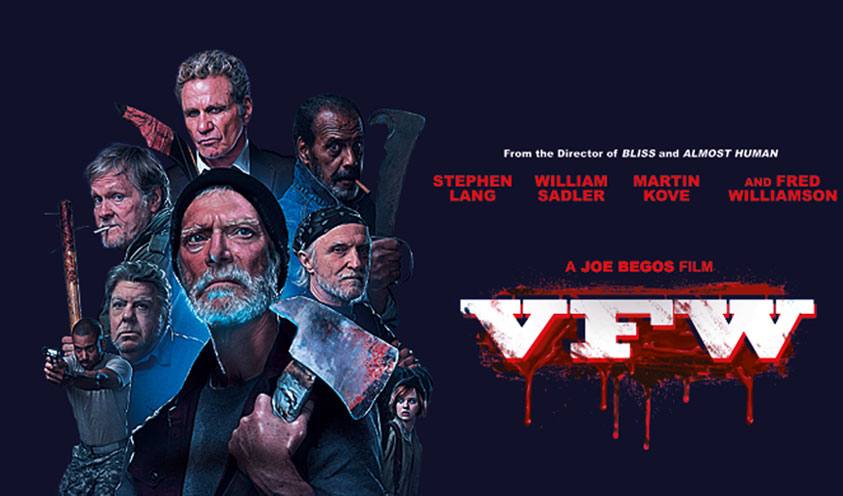
    [et_pb_section fb_built=”1″ _builder_version=”4.4.8″][et_pb_row column_structure=”2_3,1_3″ _builder_version=”4.4.8″][et_pb_column type=”2_3″ _builder_version=”4.4.8″][et_pb_text _builder_version=”4.4.8″ hover_enabled=”0″]In Hollywood, while there are actors who are considered superstars, there are also those who make a living supporting them. Oftentimes called ‘character actors’, many of these actors can end up being more memorable than the leads. Some of the most prominent character actors include Lin Shaye, Keith David, Kurt Fuller, Jared Harris, and Clancy Brown. However, there are times where a character actor can transition into being a superstar, like Terry Crews and Octavia Spencer. There’ve even been movies whose primary cast is character actors, including The Adventures of Buckaroo Banzai Across the 8th Dimension. Enter Joe Begos, a relatively new director who made his feature film debut with 2013’s Almost Human. After making 2015’s The Mind’s Eye, Begos gained a lot more attention for his 2019 film Bliss. That same year, Begos directed what has become his most critically acclaimed film to date, VFW.
    [/et_pb_text][/et_pb_column][et_pb_column type=”1_3″ _builder_version=”4.4.8″][et_pb_circle_counter title=”Rating” number=”90″ bar_bg_color=”#7CDA24″ _builder_version=”4.4.8″][/et_pb_circle_counter][/et_pb_column][/et_pb_row][et_pb_row _builder_version=”4.4.8″][et_pb_column _builder_version=”4.4.8″ type=”4_4″][et_pb_text _builder_version=”4.4.8″ hover_enabled=”0″]

    Synopsis

    Vietnam veteran Fred (Stephen Lang) runs a VFW post, meeting up with friends Walter (William Sadler) and Abe (Fred Williamson). One night, Walter, Abe, Lou (Martin Kove), Doug (David Patrick Kelly), and Thomas (George Wendt) come to celebrate Fred’s birthday. Unfortunately, things go south when a young woman named Lizard (Sierra McCormick) storms in with gang members after her. The veterans make fast work of them, but demand to know what’s going on and why the gang’s after her. Turns out she stole drugs from local crime boss Boz (Travis Hammer) after he killed her sister Lucy (Linnea Wilson). Even worse, one of the punks the veterans killed was Boz’s brother Tank (Josh Ethier), so he also wants revenge. Unfortunately, Thomas gets killed and Doug is critically wounded, so the others must fight to stay alive throughout the night. Will the vets survive, or will the gang kill them all?


    Review

    Whereas Super 8 felt like J.J. Abrams’ tribute to Steven Spielberg, VFW feels like Joe Begos’ tribute to John Carpenter. The film takes its inspiration from Assault on Precinct 13 with some elements from Escape from New York thrown in. Stylistically, there are some Argento and Fulci influences with the vivid colors and use of shadows and darkness. This results in a hyper-stylized look that fits along with the unbridled insanity and over-the-top violence on display. You’ll see heads exploding, limbs being cut off, faces getting stomped, and blood splattered everywhere bordering on being gratuitous. Thankfully, for all the violence and action thrown in, there are plenty of moments for exposition and character development. The cast is fantastic, with Lang and McCormick, in particular, being the major highlights and the heart of the story. Hammer makes for a solid villain, and Dora Madison is good as his accomplice.

    The rest of the main cast alongside Lang is comprised of some of Hollywood’s greatest veteran character actors. Even though some don’t have much screen time, each of them is given a moment to shine they excel in. Williamson and Kove are still major powerhouses as always, and Sadler also has some fun moments where he’s unhinged. Also, Tom Williamson plays a young Army veteran who more than holds his own against these Hollywood veterans. There are tons of practical effects work for the blood and gore, which further adds to the film’s visceral quality. Honestly, it’s a much better tribute to 80s action than The Expendables films, which use tons of CGI blood. Much like those films, this goes to show that no matter how old they are, actors can still be awesome. Overall, VFW is an enjoyably brutal horror-action fan sure to please genre aficionados.


    Buy VFW from DiabolikDVD: https://bit.ly/3gLnUuS

    [/et_pb_text][/et_pb_column][/et_pb_row][/et_pb_section]
  • Back to the Future Part III (1990)

    Back to the Future Part III (1990)

    [et_pb_section fb_built=”1″ _builder_version=”4.4.8″][et_pb_row _builder_version=”4.4.8″ column_structure=”2_3,1_3″][et_pb_column _builder_version=”4.4.8″ type=”2_3″][et_pb_text _builder_version=”4.4.8″ hover_enabled=”0″]

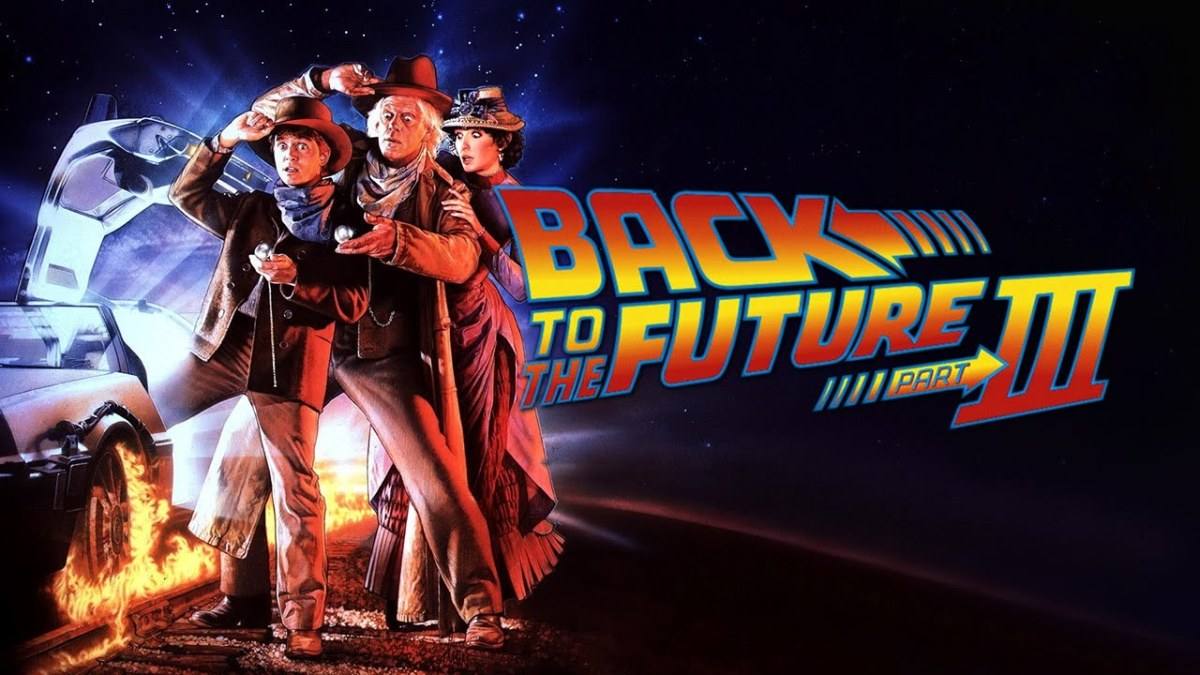
    The original script for Back to the Future Part II was considered too long, so it was split into two. Universal Studios, alongside co-writer/producer Bob Gale and co-writer/director Robert Zemeckis, decided that Parts II and III would be filmed back-to-back. Once Part II was finished filming, Part III would start immediately afterward, amounting to roughly 11 months’ worth of shooting. There was even a short teaser trailer for Part III added to the end of Part II. While working on the first film, one idea that started circulating was moving the action to the Old West. To realize this, they built a whole Western town in Monument Valley, California, and everyone in the crew was excited. For this third installment, Zemeckis felt there wasn’t much left for the McFly’s, so the focus shifted to Doc Brown. After a lengthy production, Back to the Future Part III was released in 1990.

    [/et_pb_text][/et_pb_column][et_pb_column _builder_version=”4.4.8″ type=”1_3″][et_pb_circle_counter _builder_version=”4.4.8″ title=”Rating” number=”80″ bar_bg_color=”#7CDA24″ hover_enabled=”0″][/et_pb_circle_counter][/et_pb_column][/et_pb_row][et_pb_row _builder_version=”4.4.8″][et_pb_column _builder_version=”4.4.8″ type=”4_4″][et_pb_text _builder_version=”4.4.8″ hover_enabled=”0″]

    Synopsis

    Following Part II’s ending, Marty McFly (Michael J. Fox) gives 1955 Doc Brown (Christopher Lloyd) instructions left by 1885 Doc. They show how to repair the DeLorean so Marty can return to 1985 and to not go to 1885. However, Marty discovers that Doc will be shot in 1885, so he uses the DeLorean to try and save him. Unfortunately, the DeLorean’s fuel line gets cut, so it can’t go 88 miles per hour to make time travel possible. Marty manages to find Doc after running into local outlaw Buford “Mad Dog” Tannen (Thomas F. Wilson), who’s after Doc. After Marty warns him, Doc devises a plan to get the DeLorean moving: have a locomotive push it. Along the way, Doc meets local schoolteacher Clara Clayton (Mary Steenburgen) and they fall in love. It’s a race against time to stop Mad Dog and get Marty back to the future!


    Review

    While Part II expanded on the original and asked thought-provoking questions, Back to the Future Part III plays it safe. As a whole, it’s largely a retread of the first film, the only main difference being the setting. Marty goes back in time, arrives at an older Hill Valley, confronts a bully, and must get back to 1985. Admittedly, this film does have several major differences besides the setting, namely that this is largely Doc Brown’s story. Not only is Marty’s motivation to prevent Doc’s death, but he’s given more character development and a bigger arc. It’s an interesting angle to take, essentially role reversing Marty and Doc, even giving Doc a love interest. It doesn’t hurt that Lloyd and Steenburgen have great chemistry together, and they feel like a fully fleshed out couple. There’s a mixture of old tropes and new ideas thrown into the mix.

    Acting-wise, everyone does a good job, Fox and Lloyd still working as a comedic duo and being the franchise’s heart. Since he’s given more of an arc, this entry allows Lloyd to further show his acting abilities aside from eccentricity. Like before, Wilson steals the show, this time as the gun-totting and ill-tempered outlaw Mad Dog Tannen. While George “Buck” Flower doesn’t return, there are plenty of Western character actors thrown in, some even from Blazing Saddles. Production-wise, the Western town built for the film is impressive, feeling like something that would’ve existed at the time. The climactic train sequence is just as thrilling as anything else from the series, and the ending perfectly wraps everything up. Though arguably the weakest film in the trilogy, it still works as a satisfying conclusion without any loose ends. Overall, Back to the Future Part III is a solid final chapter.


    Buy the Back to the Future trilogy on Amazon: https://amzn.to/3ipaAxQ

    [/et_pb_text][/et_pb_column][/et_pb_row][/et_pb_section]