Facebook

FilmNerd

Category: Horror

  • A Quiet Place (2018)

    A Quiet Place (2018)

    [et_pb_section fb_built=”1″ _builder_version=”4.9.4″ _module_preset=”default”][et_pb_row column_structure=”2_3,1_3″ _builder_version=”4.9.4″ _module_preset=”default”][et_pb_column type=”2_3″ _builder_version=”4.9.4″ _module_preset=”default”][et_pb_text _builder_version=”4.9.4″ _module_preset=”default”]

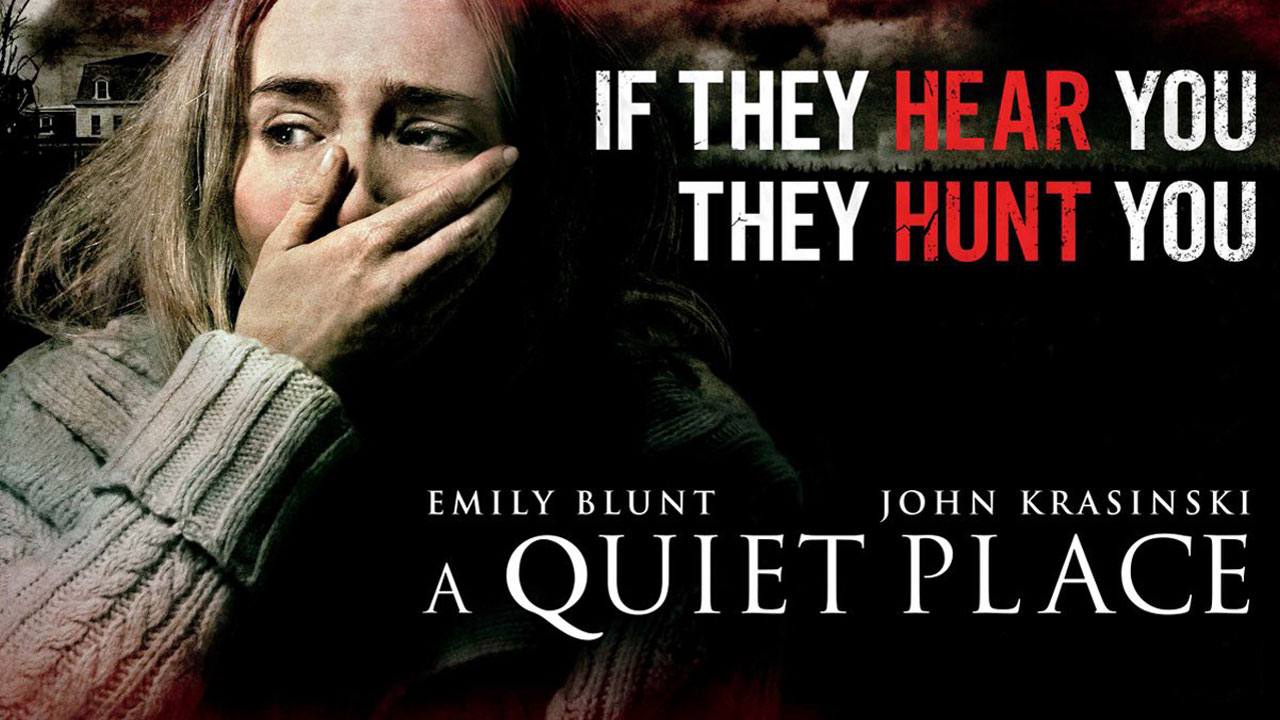
    In early 2016, writers Scott Beck and Bryan Woods started working on a script for a rather unique horror film. Growing up in Iowa, the two watched numerous silent films in college, and they discussed making a silent horror film. Their script caught the attention of actor John Krasinski, who was intrigued by the concept of parents protecting their children. Krasinski signed on to not only star but also rewrite and direct what would be his third film directing credit. Though hesitant at first, his wife and fellow actress Emily Blunt signed on to star alongside her husband. Actress Millicent Simmonds, who is deaf in real life, was hired to lend the film some authenticity for deaf people. With a budget of $17 million, they went to Upstate New York to film this uniquely horrifying production. Finally, in April 2018, A Quiet Place was released to theaters.

    [/et_pb_text][/et_pb_column][et_pb_column type=”1_3″ _builder_version=”4.9.4″ _module_preset=”default”][et_pb_circle_counter title=”Rating” number=”85″ bar_bg_color=”#7CDA24″ _builder_version=”4.9.4″ _module_preset=”default”][/et_pb_circle_counter][/et_pb_column][/et_pb_row][et_pb_row _builder_version=”4.9.4″ _module_preset=”default”][et_pb_column type=”4_4″ _builder_version=”4.9.4″ _module_preset=”default”][et_pb_text _builder_version=”4.9.4″ _module_preset=”default” hover_enabled=”0″ sticky_enabled=”0″]

    Synopsis

    Most of humanity has been wiped out by mysterious creatures that rely on sound to find and kill their victims. We follow the Abbotts – Evelyn (Emily Blunt), husband Lee (John Krasinski), and kids Regan (Millicent Simmonds) and Marcus (Noah Jupe). With Regan being deaf and given the threat around them, the family has had to learn sign language to communicate. Unfortunately, the family is somewhat fractured because Regan feels guilty about the death of her younger brother Beau (Cade Woodward). Also, Lee has been trying to modify Regan’s cochlear implant to restore her hearing but to no avail. Through a series of events, the family is separated and away from the house when Evelyn starts going into labor. With the monsters approaching, the family has to rush together to defend their home while Evelyn gives birth. Will they survive the oncoming onslaught or will they be the next victims?


    Review

    A Quiet Place is an impressively well-made horror film considering it’s made by someone not traditionally known for horror. In an era where horror is typically marked by loud shouts and screams, this is a nice change of pace. Even though there’s hardly any dialogue, you’re still drawn in because you’re intrigued to see where it goes. The movie doesn’t feel the need to explain everything that’s happening, but rather letting the audience figure it out. It’s never explained where the creatures came from, how they got here, or why they’re here in the first place. It’s very similar to how Night of the Living Dead doesn’t explain how the zombies came to be. Granted, this movie is nowhere near as good as George Romero’s immortal classic, but it’s still a solid horror thriller. While it’s got plenty of good qualities, there’s plenty of bad qualities, too.

    One good thing is the cast, as everyone goes a phenomenal job, especially given that they have very little dialogue. Special mention has to go to Millicent Simmonds, who’s able to convey a lot through her body language. Krasinski, Blunt, and Jupe also give solid performances, and they all feel believable as a close-knit family. The creature effects are impressive, with plenty of detail put into its head that separates into different plates. At a brisk 90 minutes, the film goes by fairly quickly and doesn’t feel bogged down with pointless filler. That said, there are a few plot contrivances that drag the film down, such as the dumb kid trope. Additionally, it seems the focus was more on putting the characters in danger instead of having them make rational decisions. Overall, A Quiet Place has some confusing and odd moments, but it’s still a fun thrill ride.


    Buy A Quiet Place on Amazon: https://amzn.to/3wvmIDJ

    [/et_pb_text][/et_pb_column][/et_pb_row][/et_pb_section]
  • Graduation Day (1981)

    Graduation Day (1981)

    [et_pb_section fb_built=”1″ _builder_version=”4.9.4″ _module_preset=”default”][et_pb_row column_structure=”2_3,1_3″ _builder_version=”4.9.4″ _module_preset=”default”][et_pb_column type=”2_3″ _builder_version=”4.9.4″ _module_preset=”default”][et_pb_text _builder_version=”4.9.4″ _module_preset=”default”]

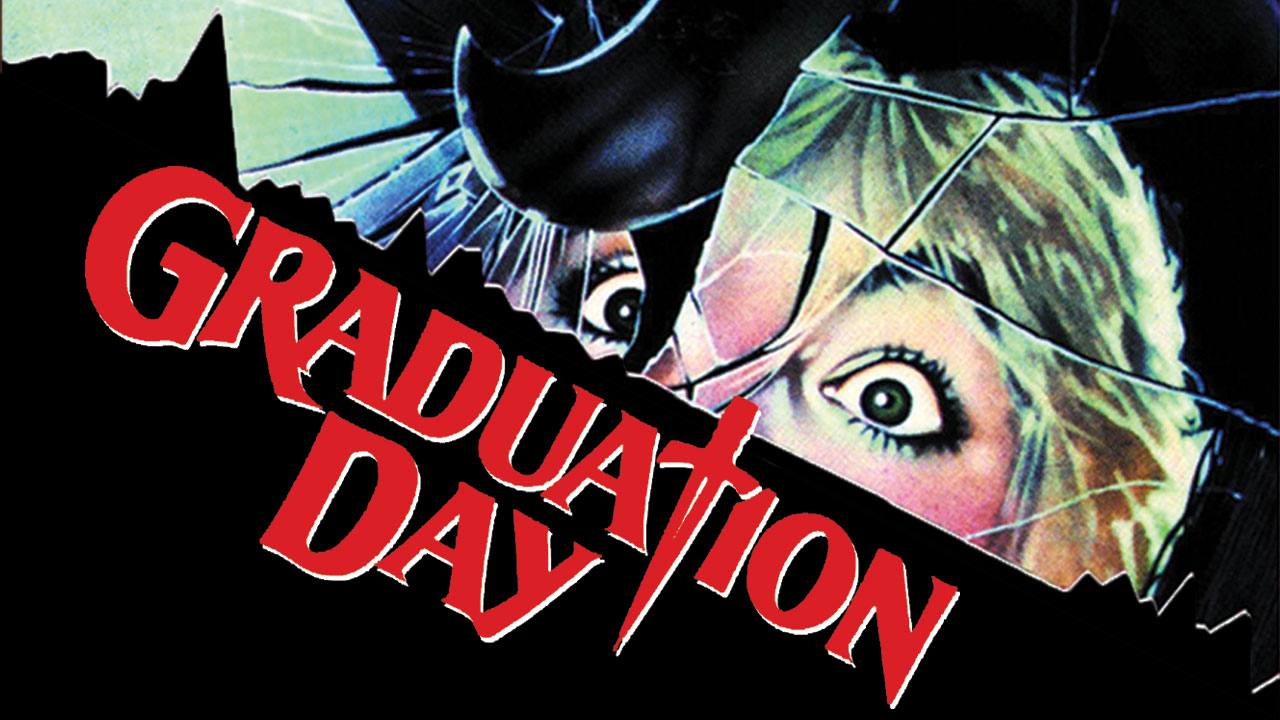
    After being dissatisfied with being a rabbi, Herb Freed was convinced by his wife to pursue his true passion: film. Freed really wanted to make arthouse films but recognized that there was no money to be made in arthouse films. He made his debut film A.W.O.L. in 1972, which was followed by the horror film Haunts in 1976. While working on that film, Freed met David Baughn, an executive who worked with MGM and Russ Meyer’s company. The two entered a partnership to produce and distribute their own films, agreeing that the real money was in horror. Together, they produced the supernatural horror film Beyond Evil, which was released the same year as Friday the 13th. Seeing that slasher films were becoming popular, they decided to find a holiday that hadn’t been made into one yet. They settled on Graduation Day, which was released in May of 1981.

    [/et_pb_text][/et_pb_column][et_pb_column type=”1_3″ _builder_version=”4.9.4″ _module_preset=”default”][et_pb_circle_counter title=”Rating” number=”85″ bar_bg_color=”#7CDA24″ _builder_version=”4.9.4″ _module_preset=”default”][/et_pb_circle_counter][/et_pb_column][/et_pb_row][et_pb_row _builder_version=”4.9.4″ _module_preset=”default”][et_pb_column type=”4_4″ _builder_version=”4.9.4″ _module_preset=”default”][et_pb_text _builder_version=”4.9.4″ _module_preset=”default” hover_enabled=”0″ sticky_enabled=”0″]

    Synopsis

    At Midvale High School, young athlete Laura Ramstead (Ruth Ann Llorens) dies from a blood clot during a track meet. Months later, her older sister Anne (Patch Mackenzie) comes home to take part in the high school’s graduation. Meanwhile, someone is killing off the remaining members of Laura’s track team and crossing them off a team picture. Right before the killer strikes, they pull out a stopwatch to make sure they kill their victims within 30 seconds. The track team is killed in various methods, including a football with a metal spike and a steel spike pit. As more and more students are disappearing, Principal Guglione (Michael Pataki) is having to deal with their parents. Anne confronts Laura’s track coach George Michaels (Christopher George) who’s still dealing with being blamed for her death. Who is this mysterious killer, and who will survive and make it to graduation day?


    Review

    Graduation Day is not only a solid slasher, but it also works as a great mystery film. Throughout the film, there are various red herrings placed about, and each one makes sense for being the killer. Between the grieving sister Anne, the angry coach George, and the eccentric principal, any of them could be the killer. Admittedly, one thing that somewhat drags the film is that there isn’t one central character to focus on. While Anne is initially the lead early on, she disappears for much of the film until the third act. Also, we don’t really get to know much of the track team aside from their names up until they’re killed. That being said, for an early 80s slasher, the film has some fairly likable characters that you honestly care about. Plus, slashers aren’t really known for their deep characterizations or rich backstories.

    Though she disappears for much of the film, Patch Mackenzie makes for a solid lead, being both sympathetic and tough. One of her best scenes is when she’s confronting the coach, and she bounces off of Christopher George with ease. Speaking of, Christopher George delivers a great performance as always, and Michael Pataki has some funny moments as the principal. However, the biggest name here is a then-unknown Vanna White, who got the job since George was her uncle. Plus, we get an early appearance of future 80s scream-queen Linnea Quigley from Sorority Babes in the Slimeball Bowl-O-Rama. What really makes the film stand out is the editing, which incorporates a lot of quick cuts and split-second shots. While some may find it distracting, it’s used just enough here to make the scenes more energetic and tense. Overall, Graduation Day is a slasher classic that should be talked about more.


    Buy Graduation Day from Amazon: https://amzn.to/2S48mLI

    [/et_pb_text][/et_pb_column][/et_pb_row][/et_pb_section]
  • Prison (1987)

    Prison (1987)

    [et_pb_section fb_built=”1″ _builder_version=”4.9.4″ _module_preset=”default”][et_pb_row column_structure=”2_3,1_3″ _builder_version=”4.9.4″ _module_preset=”default”][et_pb_column type=”2_3″ _builder_version=”4.9.4″ _module_preset=”default”][et_pb_text _builder_version=”4.9.4″ _module_preset=”default” hover_enabled=”0″ sticky_enabled=”0″]

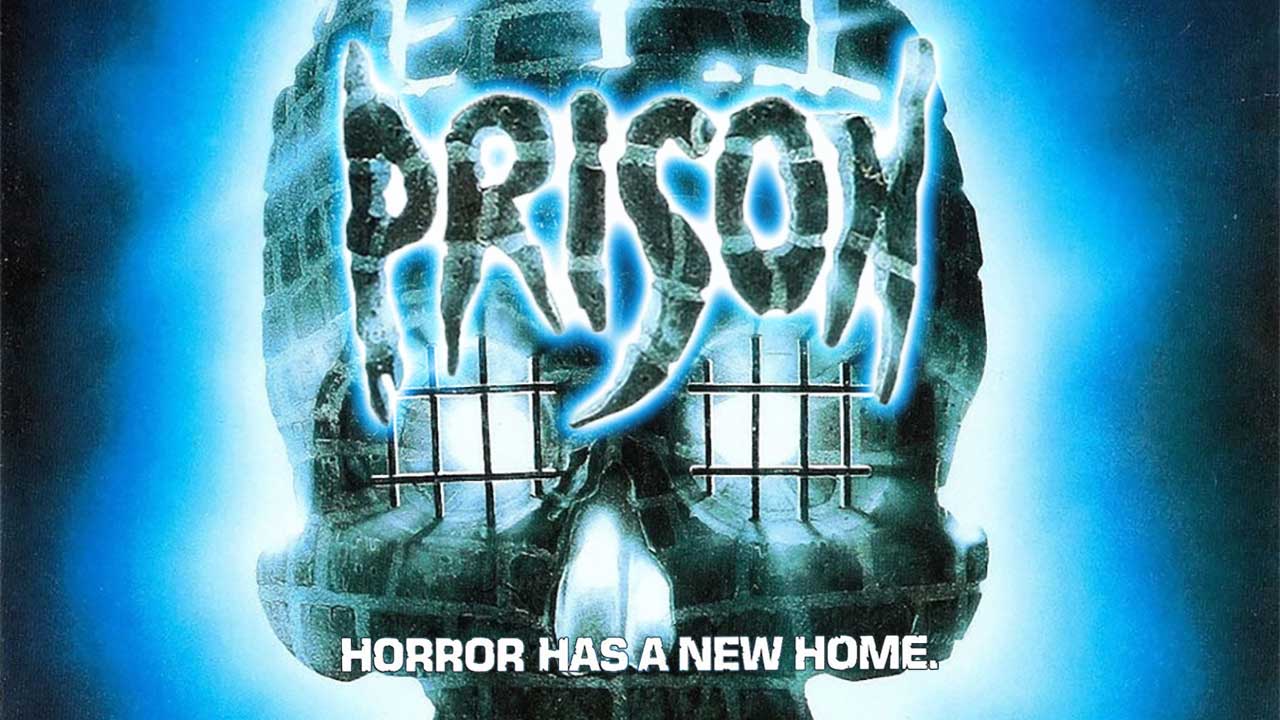
    Irwin Yablans, who produced the 1978 classic Halloween, was thinking of new ideas for a horror film. Feeling that just about every idea had been exhausted, he started thinking of setting a horror film in a prison. He pitched the idea to Charles Band, and he agreed to produce it under his company, Empire Pictures. They hired C. Courtney Joyner to pen the script, but he decided to make it more of a ghost story. Yablans wanted a young, up-and-coming director to helm the project, someone who could be the next John Carpenter. Off the strength of his debut feature Born American, Finnish filmmaker Renny Harlin was hired for his first American film. With a budget of around $1-$4 million, they went to the former Wyoming State Penitentiary to shoot this horrifying production. Eventually, Prison was released in 1987 in the UK and 1988 in the US.

    [/et_pb_text][/et_pb_column][et_pb_column type=”1_3″ _builder_version=”4.9.4″ _module_preset=”default”][et_pb_circle_counter title=”Rating” number=”85″ bar_bg_color=”#7CDA24″ _builder_version=”4.9.4″ _module_preset=”default” hover_enabled=”0″ sticky_enabled=”0″][/et_pb_circle_counter][/et_pb_column][/et_pb_row][et_pb_row _builder_version=”4.9.4″ _module_preset=”default”][et_pb_column type=”4_4″ _builder_version=”4.9.4″ _module_preset=”default”][et_pb_text _builder_version=”4.9.4″ _module_preset=”default” hover_enabled=”0″ sticky_enabled=”0″]

    Synopsis

    Despite the objections of inspector Katherine Walker (Chelsea Field), the prison board decides to reopen the recently condemned Creedmore Prison. Eaton Sharpe (Lane Smith), who was a guard back in the day, is hired to be the warden. Several hundred inmates are transferred in, including Burke (Viggo Mortensen), Cresus (Lincoln Kilpatrick), and Joe ‘Lasagna’ Lazano (Ivan Kane). Trouble starts brewing when one of the inmates is burned to death in a solitary confinement cell. Walker is demanding an investigation be conducted, but Sharpe declines and is vehement about reporting to the board. Turns out that back in the day, Sharpe oversaw the execution of a prisoner who was framed for murder. As more prisoners and guards are being killed in mysterious ways, Sharpe is driven mad while trying to maintain control. Soon, the prisoners band together to try escaping before they’re picked off by the vengeful spirits of the prison.


    Review

    Compared to many of the cheap quickies put out by Empire Pictures around this time, Prison is a hidden gem. Part of what makes this film stand out is the fact that they shot in an actual abandoned prison. The location has a very dark and foreboding presence on its own, enhanced by the excellent cinematography of Mac Ahlberg. For such a low budget and given that this was Renny Harlin’s second film, it looks way better than expected. There are tons of moody lighting, harsh shadows, and dynamic lighting, with some scenes feeling like a warped dream. Acting-wise, everyone does a solid job, Lane Smith in particular making for a great and complex villain. As much as he tries to act tough and stern, you get a sense that he’s haunted by his past. Plus, Hal Landon Jr. of Bill & Ted fame plays a guard.

    While he’s not given many lines, Viggo Mortensen has a very cool and charismatic presence to him. It’s easy to see how he became a major star in the Lord of the Rings films and Green Book. Chelsea Field does a good job as the female lead and has great back-and-forths with Smith and Mortensen. Also, there are plenty of notable character actors, including Tommy “Tiny” Lister, Lincoln Kilpatrick, Tom Everett, and Larry “Flash” Jenkins. Like many Charles Band productions, the late great John Carl Buechler did the effects, and it’s easily his best work. From Hal Landon Jr.’s death by razor wire to the zombified corpse played by Kane Hodder, it’s some incredible stuff. Admittedly, the film does take a while to get going, but once they’re at the prison, all hell breaks loose. Overall, Prison is a solidly creepy and atmospheric horror film worthy of rediscovering.


    Buy Prison on Amazon: https://amzn.to/3tJgcaD

    [/et_pb_text][/et_pb_column][/et_pb_row][/et_pb_section]
  • Mother’s Day (1980)

    Mother’s Day (1980)

    [et_pb_section fb_built=”1″ _builder_version=”4.9.4″ _module_preset=”default”][et_pb_row column_structure=”2_3,1_3″ _builder_version=”4.9.4″ _module_preset=”default”][et_pb_column type=”2_3″ _builder_version=”4.9.4″ _module_preset=”default”][et_pb_text _builder_version=”4.9.4″ _module_preset=”default”]

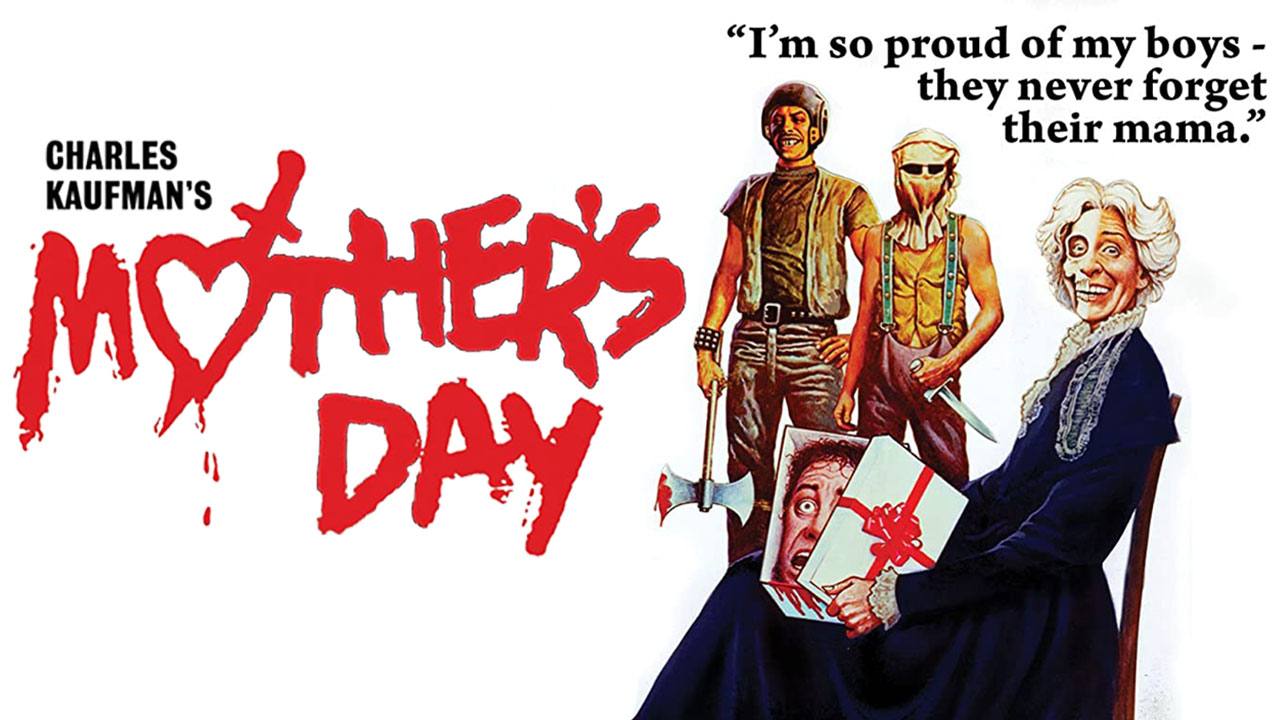
    Charles Kaufman, brother of Troma co-founder Lloyd Kaufman, currently runs a bakery in San Diego that’s been operating since 1994. However, before entering the baking industry, Charles wanted to get into the film industry and attended UCLA’s film school. After graduating, Kaufman got a job working on the Bob Hope Show before moving on to making B-movies. Not having much luck in Hollywood, Charles decided to move back to New York to work with his brother Lloyd. His directorial debut was the 1977 adult film, The Secret Dreams of Mona Q, which Lloyd also produced. Around this time, John Carpenter’s Halloween was dominating the box office, and studios were trying to capitalize on its success. Seeing the potential in this, Charles decided to make his next project a horror film, albeit with some humor added. Made on a budget of $115,000, Mother’s Day was released in September of 1980.

    [/et_pb_text][/et_pb_column][et_pb_column type=”1_3″ _builder_version=”4.9.4″ _module_preset=”default”][et_pb_circle_counter title=”Rating” number=”80″ bar_bg_color=”#7CDA24″ _builder_version=”4.9.4″ _module_preset=”default”][/et_pb_circle_counter][/et_pb_column][/et_pb_row][et_pb_row _builder_version=”4.9.4″ _module_preset=”default”][et_pb_column type=”4_4″ _builder_version=”4.9.4″ _module_preset=”default”][et_pb_text _builder_version=”4.9.4″ _module_preset=”default” hover_enabled=”0″ sticky_enabled=”0″]

    Synopsis

    Former college roommates Trina (Tiana Pierce), Abbey (Nancy Hendrickson), and Jackie (Deborah Luce) have an annual “mystery weekend” tradition. Each year, one of them picks a mystery destination for them to spend the weekend, and this is Jackie’s year. She plans a camping trip for the three of them at Deep Barons, a wooded area in rural New Jersey. One night, they’re stuffed into their sleeping bags and kidnapped by brothers Ike (Frederick Coffin) and Addley (Michael McCleery). The girls are brought before the brothers’ demented mother (Beatrice Pons), who subjects them to physical and mental torture. While the girls manage to escape, Jackie dies from her wounds, leaving Trina and Abbey to fend for themselves. After recovering, the girls head back to the house to get their revenge on the brothers and their mother. Truly, this will be one Mother’s Day they won’t soon forget.


    Review

    After having viewed Mother’s Day, I’m somewhat conflicted on my feelings towards the overall film, mostly due to the tone. When the girls are kidnapped and tortured, it’s effectively disturbing and uncomfortable, which makes the revenge all the more satisfying. However, several scenes are so ridiculous in between the disturbing moments, it’s hard to take it seriously. From what I understand, Charles Kaufman intended for this to have some satire, which many contemporary critics have noted. I can see where they’re coming from, given that the boys are raised on junk food and TV. Also, there are numerous pop culture references sprinkled in, such as a Star Trek poster and G.I. Joe action figures. It comes off as a satire of rampant consumerism, a society raised on popular media, and parental upbringing. Granted, I could be reaching for something deep in an exploitation film.

    Directing-wise, Charles does well behind the camera, and the low budget gives it a very raw and gritty feel. In terms of acting, it’s about what you’d expect from this type of movie, though there are a few stand-outs. Credited as Rose Ross, Beatrice Pons steals the show as the demented mother who wants her boys to prove themselves. Frederick Coffin and Michael McCleery work well off each other as the dimwitted brothers and they have some good back-and-forths. Speaking of, Tiana Pierce, Nancy Hendrickson, and Deborah Luce have decent chemistry, and you feel for what they’re going through. While the film clocks in roughly 90 minutes, much of the runtime is padded out with a pretty meaningless filler. These slower scenes do detract from the film, but it’s almost expected for this era of exploitation film. Overall, Mother’s Day is a bit disjointed, but it’s still a good time.


    Buy Mother’s Day from Amazon: https://amzn.to/2QMdq76

    [/et_pb_text][/et_pb_column][/et_pb_row][/et_pb_section]
  • Frostbiter: Wrath of the Wendigo (1994)

    Frostbiter: Wrath of the Wendigo (1994)

    [et_pb_section fb_built=”1″ _builder_version=”4.9.4″ _module_preset=”default”][et_pb_row column_structure=”2_3,1_3″ _builder_version=”4.9.4″ _module_preset=”default”][et_pb_column type=”2_3″ _builder_version=”4.9.4″ _module_preset=”default”][et_pb_text _builder_version=”4.9.4″ _module_preset=”default”]

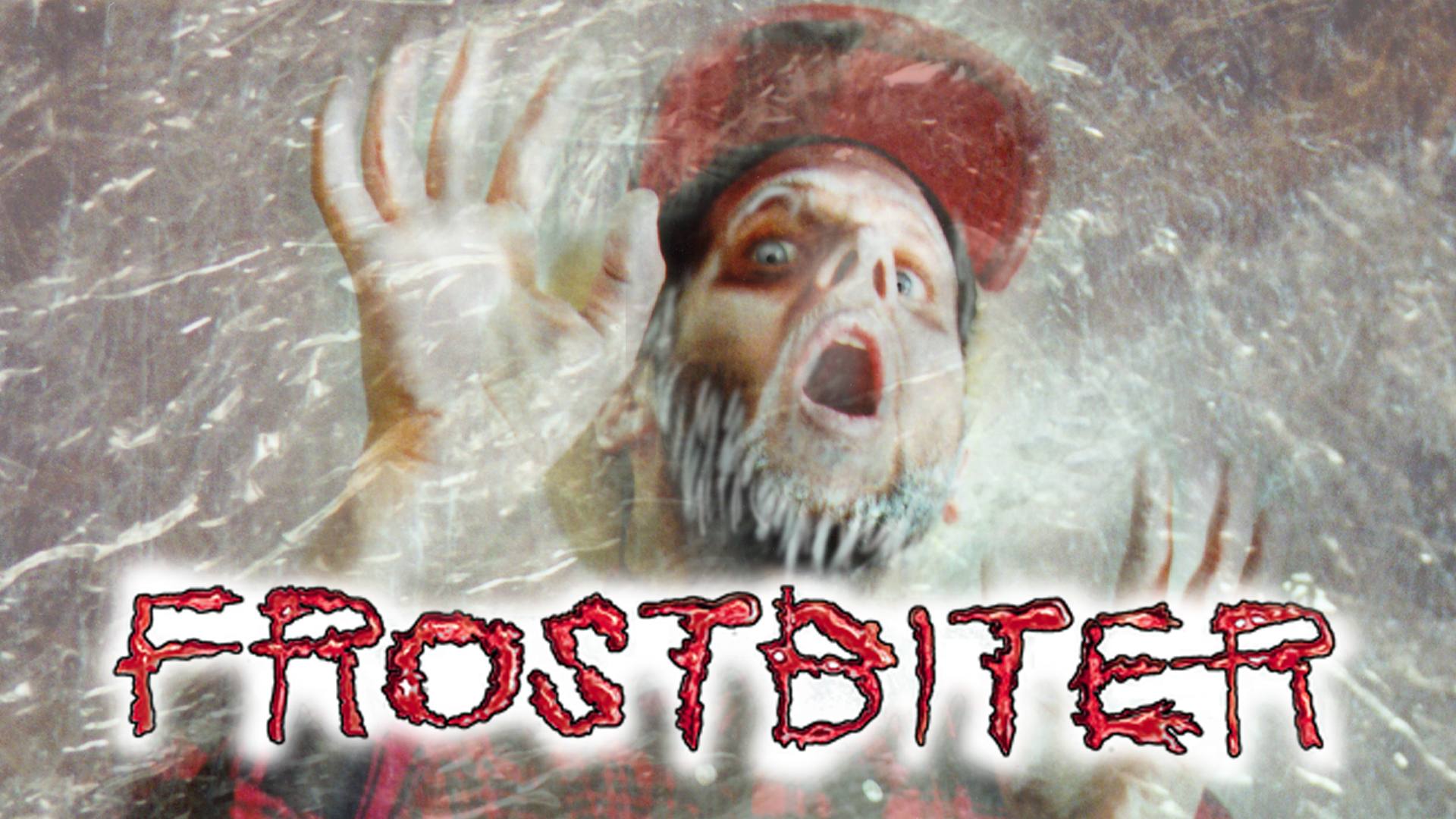
    Tom Chaney was studying filmmaking in Michigan when he met special effects designer Gary Jones while working on The Carrier. The two instantly became good friends, having a shared love for monster movies and started working together. Chaney and Tom were both influenced by Sam Raimi and company, and Jones did special effects on Evil Dead II. While working on commercials and still attending school, Chaney was saving up to buy film stock for his first movie. Over the course of several weekends, Chaney, Jones, and their small cast and crew worked on a fairly ambitious film. Chaney connected with Nanette Sorensen, who produced Singapore Harbor, U.S.A., which Jones worked on, to help finish the film. Though it was originally filmed in 1988, the film, originally titled Wendigo, wouldn’t see a release until 1994. Once Troma picked it up, they released it under the title Frostbiter: Wrath of the Wendigo.

    [/et_pb_text][/et_pb_column][et_pb_column type=”1_3″ _builder_version=”4.9.4″ _module_preset=”default”][et_pb_circle_counter title=”Rating” number=”70″ bar_bg_color=”#EDF000″ _builder_version=”4.9.4″ _module_preset=”default”][/et_pb_circle_counter][/et_pb_column][/et_pb_row][et_pb_row _builder_version=”4.9.4″ _module_preset=”default”][et_pb_column type=”4_4″ _builder_version=”4.9.4″ _module_preset=”default”][et_pb_text _builder_version=”4.9.4″ _module_preset=”default” hover_enabled=”0″ sticky_enabled=”0″]

    Synopsis

    On Manitou Island, friends Gary (Ron Asheton) and Dave (David Wogh) are out hunting when they encounter an old man. Referring to himself as The Guardian (Mike Missler), Gary accidentally shoots him, which breaks the circle holding the Wendigo captive. Meanwhile, The Guardian visits his granddaughter Sandy (Lori Baker) as a ghost to tell her she must reseal the Wendigo. She hires Duke (John Mietelka) to fly her to the island, only for the plane to crash after he’s killed. Elsewhere, Gary’s with his friends Peter (Patrick Butler), Tony (Tom Franks), Nick (Alan Madlane), and Jerry (John Bussard). Along with new guy Leo Phillipe (Devlin Burton), the group encounters chili monsters, witches disguised as centerfolds, and the Wendigo. Before long, the guys are gradually picked off one by one by the Wendigo until only a few are left. Will Sandy successfully reseal the Wendigo, or will she suffer its wrath?


    Review

    Frostbiter: Wrath of the Wendigo is one of those movies you’ll either love or hate depending on your expectations. If you’re looking for a low-budget schlocky monster movie with gore and nudity, you’ll more than likely enjoy this. Given that this was made by guys with experience in special effects, those are the movie’s main selling point. For the most part, the effects look pretty decent given the low budget they had to work with. There are some decent gore effects and some fun stop-motion animation sequences that’ll satisfy fans of practical effects. Admittedly, the old man makeup used for The Guardian looks decent in wide shots, but in close-up looks terrible. Some optical effects are thrown in that add to the film’s low-budget charm, particularly towards the finale. Also, the design of the titular Wendigo is pretty cool and easily the best part of the film.

    Unfortunately, what this movie has in terms of effects lacks in story and characters, which are pretty lacking. Granted, something like this shouldn’t require a deep story and nuanced characters, but this doesn’t give much to work with. We hardly get to know anything about the characters other than their names and maybe some ancillary background information. It doesn’t help either that almost everyone is giving a fairly sub-par performance that’s neither good nor bad but forgettable. Ron Asheton and Lori Baker are at least trying given the small amount of material they’re given to work with. Also, in between the scenes of monsters and gore, the film is padded out with tons of filler. These scenes ultimately lead to nothing and drag down the pacing of a fairly short film at under 90 minutes. Overall, Frostbiter: Wrath of the Wendigo is an average monster movie worth watching once.


    Buy Frostbiter: Wrath of the Wendigo from Amazon: https://amzn.to/2S6faIR

    [/et_pb_text][/et_pb_column][/et_pb_row][/et_pb_section]
  • Galaxy of Terror (1981)

    Galaxy of Terror (1981)

    [et_pb_section fb_built=”1″ _builder_version=”4.16″ _module_preset=”default” global_colors_info=”{}”][et_pb_row _builder_version=”4.25.2″ _module_preset=”default” global_colors_info=”{}”][et_pb_column type=”4_4″ _builder_version=”4.25.2″ _module_preset=”default” global_colors_info=”{}”][et_pb_video src=”https://youtu.be/q0ssEVAgBRs” _builder_version=”4.25.2″ _module_preset=”default” global_colors_info=”{}”][/et_pb_video][/et_pb_column][/et_pb_row][et_pb_row column_structure=”2_3,1_3″ _builder_version=”4.16″ _module_preset=”default” global_colors_info=”{}”][et_pb_column type=”2_3″ _builder_version=”4.16″ _module_preset=”default” global_colors_info=”{}”][et_pb_text _builder_version=”4.16″ _module_preset=”default” global_colors_info=”{}”]

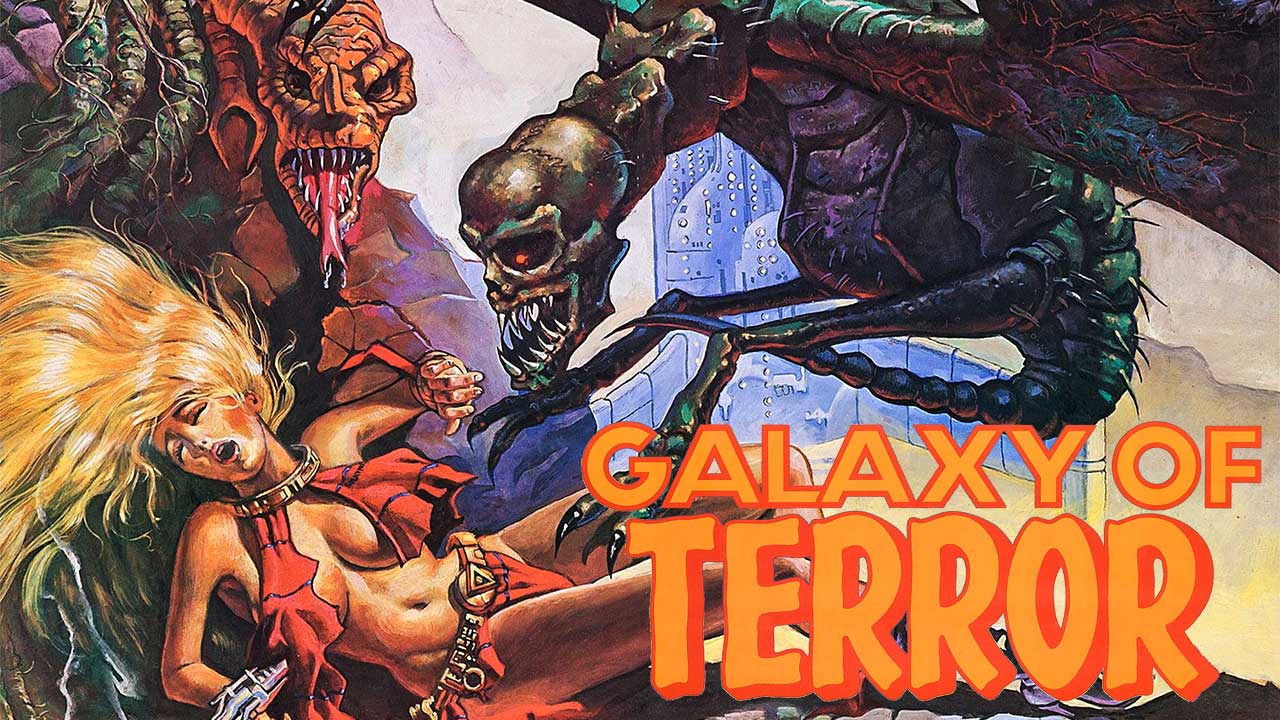
    As mentioned in my review of Alien, B-movie producer Roger Corman was originally set to produce before Fox stepped up. After the film became a massive hit, Corman decided to capitalize on its success by making his own knock-off. He hired director Bruce Clark and writer Marc Siegler, who he worked with in the past on 1969’s Naked Angels. The two decided that rather than copy the Ridley Scott film wholesale, they’d make their film more psychological. Much of the crew that was hired had worked on Corman’s Star Wars knock-off, Battle Beyond the Stars. Among them was a then 26-year-old James Cameron, who quickly rose through the ranks to be Head of Production Design. What resulted was perhaps one of the most infamously sleazy Alien knock-offs ever made thanks to one particular scene. The subsequent film was released in October 1981 as Galaxy of Terror.

    [/et_pb_text][/et_pb_column][et_pb_column type=”1_3″ _builder_version=”4.16″ _module_preset=”default” global_colors_info=”{}”][et_pb_circle_counter title=”Rating” number=”80″ bar_bg_color=”#7CDA24″ _builder_version=”4.16″ _module_preset=”default” global_colors_info=”{}”][/et_pb_circle_counter][/et_pb_column][/et_pb_row][et_pb_row _builder_version=”4.16″ _module_preset=”default” global_colors_info=”{}”][et_pb_column type=”4_4″ _builder_version=”4.16″ _module_preset=”default” global_colors_info=”{}”][et_pb_text _builder_version=”4.27.4″ _module_preset=”default” hover_enabled=”0″ global_colors_info=”{}” sticky_enabled=”0″]

    Synopsis

    After receiving a distress signal from the planet Morganthus, the spaceship Quest is sent out to investigate. Piloted by Captain Trantor (Grace Zabriskie), the ship ends up crash landing, thought thankfully the crew survives. Led by Baelon (Zalman King), the crew is sent out to investigate the source of the signal and find bodies. Eventually, they find a giant pyramid-like structure, which empath Alluma (Erin Moran) describes as feeling “empty” and “dead”. Among the crew is Alluma’s lover Cabren (Edward Albert), tech officer Dameia (Taaffe O’Connell), and the mute Quuhod (Sid Haig). As they venture further into the pyramid, the crew are being picked off one by one in gruesome ways. The survivors discover that the pyramid is taking their greatest fears and bringing them to life to kill them off. Who is responsible for this, and what horrors await our heroes as they explore this galaxy of terror?


    Review

    Even for its low budget, Galaxy of Terror is one of the better-made knock-offs to come out of Roger Corman. Part of this is because of the amazing effects work by Cameron, the Skotak Brothers, and Alec Gillis among others. It’s easy to compare the work Cameron did on this to what he would later do with Aliens. From the look of the barren planet to the ominous pyramid’s design, they did a lot for very little. What also makes this stand out is how, while it’s clear what they’re knocking off, they still make it original. The idea of something manifesting a person’s worst fears into reality is unique, especially for the opportunities it offers. There are so many memorable creatures and monsters, as well as inventive death scenes, it’ll satiate any gore hound’s appetite. Even the sound effects make the film wonderfully gross and disgusting.

    The film has probably one of the weirdest casts ever, including Ray Walston, Erin Moran, Zalman King, and Robert Englund. It’s so weird seeing Walston, Moran, and King in a film where people are torn apart and slashed by monsters. B-movie regulars Sid Haig and Taaffe O’Connell shine in their respective roles and easily have the most memorable death scenes. O’Connell’s is probably the most notorious, considering it involves her being, essentially, raped to death by a giant maggot. Admittedly, Clark and Siegler were ordered to include the scene, so they decided to make it as ridiculous as possible. To their credit, they succeeded, and it’s certainly a moment you won’t see in any film before or after. Admittedly, the story can get confusing, especially towards the end, but at 80 minutes, it flies by pretty quickly. Overall, Galaxy of Terror is an oddity worth tracking down for cult aficionados.


    Buy Galaxy of Terror on Amazon: https://amzn.to/2RAdBCz.

    Disclosure: The above link is an affiliate link, which means that, at no additional cost, I will earn a commission if you click through the link and make a purchase.

    [/et_pb_text][et_pb_code _builder_version=”4.27.4″ _module_preset=”default” hover_enabled=”0″ sticky_enabled=”0″]

    Where to watch Galaxy of Terror (1981)

    data-api-key=”LMVDLdLSH5ZJnQ4FMGMgyJCB8cmGbfCV” data-object-type=”Movie” data-title=”Galaxy of Terror” data-year=”1981″ data-theme=”light”>

    [/et_pb_code][/et_pb_column][/et_pb_row][/et_pb_section]

  • The Vampire Journals (1997)

    The Vampire Journals (1997)

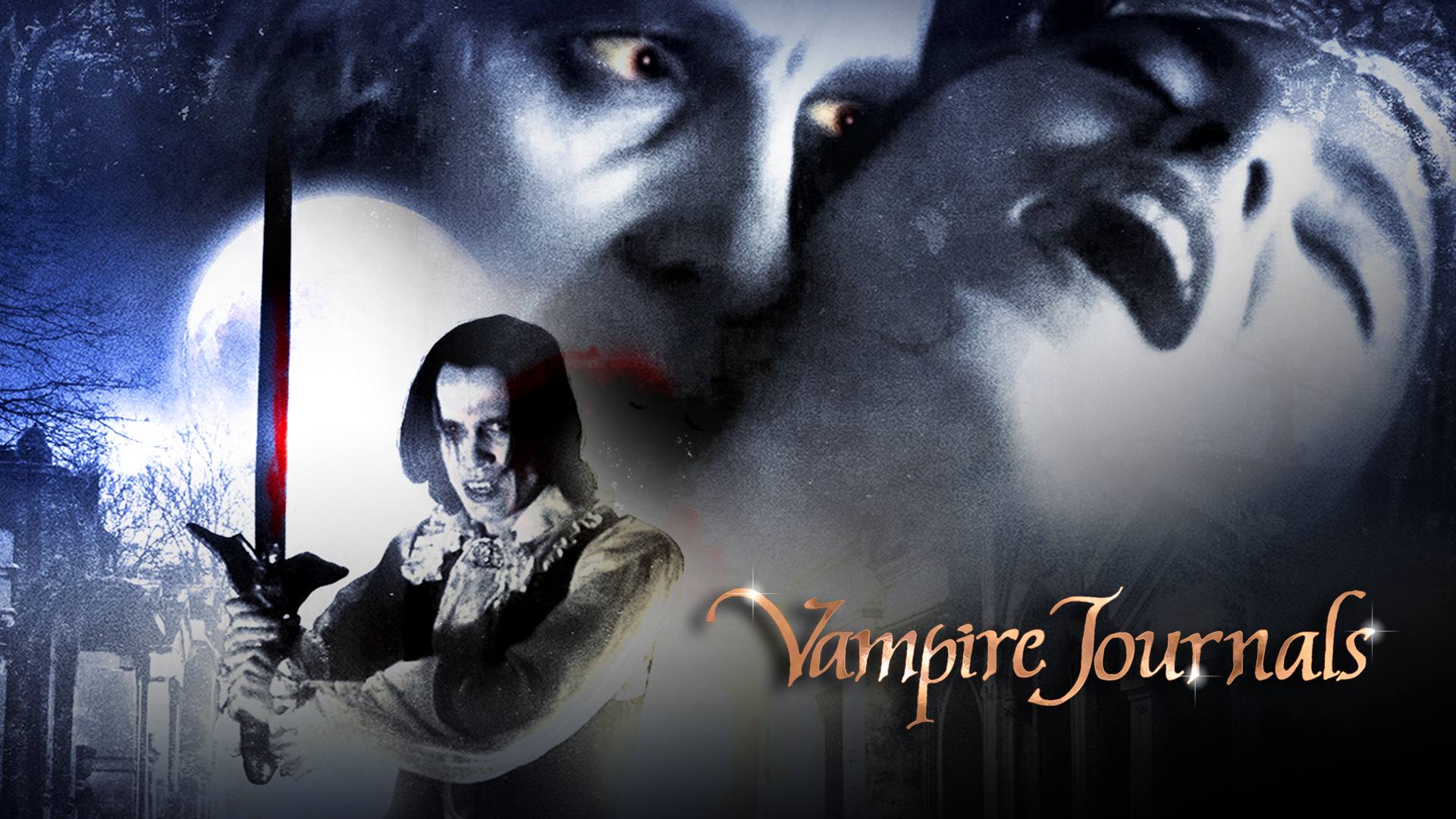
    [et_pb_section fb_built=”1″ _builder_version=”4.16″ _module_preset=”default” global_colors_info=”{}”][et_pb_row column_structure=”2_3,1_3″ _builder_version=”4.16″ _module_preset=”default” global_colors_info=”{}”][et_pb_column type=”2_3″ _builder_version=”4.16″ _module_preset=”default” global_colors_info=”{}”][et_pb_text _builder_version=”4.16″ _module_preset=”default” global_colors_info=”{}”]Following the production of Bloodlust: Subspecies III, Charles Band proposed to director Ted Nicolaou with an idea for a spin-off. Band suggested doing a more classical, sophisticated vampire movie that was more urban versus Subspecies being in the country. Nicolaou accepted though it would be years before the film got off the ground following Full Moon’s fallout with Paramount. Around this time, 1994’s Interview with the Vampire, based on Anne Rice’s novel, was a critical and financial hit. This might’ve inspired Band’s decision, as it’s typical of him to chase after a trend while it’s still popular. Regardless, Nicolaou was interested in making a more elegant vampire movie that would be filmed in Romania. It helped that he really enjoyed shooting there, so after an extensive series of auditions, Nicolaou shot his vampire spinoff. Finally, in February 1997, The Vampire Journals was released to a ravenous fanbase.

    [/et_pb_text][/et_pb_column][et_pb_column type=”1_3″ _builder_version=”4.16″ _module_preset=”default” global_colors_info=”{}”][et_pb_circle_counter title=”Rating” number=”80″ bar_bg_color=”#7CDA24″ _builder_version=”4.16″ _module_preset=”default” global_colors_info=”{}”][/et_pb_circle_counter][/et_pb_column][/et_pb_row][et_pb_row _builder_version=”4.16″ _module_preset=”default” global_colors_info=”{}”][et_pb_column type=”4_4″ _builder_version=”4.16″ _module_preset=”default” global_colors_info=”{}”][et_pb_text _builder_version=”4.27.4″ _module_preset=”default” hover_enabled=”0″ global_colors_info=”{}” sticky_enabled=”0″]

    Synopsis

    In Bucharest, the vampiric Zachary (David Gunn) is hunting down fellow vampire Ash (Johnathan Morris) for a revenge quest. Back in the 1800s, Zachary killed the woman who turned him and his hunting down everyone in her bloodline. He tracks Ash down to Club Muse, a nightclub that he owns alongside its manager Iris (Starr Andreeff). One night, Zach and Ash come across an aspiring pianist named Sofia (Kirsten Cerre) and fall in love with her. Ash sends Iris to invite Sofia to the club with the promise of $1,000 for a live solo performance. Zach warns her not to go, but she does and ends up getting turned by Ash. While she’s being held hostage until agreeing to accept Ash as her master, Zach infiltrates the club to rescue her. But will it be too late to save her before Ash fully turns her into one of his brides?


    Review

    While not the most original vampire film, The Vampire Journals is easily one of Full Moon’s most well-made movies. Like the Subspecies films, Ted Nicolaou takes full advantage of filming in Bucharest and chooses some fantastic locations. Not only do they use the historic architecture, but the wintertime conditions help the film stand out. Nicolaou makes great use of shadows and harsh lighting to establish mood much as he did in previous films. Adding to the film’s mood is the haunting score by Richard Kosinski, evoking the same emotions as his Subspecies score. Long-time collaborator Adolfo Bartoli uses some creative angles and lighting to help accentuate the film’s more gothic nature. In a way, the style and look are very similar to the Hammer Films of the 1960s and 1970s. Adding to the old school feel is the extensive use of fog and very dim lighting, which are excellent.

    Though the cast is comprised mostly of unknowns and character actors, they all do a surprisingly great job. David Gunn makes for a solid, moody lead, though his voiceovers can get somewhat grating, sounding super emotional and archaic. It reminds me of Harrison Ford’s voiceovers in Blade Runner, but at least here Gunn puts some emotion in it. Kirsten Cerre, on top of being adorable, brings some emotional weight with her performance and works well off of Gunn. However, it’s Johnathan Morris’ Ash who stands out as the malevolent vampire, adding some class and an element of tragedy. Even though it’s billed as a Subspecies spinoff, there’s only a one-line mention of Radu and Transylvania. In a way, this works in the film’s favor in that you can enjoy it as a standalone vampire film. Overall, The Vampire Journals is a well-made and solidly entertaining gothic horror film.


    Buy The Vampire Journals from

    Disclosure: The above link is an affiliate link, which means that, at zero cost to you, I will earn a commission if you click through the link and finalize a purchase.

    [/et_pb_text][/et_pb_column][/et_pb_row][/et_pb_section]
  • Bloodsucking Freaks (1976)

    Bloodsucking Freaks (1976)

    [et_pb_section fb_built=”1″ _builder_version=”4.9.3″ _module_preset=”default”][et_pb_row column_structure=”2_3,1_3″ _builder_version=”4.9.3″ _module_preset=”default”][et_pb_column type=”2_3″ _builder_version=”4.9.3″ _module_preset=”default”][et_pb_text _builder_version=”4.9.3″ _module_preset=”default”]

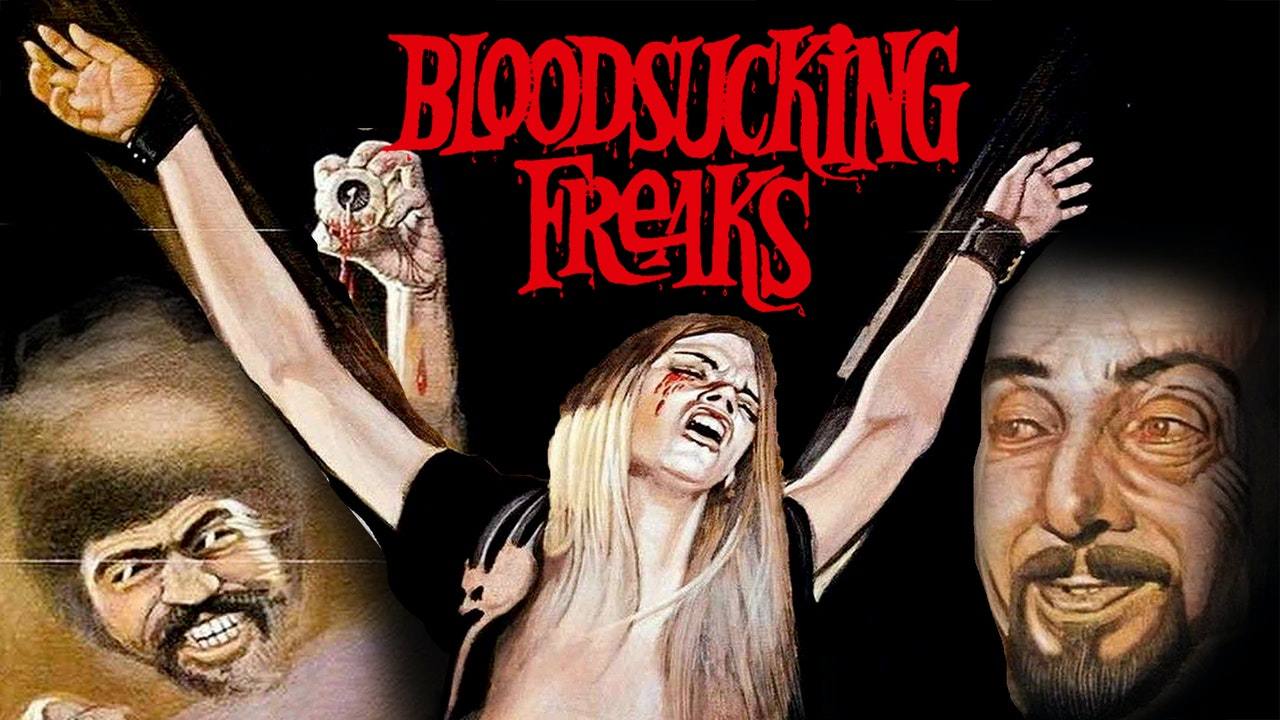
    New York-based filmmaker Joel M. Reed started in the adult industry directing films like Career Bed and Sex by Advertisement. Going into the 70s, he directed Wit’s End, which was finished in 1971 but not released until 1975. He made his transition into horror with 1975’s Blood Bath, which featured early appearances from Doris Roberts and P.J. Soles. Around this time, he was working on a film about a rock star haunted by a groupie’s ghost. Unfortunately, he couldn’t get that off the ground, so he instead made a horror comedy that incorporated S&M and ballet. Initially titled Sardu, Master of the Screaming Virgins, the film was released in 1976 as The Incredible Torture Show. Years later, Troma acquired the film and re-released it, but got in trouble after releasing it uncut with an R-rating. Having become the subject of controversy, the film gained a cult reputation as Bloodsucking Freaks.

    [/et_pb_text][/et_pb_column][et_pb_column type=”1_3″ _builder_version=”4.9.3″ _module_preset=”default”][et_pb_circle_counter title=”Rating” number=”70″ bar_bg_color=”#EDF000″ _builder_version=”4.9.3″ _module_preset=”default”][/et_pb_circle_counter][/et_pb_column][/et_pb_row][et_pb_row _builder_version=”4.9.3″ _module_preset=”default”][et_pb_column type=”4_4″ _builder_version=”4.9.3″ _module_preset=”default”][et_pb_text _builder_version=”4.9.3″ _module_preset=”default” hover_enabled=”0″ sticky_enabled=”0″]

    Synopsis

    Sardu (Seamus O’Brien) runs an off-Broadway show called “Theatre of the Macabre” with his diminutive assistant Ralphus (Luis De Jesus). Their show mainly consists of them brutally torturing and killing various naked women they get through the white slave trade. During a show, theatre critic Creasy Silo (Alan Dellay) denounces the show and refuses to even give a negative review. As revenge, Sardu has Ralphus and one of his girls kidnap Creasy to torture him for a positive review. To try and elevate the show, Sardu also sets his sights on famed ballerina Natasha Di Natalie (Viju Krem). When she refuses to participate, Sardu forces her to watch as they dismember and kill various women in gruesome ways. Meanwhile, her football-player boyfriend Tom Maverick (Niles McMaster) enlists Detective John Tucci (Dan Fauci) to help find her. What horrors await our heroes as they venture into Sardu’s Theatre of the Macabre?


    Review

    Bloodsucking Freaks has been discussed to death since its release, so there’s not much that hasn’t already been said. It’s vile, it’s graphic, it’s sleazy, it’s misogynistic, it’s ridiculous, it’s campy, it’s juvenile, and other adjectives. Since much more graphic films have been made in later years, this one is fairly tame by comparison. The gore in this film is about on par with a Herschel Gordon Lewis movie, including the bright red blood. That being said, some sequences are still pretty gruesome even by today’s standards, though most of them are implied. One involves a deranged doctor pulling a woman’s teeth out and drilling a hole in her head to drink from. If nothing else, this film has some creative ways by which they dispatch their victims, which keeps things somewhat original. It’s definitely not for the squeamish, but there’s far worse out there.

    This is a somewhat impossible film to review since the filmmakers clearly weren’t going for some sort of artistic vision. They clearly wanted to make a film that featured naked women being tortured and maimed in gratuitous ways. That said, I will say that the film has an almost hypnotic quality to it, like you can’t look away. Also, the film benefits from being filmed in 1970s New York, where every street corner had grime and grit. Acting-wise, it runs the gambit from being pretty bad to somewhat decent, though Seamus O’Brien is easily the best actor. It’s a shame he was killed shortly after making this film because he could’ve been a great character actor. In fact, many of the people involved have died over the years, which adds to its overall mystique. Overall, Bloodsucking Freaks isn’t for everyone, but it’s an interesting footnote in exploitation cinema.


    Buy Bloodsucking Freaks from Amazon: https://amzn.to/3a8agBo

    [/et_pb_text][/et_pb_column][/et_pb_row][/et_pb_section]
  • Crawlspace (1986)

    Crawlspace (1986)

    [et_pb_section fb_built=”1″ _builder_version=”4.16″ _module_preset=”default” global_colors_info=”{}”][et_pb_row column_structure=”2_3,1_3″ _builder_version=”4.16″ _module_preset=”default” global_colors_info=”{}”][et_pb_column type=”2_3″ _builder_version=”4.16″ _module_preset=”default” global_colors_info=”{}”][et_pb_text _builder_version=”4.16″ _module_preset=”default” global_colors_info=”{}”]

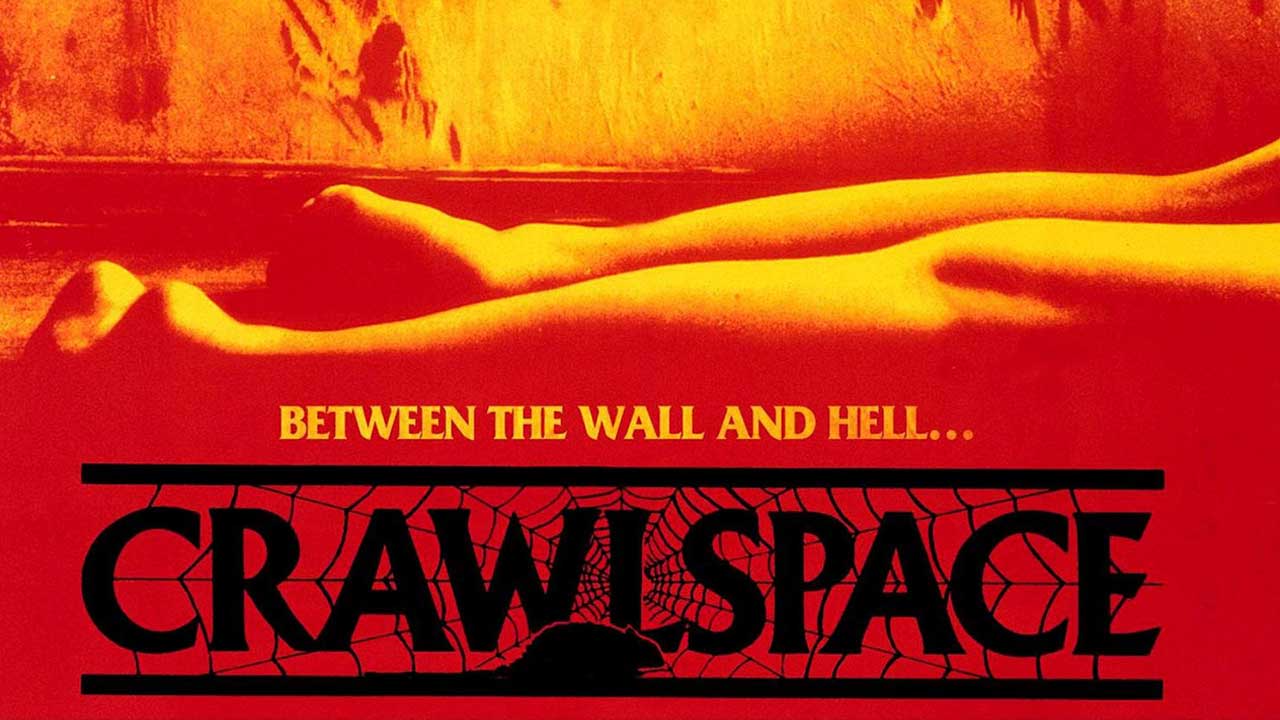
    Though it wasn’t a hit at the time, Tourist Trap has since developed a cult following among hardcore horror fans. Following its release, filmmaker David Schmoeller moved onto what was supposed to be his big breakthrough into mainstream Hollywood. 1982’s The Seduction, featuring Morgan Fairchild in her feature film debut, unfortunately received negative reviews and earned three Razzie nominations. Looking to bounce back, Schmoeller turned to Charles Band, who had since formed his production company, Empire Pictures. Schmoeller had a script about a former POW in Vietnam building a homemade prison camp, but Band had other ideas. Band promised he’d get character actor Klaus Kinski to star if Schmoeller changed the script to be about a Nazi. Schmoeller agreed, but nothing could’ve prepared him for how much of a disaster working with Kinski would be. After a very troubled production, Crawlspace was finally released in May of 1986.

    [/et_pb_text][/et_pb_column][et_pb_column type=”1_3″ _builder_version=”4.16″ _module_preset=”default” global_colors_info=”{}”][et_pb_circle_counter title=”Rating” number=”85″ bar_bg_color=”#7CDA24″ _builder_version=”4.16″ _module_preset=”default” global_colors_info=”{}”][/et_pb_circle_counter][/et_pb_column][/et_pb_row][et_pb_row _builder_version=”4.16″ _module_preset=”default” global_colors_info=”{}”][et_pb_column type=”4_4″ _builder_version=”4.16″ _module_preset=”default” global_colors_info=”{}”][et_pb_text _builder_version=”4.27.4″ _module_preset=”default” hover_enabled=”0″ global_colors_info=”{}” sticky_enabled=”0″ admin_label=”Text”]

    Synopsis

    Lori Bancroft (Talia Balsam) is looking into a new apartment and meets with the landlord Karl Gunther (Klaus Kinski). After he gives her a tour and talks about the apartment, Lori decides to move in, much to Karl’s delight. Turns out Karl has some dark secrets, as he regularly kidnaps and tortures his female tenants in the attic. He has various crawlspaces and passageways within the building that he uses to spy on and kill his tenants. One day, he’s visited by Josef Steiner (Kenneth Robert Shippy), whose brother was a patient of Gunther’s that he killed. Steiner has been working to try and prove that Gunther was responsible for the deaths of several other patients. Soon, Gunther’s already warped mental state starts deteriorating, as he kills the other tenants and embraces his family’s Nazi roots. What horrors will Lori stumble across as she navigates her way through the crawlspace?


    Review

    Crawlspace is a film that works despite its production problems, most of them revolving around Klaus Kinski. According to David Schmoeller, Kinski had started six fistfights with the crew after only three days of filming. It got to the point where the Italian producers were even considering killing Kinski for the insurance money. All of this and more is detailed in Schmoeller’s 1999 mini-doc Please Kill Mr. Kinski, which I highly recommend watching. That said, while it’s easy to villainize Kinski for being so troublesome on set, he still delivers a great performance. Even when he’s trying to act normal and charming, he comes off creepy and menacing, like something’s wrong with him. His performance is almost on par with Jack Nicholson’s performance in The Shining, though not quite as off-the-wall. Still, Kinski manages to be captivating even when there isn’t much happening on screen.

    Talia Balsam, as our protagonist, fills her role pretty well, coming off as fairly normal and somewhat demure. Her shyness perfectly contrasts with Kinski’s creepiness, and she’s easy to root for when things start going crazy. The other female tenants, played by Barbara Whinnery, Carole Francis, and Tane McClure work well together but aren’t very memorable. It’s easy to side with Kenneth Robert Shippy as Josef Steiner given his situation, but his subplot doesn’t go anywhere. Fans of Charles Band will recognize the set as being the same apartment set used for John Carl Buechler’s Troll. In terms of Schmoeller’s direction, it’s not as atmospheric as Tourist Trap, but there are some effectively foreboding moments. At 80 minutes, the film gets in and out fairly quickly, and it does its job without overstaying its welcome. Overall, Crawlspace is an effective horror/thriller that succeeds despite its troublesome, though talented, star.


    Buy Crawlspace from Amazon: https://amzn.to/3wIHPDo.

    Disclosure: The above link is an affiliate link, which means that, at no additional cost, I will earn a commission if you click through the link and make a purchase.

    [/et_pb_text][et_pb_code _builder_version=”4.27.4″ _module_preset=”default” hover_enabled=”0″ sticky_enabled=”0″]

    Where to watch Crawlspace (1986)

    data-api-key=”LMVDLdLSH5ZJnQ4FMGMgyJCB8cmGbfCV” data-object-type=”Movie” data-title=”Crawlspace” data-year=”1986″ data-theme=”light”>

    [/et_pb_code][/et_pb_column][/et_pb_row][/et_pb_section]
  • There’s Nothing Out There (1991)

    There’s Nothing Out There (1991)

    [et_pb_section fb_built=”1″ _builder_version=”4.9.2″ _module_preset=”default”][et_pb_row column_structure=”2_3,1_3″ _builder_version=”4.9.2″ _module_preset=”default”][et_pb_column type=”2_3″ _builder_version=”4.9.2″ _module_preset=”default”][et_pb_text _builder_version=”4.9.2″ _module_preset=”default”]

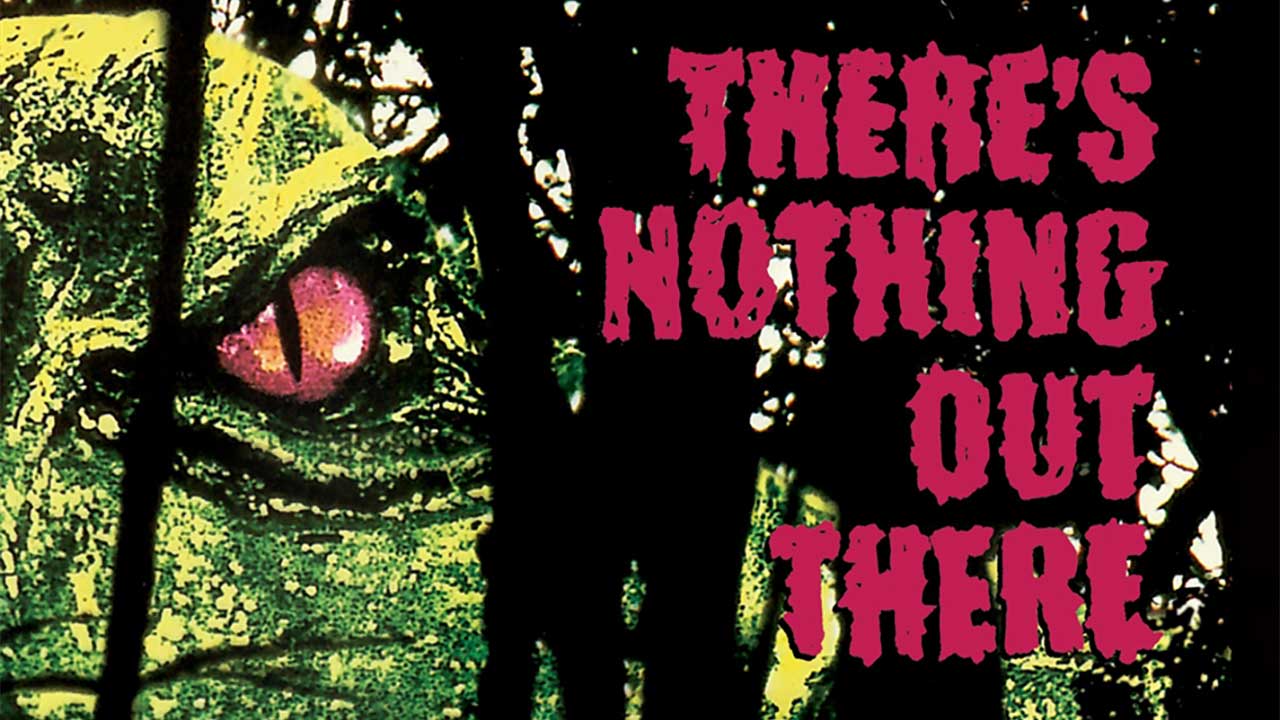
    At an early age, Rolfe Kanefsky was drawn to films starting with his love of the Abbott & Costello movies. Recognizing his aspirations, his father, editor Victor Kanefsky, got him a job working at Troma before he entered college. He worked as a production assistant on Troma’s War, which gave him a taste of how tough filmmaking can be. While in high school, Rolfe saw the Siskel & Ebert “Women in Danger” special, where they criticized popular slasher films. Rolfe wondered how easy writing a teen exploitation film was, so he watched tons of horror films and started writing. He started getting frustrated at all the tropes and cliches, so he decided to make it a self-referential horror-comedy. With help from his parents, Rolfe was able to amass $100,000 to film what became his feature-film debut. Shot in 1989, There’s Nothing Out There finally saw release in 1992.

    [/et_pb_text][/et_pb_column][et_pb_column type=”1_3″ _builder_version=”4.9.2″ _module_preset=”default”][et_pb_circle_counter title=”Rating” number=”85″ bar_bg_color=”#7CDA24″ _builder_version=”4.9.2″ _module_preset=”default”][/et_pb_circle_counter][/et_pb_column][/et_pb_row][et_pb_row _builder_version=”4.9.2″ _module_preset=”default”][et_pb_column type=”4_4″ _builder_version=”4.9.2″ _module_preset=”default”][et_pb_text _builder_version=”4.9.2″ _module_preset=”default” hover_enabled=”0″ sticky_enabled=”0″]

    Synopsis

    For their Spring Break, a group of high school students decides to go to a house by the lake. One of them, a horror buff named Mike (Craig Peck), is paranoid and thinks the worst may happen. While his friend Nick (John Carhart III) puts up with him, the rest of the group is annoyed to death. Unbeknownst to them, a small alien creature is roaming through the woods and is making its way to the house. After getting into a fight with the lunkheaded Jim (Mark Collver), Mike gets locked in the basement for the night. Soon enough, the creature makes its way to the house and starts picking off the teens one by one. Thankfully, Mike makes his way back to the house after breaking out and helps the survivors fend off the creature. They’re gonna needs tons of shaving cream to survive against the creature!


    Review

    There’s Nothing Out There is a clever horror-comedy that manages to achieve that perfect balance between the two genres. What helps is that the movie remembers to be a horror film first and have the comedy be secondary. This could work as a standard creature-feature, but the addition of the Mike character makes it an effective spoof. It also helps that the film doesn’t talk down to its audience or seem insulting to the horror genre. Speaking of Mike, Craig Peck does a great job playing essentially the audience’s avatar, saying what the viewer’s thinking. While he can seem snarky and rude, he comes off as likable since he just wants to keep everyone safe. Also, whether intentional or not, the film seems to make a point about how media consumption can warp someone’s reality. It’s much smarter than you’d expect from a low-budget creature-feature.

    The rest of the cast fit their roles well, though many of them are more the typical horror film archetypes. Thankfully, none of them are particularly annoying or so awful that you’re waiting for them to die. Also, for such a low budget, the creature effects are fairly impressive, the alien creature having a very unique design. What helps is that they hide the creature just enough so you can still see it while still building suspense. There’s plenty of gore and nudity to satiate any fans of exploitation, as well as some great fourth-wall gags. The funniest gag is when a character sees the boom mic and uses it to swing away from the creature. Moments like these help elevate the film past its low-budget trappings into an enjoyable horror-comedy alongside Evil Dead II. Overall, There’s Nothing Out There is worth seeking out.


    Buy There’s Nothing Out There on Amazon: https://amzn.to/2Pk7YI3

    [/et_pb_text][/et_pb_column][/et_pb_row][/et_pb_section]