Facebook

FilmNerd

Category: Cult Films

  • Puppet Master: The Legacy (2003)

    Puppet Master: The Legacy (2003)

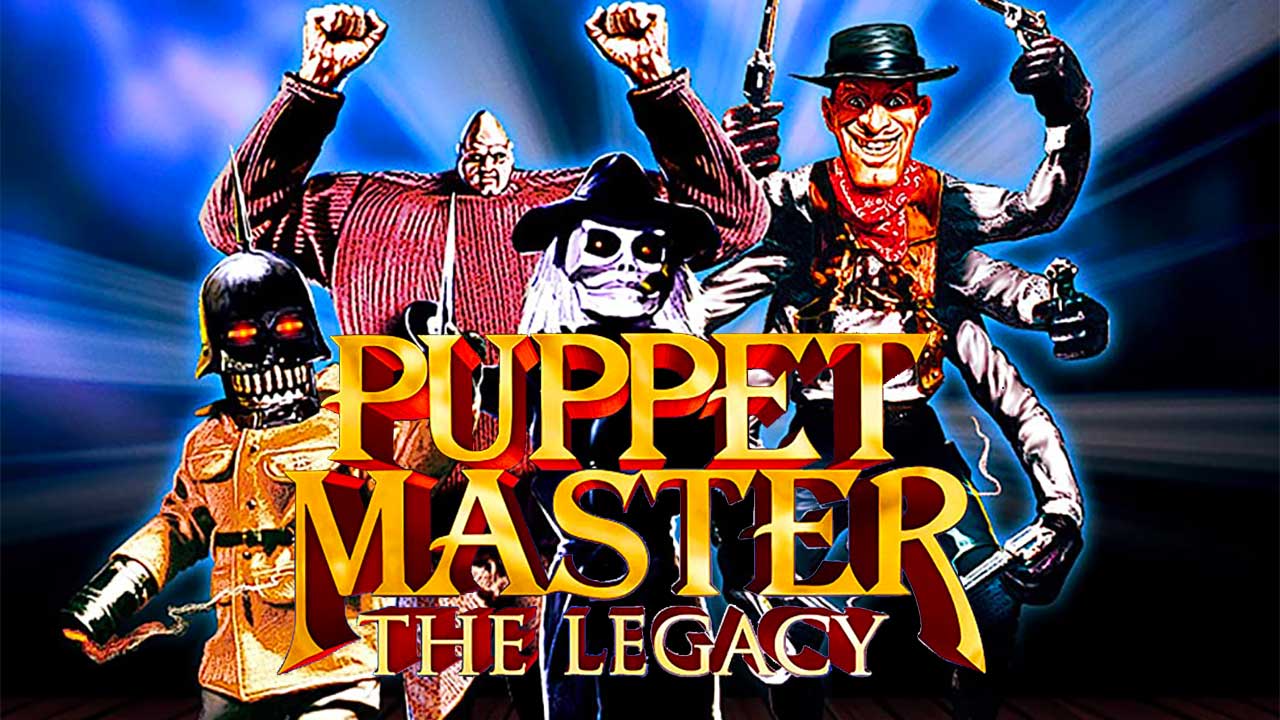
    [et_pb_section fb_built=”1″ admin_label=”section” _builder_version=”4.16″ global_colors_info=”{}”][et_pb_row column_structure=”2_3,1_3″ admin_label=”row” _builder_version=”4.16″ background_size=”initial” background_position=”top_left” background_repeat=”repeat” global_colors_info=”{}”][et_pb_column type=”2_3″ _builder_version=”4.16″ custom_padding=”|||” global_colors_info=”{}” custom_padding__hover=”|||”][et_pb_text _builder_version=”4.17.1″ _module_preset=”default” global_colors_info=”{}”]Due to financial problems, Charles Band temporarily shut down Full Moon Features in 2002 and rebranded as Shadow Entertainment. Having made a deal with Twentieth Century Fox Home Video, Band tried staying afloat despite the market dying out. Thankfully, he still held the rights to the Puppet Master series, but he had to make sense of the continuity. Much like the Friday the 13th series, the timeline of the movies was all over the place and became confusing. He brought back C. Courtney Joyner, writer of Puppet Master III, to pen a script for a soft reset. Joyner used the pseudonym Gene Yarbrough, while Band went by his Head of the Family credit, Robert Talbot. Fans would have to wait four years for this entry, and what they got was a huge disappointment. In 2003, Puppet Master: The Legacy hit video store shelves across the country.

    [/et_pb_text][/et_pb_column][et_pb_column type=”1_3″ _builder_version=”4.16″ custom_padding=”|||” global_colors_info=”{}” custom_padding__hover=”|||”][et_pb_circle_counter title=”Rating” number=”30″ bar_bg_color=”#E09900″ _builder_version=”4.17.1″ _module_preset=”default” global_colors_info=”{}”][/et_pb_circle_counter][/et_pb_column][/et_pb_row][et_pb_row _builder_version=”4.16″ _module_preset=”default” global_colors_info=”{}”][et_pb_column type=”4_4″ _builder_version=”4.16″ _module_preset=”default” global_colors_info=”{}”][et_pb_text _builder_version=”4.27.4″ _module_preset=”default” hover_enabled=”0″ global_colors_info=”{}” sticky_enabled=”0″]

    Synopsis

    Rogue agent Maclain (Kate Orsini) searches for André Toulon’s secret of resurrecting the dead for a mysterious client. Her search takes her to the Bodega Bay Inn, where she finds Eric Weiss (Jacob Witkin) working on the puppets. It turns out that Weiss knew Toulon before his death and swore never to reveal his secrets. When Maclain threatens his life, Weiss plays a recording left by Toulon explaining how he acquired the magic. Some stock footage later, Weiss reveals that his real name is Peter Hertz, the boy Toulon saved from Nazi Germany. The two begin arguing over whether Toulon was good or evil and whether the puppets justified their killings. Maclain soon learns more than she ever expected, including the war with Sutek and how Toulon’s secrets keep getting discovered. Soon enough, they’ll find just what kind of a legacy has been left by the Puppet Master.


    Review

    Admittedly, Full Moon Features was never going to produce a film that would get an Oscar nomination, let alone win. They always maintained at least some level of quality and were generally fun B-movies that knew what they were. With Puppet Master: The Legacy, the company has hit an all-time low for the franchise and Full Moon themselves. At 80 minutes in length, about 15 minutes is original footage, with the remaining 65 being stock footage. It’s on par with Silent Night Deadly Night 2‘s use of stock footage, but at least that was more even. With Legacy, there will be two minutes of original footage followed by ten minutes of clips from the other movies. It feels less like a full-length feature, and more a glorified clip show trying to pass off as a movie. I understand why they did it, but that doesn’t make it less lazy.

    To give them some credit, the filmmakers tried to make sense of the series’ continuity being all over the place. Unfortunately, they leave you with more questions than answers and make the timeline even more confusing. For instance, Rick Meyers, the lead from Puppet Master 4, was killed off-screen after the events of Puppet Master 5. Also, we learn that the puppets hired Maclain to kill Weiss, the new puppet master, which raises tons of questions. If that was their endgame, why didn’t the puppets kill Weiss themselves when they had the chance? Also, how were the puppets able to talk to Maclain when none of them had voices? After the ending, there’s a message thanking all the people who worked over the years on this franchise. Overall, they may have had good intentions, but Puppet Master: The Legacy feels like desperation more than a celebration.


    Buy Puppet Master: The Legacy from:

    Disclosure: The above link is an affiliate link, which means that, at zero cost to you, I will earn a commission if you click through the link and finalize a purchase.

    [/et_pb_text][/et_pb_column][/et_pb_row][/et_pb_section]

  • Sizzle Beach, U.S.A. (1981)

    Sizzle Beach, U.S.A. (1981)

    [et_pb_section fb_built=”1″ admin_label=”section” _builder_version=”4.16″ global_colors_info=”{}”][et_pb_row column_structure=”2_3,1_3″ admin_label=”row” _builder_version=”4.16″ background_size=”initial” background_position=”top_left” background_repeat=”repeat” global_colors_info=”{}”][et_pb_column type=”2_3″ _builder_version=”4.16″ custom_padding=”|||” global_colors_info=”{}” custom_padding__hover=”|||”][et_pb_text _builder_version=”4.27.4″ _module_preset=”default” hover_enabled=”0″ global_colors_info=”{}” sticky_enabled=”0″]

    Some of the most prominent actors working today often get their start in low-budget films, though they often regret this. There’s Demi Moore in Parasite 3D, Jennifer Aniston in Leprechaun, and Nicole Kidman in BMX Bandits, to name a few. Then there’s Kevin Costner, who was a stagehand before getting his big break in The Untouchables and No Way Out. While working behind the scenes, Costner would pass by the office of producer Eric Louzil and ask for acting roles. Louzil had a project in line with first-time director Richard Brander, so he offered Costner a minor part. Admittedly, Louzil hired Costner more for his looks than his acting abilities, not to mention he was awkward. The movie was filmed during the winter of 1978-79 and initially released in 1981 as Malibu Hot Summer. In 1986, Troma acquired the rights and re-released the film as Sizzle Beach, U.S.A.

    [/et_pb_text][/et_pb_column][et_pb_column type=”1_3″ _builder_version=”4.16″ custom_padding=”|||” global_colors_info=”{}” custom_padding__hover=”|||”][et_pb_circle_counter title=”Rating” number=”40″ bar_bg_color=”#E09900″ _builder_version=”4.16.1″ _module_preset=”default” global_colors_info=”{}”][/et_pb_circle_counter][/et_pb_column][/et_pb_row][et_pb_row _builder_version=”4.16″ _module_preset=”default” global_colors_info=”{}”][et_pb_column type=”4_4″ _builder_version=”4.16″ _module_preset=”default” global_colors_info=”{}”][et_pb_text _builder_version=”4.27.4″ _module_preset=”default” hover_enabled=”0″ global_colors_info=”{}” sticky_enabled=”0″]

    Synopsis

    Best friends Janice Johnston (Terry Congie), Dit McCoy (Lesley Brander), and Cheryl Reilly (Roselyn Royce) move out to California. Dit wants to be a famous singer, Cheryl gets a job as a physical education teacher, and Janice takes acting lessons. They decide to rent a beach house and Malibu and plan to try and live out their dreams. Janice falls in love with ranch hand John Logan (Kevin Costner), who teaches her horseback riding in between her classes. Dit gets a spot in a singing competition through a friend but soon discovers how sleazy the manager is. Also, Cheryl gets scolded by her supervisor at the school for supposedly having an insatiable libido. The three grow as friends, learn lessons along the way, and meet the loves of their lives. All of this is mixed in with plenty of TNA to distract you from how dull the plot is.


    Review

    Going into Sizzle Beach, U.S.A., I expected it to be one of those zany sex comedies from the early 1980s. Instead, you get a bland drama about three women, their friendship, and their dreams mixed with some nudity. After a while, the nudity starts losing its appeal and becomes annoying, like you’re praying they keep their clothes on. At least the three lead women look good naked, but that’s not enough to compensate for a dull movie. Congie, Brander, and Reilly have decent chemistry together, but there’s nothing to their characters to make us care. It’s not a shock that of the three, only one has more than two acting credits to their name. I’d comment on the rest of the cast, but they’re so forgettable that it’s not worth it. Then, of course, there’s the person we’re all here to see: Kevin Costner.

    After hearing Louzil say he hired Costner for his looks, it makes sense given his performance or lack thereof. Costner sounds stiff and wooden, and he looks awkward and uncomfortable as if he doesn’t know what to do. Supposedly, he was most uncomfortable shooting a love scene without clothes on, and you can tell when you see it. While he’s never been great, you’d never guess that Costner would become the superstar he is today seeing this. Usually, I scoff at actors denying or feeling embarrassed by their past work, but in this case, I get it. Even with the rampant nudity, this is such a dull and uninteresting movie that you’ll forget about it fast. Even at 90 minutes long, you could do much better than this, even if you want cheap TNA. Overall, Sizzle Beach, U.S.A. might be worth it for Costner completionists, but it’s otherwise best avoided.


    Buy Sizzle Beach, U.S.A. from Amazon: https://amzn.to/3uZxKCg.

    Disclosure: The above link is an affiliate link, which means that, at zero cost to you, I will earn a commission if you click through the link and finalize a purchase.

    [/et_pb_text][et_pb_code _builder_version=”4.27.4″ _module_preset=”default” hover_enabled=”0″ sticky_enabled=”0″]

    Where to watch Sizzle Beach, U.S.A. (1981)

    data-api-key=”LMVDLdLSH5ZJnQ4FMGMgyJCB8cmGbfCV” data-object-type=”Movie” data-title=”Sizzle Beach, U.S.A.” data-year=”1981″ data-theme=”light”>

    [/et_pb_code][/et_pb_column][/et_pb_row][/et_pb_section]

  • Cinderella (1977)

    Cinderella (1977)

    [et_pb_section fb_built=”1″ _builder_version=”4.16.0″ _module_preset=”default” global_colors_info=”{}”][et_pb_row column_structure=”2_3,1_3″ _builder_version=”4.16.0″ _module_preset=”default” global_colors_info=”{}”][et_pb_column type=”2_3″ _builder_version=”4.16.0″ _module_preset=”default” global_colors_info=”{}”][et_pb_text _builder_version=”4.18.0″ _module_preset=”default” global_colors_info=”{}”]After the release of Andy Warhol’s Blue Movie in 1969, a new trend in cinema called “Porno Chic” was born. This trend was a movement where adult films started becoming mainstream and were taken seriously by critics and general audiences. The most successful of these adult films was 1972’s Deep Throat, which grossed a record-breaking $3 million in six months. In the middle of this, there was a mini-trend of adapting children’s stories into adult films, both live-action and animated. Some examples include 1971’s The Erotic Adventures of Pinocchio and 1976’s Alice in Wonderland: An X-Rated Musical Comedy. Seeing the potential at hand, Charles Band decided to make his own adult take on a classic fairy tale. He hired Michael Pataki, who previously directed Mansion of the Doomed, to helm an adult fairy tale including musical numbers. In May 1977, Band’s adult take on Charles Perrault’s Cinderella hit grindhouse theaters.

    [/et_pb_text][/et_pb_column][et_pb_column type=”1_3″ _builder_version=”4.16.0″ _module_preset=”default” global_colors_info=”{}”][et_pb_circle_counter title=”Rating” number=”65″ bar_bg_color=”#EDF000″ _builder_version=”4.16.0″ _module_preset=”default” global_colors_info=”{}”][/et_pb_circle_counter][/et_pb_column][/et_pb_row][et_pb_row _builder_version=”4.16.0″ _module_preset=”default” global_colors_info=”{}”][et_pb_column type=”4_4″ _builder_version=”4.16.0″ _module_preset=”default” global_colors_info=”{}”][et_pb_text _builder_version=”4.27.4″ _module_preset=”default” hover_enabled=”0″ global_colors_info=”{}” sticky_enabled=”0″]

    Synopsis

    Cinderella (Cheryl Smith) lives with her oppressive stepmother (Jennifer Stace) and her stepsisters Drucella (Yana Nirvana) and Marbella (Marilyn Corwin). While she’s stuck having to tend to their every need, Cinderella longs for the day she’ll be free. Meanwhile, The Prince (Brett Smiley) is wary about marriage, which worries The King (Boris Moris) and Queen (Pamela Stonebrook). With The Prince’s 21st birthday approaching, The King decides to host a ball so his son can find a bride. The stepsisters go to the ball, but not before humiliating Cinderella as she has to stay at home. While sleeping, a cat burglar/crossdresser (Sy Richardson) breaks in and convinces Cinderella he’s her fairy godmother. With his help, she gets to go to the ball and have a night with The Prince. Unfortunately, she runs off before The Prince finds out who she is, so he goes out searching for his bride.


    Review

    Cinderella is undoubtedly a product of its time, for better or for worse, which will affect your enjoyment. First off, if you’re uncomfortable with gratuitous nudity and copious amounts of sex, this is not the movie for you. However, if you have an affinity for 70s adult entertainment, this is one of the more entertaining ones. For one, Michael Pataki’s energetic direction keeps the film upbeat and full of energy, so you’re never bored. What also helps is the cast, who all play their parts well and have fun with the material given. On top of being gorgeous, the late Cheryl “Rainbeaux” Smith brings an undeniably sweet charm to her role. Sy Richardson is hilarious in his debut role as the loud-mouthed, snarky, and devious fairy godmother. Admittedly, his character is one of the many elements that date the film considerably and would not fly today.

    The musical segments are surprisingly catchy and will stick in your head quickly, particularly “Snapper” and “Do It To Me.” The rest of the cast gleefully chew through the scenery as they prance about and constantly get naked. Given that this was the 1970s, be prepared to see more bush than a topiary garden that hasn’t been trimmed. Going back to the humor, most of it consists of sexual innuendos and puns, which can get stale fast. Also, while there isn’t much of a plot aside from the original story, this simplicity works in its favor. It serves its purpose of stringing together sex scenes and musical numbers without bogging things down with unnecessary subplots. At slightly over 90 minutes in length, the movie gets in and out quickly and doesn’t overstay its welcome. Overall, Cinderella won’t be for everyone, but fans of oddball adult entertainment should check it out.


    Buy Cinderella from Amazon: https://amzn.to/43ncJnf.

    Disclosure: The above link is an affiliate link, which means that, at zero cost to you, I will earn a commission if you click through the link and finalize a purchase.

    [/et_pb_text][et_pb_code _builder_version=”4.27.4″ _module_preset=”default” hover_enabled=”0″ sticky_enabled=”0″]

    Where to watch Cinderella (1977)

    data-api-key=”LMVDLdLSH5ZJnQ4FMGMgyJCB8cmGbfCV” data-object-type=”Movie” data-title=”Cinderella” data-year=”1977″ data-theme=”light”>

    [/et_pb_code][/et_pb_column][/et_pb_row][/et_pb_section]

  • Big Gus, What’s the Fuss? (1973)

    Big Gus, What’s the Fuss? (1973)

    [et_pb_section fb_built=”1″ admin_label=”section” _builder_version=”4.15″ global_colors_info=”{}”][et_pb_row column_structure=”2_3,1_3″ admin_label=”row” _builder_version=”4.15″ background_size=”initial” background_position=”top_left” background_repeat=”repeat” global_colors_info=”{}”][et_pb_column type=”2_3″ _builder_version=”4.15″ custom_padding=”|||” global_colors_info=”{}” custom_padding__hover=”|||”][et_pb_text _builder_version=”4.15.1″ _module_preset=”default” global_colors_info=”{}”]

    By the early 1970s, Lloyd Kaufman was only a few years away from co-founding Troma Entertainment with Michael Herz. Kaufman had two directing credits under his belt, The Girl Who Returned and The Battle of Love’s Return. Around this time, producer Ami Artzi had his first film, The Dreamer, premiere at the 1972 Cannes Film Festival. Artzi convinced Kaufman and Herz that making a G-rated family comedy in Israel would be easy money. Not only would it be a hit in Israel, but the film could also play at American synagogues. Unfortunately, the trouble started when the original script Kaufman and Herz turned in was drastically rewritten by the Israeli producers. In the end, Kaufman and Herz lost money when the film flopped upon release due to war breaking out. In 1973, Schwartz: The Brave Detective, aka Big Gus, What’s The Fuss? came and went.

    [/et_pb_text][/et_pb_column][et_pb_column type=”1_3″ _builder_version=”4.15″ custom_padding=”|||” global_colors_info=”{}” custom_padding__hover=”|||”][et_pb_circle_counter title=”Rating” number=”25″ bar_bg_color=”#E02B20″ _builder_version=”4.15.1″ _module_preset=”default” global_colors_info=”{}”][/et_pb_circle_counter][/et_pb_column][/et_pb_row][et_pb_row _builder_version=”4.15.1″ _module_preset=”default” global_colors_info=”{}”][et_pb_column type=”4_4″ _builder_version=”4.15.1″ _module_preset=”default” global_colors_info=”{}”][et_pb_text _builder_version=”4.15.1″ _module_preset=”default” hover_enabled=”0″ global_colors_info=”{}” sticky_enabled=”0″]

    Synopsis

    Detective Schwartz (Bomba Tzur) is a former cop turned private investigator who works alongside his partner Simcha (Yosef Shiloach). A wealthy man has hired them to spy on his wife, who he fears is cheating on him. The wife has an affair with her doctor, so the detectives decide to take on the case. While they manage to get photographic evidence, they accidentally lose the footage, and the doctor finds out what they’re doing. In retaliation, he hires a mob boss to send his goons after Schwartz and Simcha to hide the truth. A series of “wacky” hijinks follow as our heroes try to outrun the mob and expose the wife. Thankfully, Schwartz and Simcha have friends in high places who can help them out of this jam. Will our heroes succeed, what will happen to the wife, and just who is Gus?


    Review

    Over the years, Lloyd Kaufman said Big Gus, What’s The Fuss? “did more damage to the Jews than Mein Kempf.” While Lloyd’s statement might be hyperbolic, it’s not like Big Gus, What’s The Fuss? is some misunderstood masterpiece. Perhaps it’s a case of culture clash since I’m not Israeli, but I can’t imagine enjoying this if I was. Cultural issues aside, this is one of the most confusing and disjointed films I’ve seen since starting this site. What’s strange is that, at first, it begins simply enough as a goofy comedy about two bumbling detectives. The plot goes off the rails into pure chaos at some point as it devolves into a string of gags. They make no sense in context and come out of nowhere, including one involving a random couple rehearsing a scene. It doesn’t help that almost none of these gags aren’t the least bit funny.

    From what I understand, many of the cast members were famous in their native land and considered superstars. Admittedly, I’ve never heard of these actors, let alone seen their previous work, so I can’t say for sure. Most of them resort to simply mugging for the camera and making silly noises thinking that’s funny. It seems like they’re trying to capture the madcap energy of Benny Hill without understanding what made him work. It doesn’t help that this film is G-rated, meaning we don’t get the sexy shenanigans Benny Hill was known for. The soundtrack comprises only two songs repeatedly played throughout, which adds to the painful viewing experience. While not as bad as It’s Pat or Freddy Got Fingered, this is still a terrible comedy. Overall, unless you’re a Troma completionist, Big Gus, What’s The Fuss? is best left forgotten.


    Download Big Gus, What’s The Fuss? from Troma Direct: https://bit.ly/3qsWAZM.

    [/et_pb_text][/et_pb_column][/et_pb_row][/et_pb_section]

  • Crash and Burn (1990)

    Crash and Burn (1990)

    [et_pb_section fb_built=”1″ admin_label=”section” _builder_version=”4.16″ global_colors_info=”{}”][et_pb_row column_structure=”2_3,1_3″ admin_label=”row” _builder_version=”4.16″ background_size=”initial” background_position=”top_left” background_repeat=”repeat” global_colors_info=”{}”][et_pb_column type=”2_3″ _builder_version=”4.16″ custom_padding=”|||” global_colors_info=”{}” custom_padding__hover=”|||”][et_pb_text _builder_version=”4.27.4″ _module_preset=”default” hover_enabled=”0″ global_colors_info=”{}” sticky_enabled=”0″]

    After the collapse of Empire Pictures, Charles Band returned to the US and started its successor company: Full Moon Entertainment. While most of the Empire library went to other studios, Band released some under his new studio. The first three films released under this new company were Puppet MasterMeridian: Kiss of the Beast, and Shadowzone. Unfortunately, one of the films Band lost when Empire collapsed was Robot Jox, which went to Triumph Pictures. Since it took so long for Triumph to release the movie, Band decided to capitalize on it. Much like how Roger Corman made movies capitalizing on his previous successes, Band took a similar approach with this. Using much of the same crew as Stuart Gordon’s giant robot epic, Band churned out his own big robot movie. While Gordon’s movie hit theaters in November 1990, Band’s Crash and Burn arrived on video store shelves in September.

    [/et_pb_text][/et_pb_column][et_pb_column type=”1_3″ _builder_version=”4.16″ custom_padding=”|||” global_colors_info=”{}” custom_padding__hover=”|||”][et_pb_circle_counter title=”Rating” number=”60″ bar_bg_color=”#EDF000″ _builder_version=”4.16″ _module_preset=”default” global_colors_info=”{}”][/et_pb_circle_counter][/et_pb_column][/et_pb_row][et_pb_row _builder_version=”4.16″ _module_preset=”default” global_colors_info=”{}”][et_pb_column type=”4_4″ _builder_version=”4.16″ _module_preset=”default” global_colors_info=”{}”][et_pb_text _builder_version=”4.27.4″ _module_preset=”default” global_colors_info=”{}”]

    Synopsis

    In 2035, the powerful corporation Unicom is controlling the world after a massive economic collapse. Most of the earth is desert, and massive “thermal storms” caused by a depleted ozone layer are a daily hazard. A Unicom agent named Tyson (Paul Ganus) is delivering some freon to one of the last remaining TV broadcast stations. He meets the station manager Lathan Hooks (Ralph Waite), who instantly distrusts Tyson due to his resentment towards Unicom. Tyson also meets Lathan’s granddaughter Arren (Megan Ward), schoolteacher Parice (Eva LaRue), and technician Quinn (Bill Moseley). Unfortunately, Tyson has to stay the night at the station due to a thermal storm, trapping everyone else inside. To make matters worse, Unicom sent a “synthoid” to kill the station manager and anyone who gets in its way. Who is this mysterious killer, and who will be left alive to fight off the assailant?


    Review

    While not one of the better early Full Moon titles, Crash and Burn is a pretty entertaining mash-ups of genres. At its core, it’s a slasher film with a cyborg, a cross between Friday the 13th and The Terminator. What makes it stand out is its post-apocalyptic setting and how an economic collapse causes it, which is unique. You can tell that this was when Full Moon had extra capital through Paramount, given the production values. Despite its low budget, the set design and visual effects are surprisingly effective, though it helps they had talented artists. Future Oscar winner Greg Cannom, who also worked on Vicious LipsCherry 2000, and Meridian, designed the makeup effects. Empire/Full Moon regular David Allen handled the stop-motion alongside Chris Endicott, who later managed visual effects on Avengers: Endgame. It shows that a talented crew can compensate for a meager budget.

    On top of having a sweet mullet, Paul Ganus makes for a decent leading man and has plenty of charisma. Future Full Moon regular Megan Ward is fun as the young Arren and has tons of charm to spare. Cult actor Bill Moseley easily steals the show, especially when he goes full Nicolas Cage in the second act. Jack McGee is appropriately gross and slimy as the movie’s Rush Limbaugh stand-in, and he works as the comic relief. Ralph Waite brings some class to the production and Eva LaRue has decent chemistry with Ganus. While not exceptional, Band’s direction works, using low lighting and shadows to create an effective mood. Despite teasing some giant robot action, we only get five minutes worth towards the end of the movie. Overall, Crash and Burn isn’t quite as good as later Full Moon productions, but it’s a decent ninety-minute watch.


    Buy Crash and Burn from:

    Disclosure: The above link is an affiliate link, which means that, at zero cost to you, I will earn a commission if you click through the link and finalize a purchase.

    [/et_pb_text][et_pb_code _builder_version=”4.27.4″ _module_preset=”default” hover_enabled=”0″ sticky_enabled=”0″]

    Where to watch Crash and Burn (1990)

    data-api-key=”LMVDLdLSH5ZJnQ4FMGMgyJCB8cmGbfCV” data-object-type=”Movie” data-title=”Crash and Burn” data-year=”1990″ data-theme=”light”>

    [/et_pb_code][/et_pb_column][/et_pb_row][/et_pb_section]

  • Def by Temptation (1990)

    Def by Temptation (1990)

    [et_pb_section fb_built=”1″ _builder_version=”4.14.5″ _module_preset=”default” global_colors_info=”{}”][et_pb_row column_structure=”2_3,1_3″ _builder_version=”4.14.5″ _module_preset=”default” global_colors_info=”{}”][et_pb_column type=”2_3″ _builder_version=”4.14.5″ _module_preset=”default” global_colors_info=”{}”][et_pb_text _builder_version=”4.14.8″ _module_preset=”default” global_colors_info=”{}”]

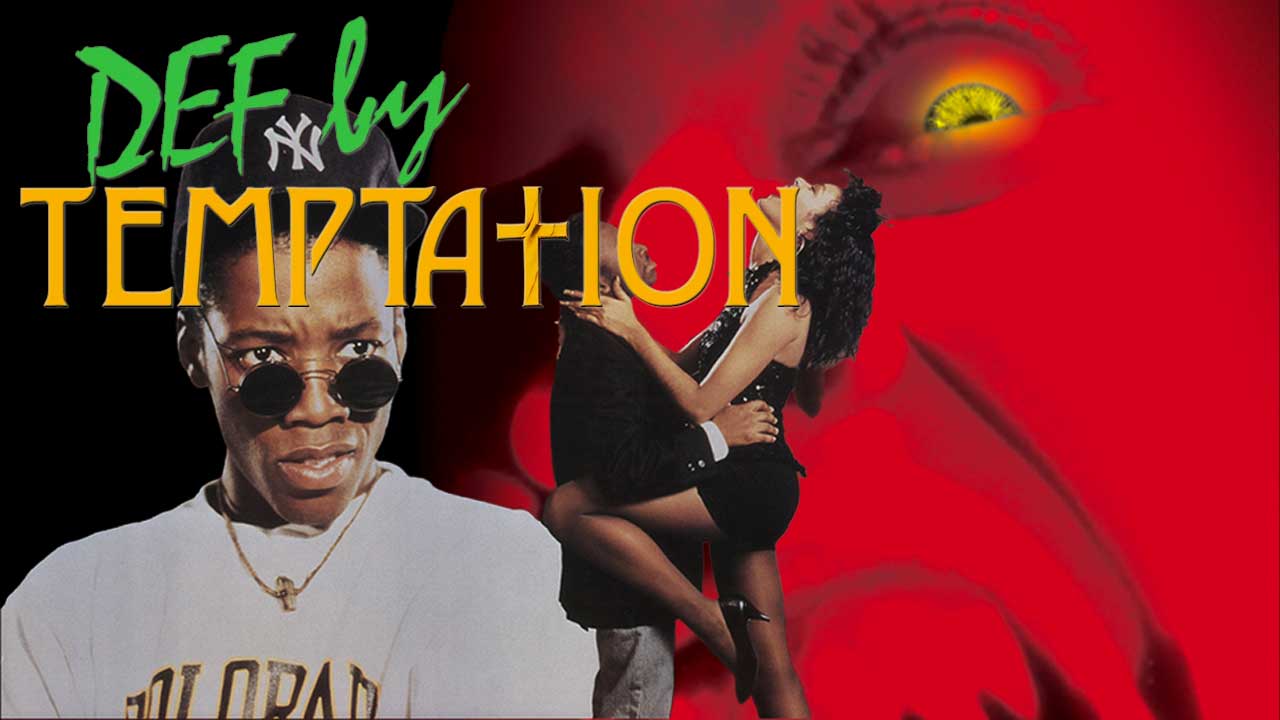
    In the 70s, James Bond III was a prominent child actor known for the short-lived series The Red Hand Gang. He also made appearances on popular shows like Wonder WomanThe Love Boat, and The Waltons. In 1988, Bond starred in Spike Lee’s second feature-length film, School Daze, with Laurence Fishburne and Giancarlo Esposito. While working on the film, Bond became acquainted with some cast and crew members, including cinematographer Ernest Dickerson. Once filming wrapped, Bond recruited some of his School Daze costars to appear in his directorial debut film. Bond cast Kadeem Hardison, Bill Nunn, and a relatively unknown Samuel L. Jackson from the earlier production. Troma stepped in to help with filming at some point, including having Redneck Zombies director Pericles Lewnes handle the effects. In March 1990, Bond’s only directing effort, Def by Temptation, held its premiere in Chapel Hill, North Carolina.

    [/et_pb_text][/et_pb_column][et_pb_column type=”1_3″ _builder_version=”4.14.5″ _module_preset=”default” global_colors_info=”{}”][et_pb_circle_counter title=”Rating” number=”75″ bar_bg_color=”#EDF000″ _builder_version=”4.14.8″ _module_preset=”default” global_colors_info=”{}”][/et_pb_circle_counter][/et_pb_column][/et_pb_row][et_pb_row _builder_version=”4.14.5″ _module_preset=”default” global_colors_info=”{}”][et_pb_column type=”4_4″ _builder_version=”4.14.5″ _module_preset=”default” global_colors_info=”{}”][et_pb_text _builder_version=”4.14.8″ _module_preset=”default” hover_enabled=”0″ global_colors_info=”{}” sticky_enabled=”0″]

    Synopsis

    Joel (James Bond III) is a devout Christian studying to become a minister when he decides to take a break. He meets up with his brother “K” (Kadeem Hardison), an aspiring actor who’s happy to have his brother stay over. While showing him around New York City, they stop into the One Step Down club for some drinks. The night before, “K” met his dream woman (Cynthia Bond) and hopes to find her there again. Much to his dismay, she sets her sights on Joel and latches onto him, completely blowing off “K.” He becomes suspicious after noticing she has no reflection, so he asks his detective friend Dougy (Bill Nunn) for help. According to Dougy, she’s been seducing and killing men for years, and they discover she’s a succubus. Joel is in for the ultimate test of his faith unless his brother can save him from Temptation.


    Review

    Like many great low-budget films, Def by Temptation manages to rise above its limitations to become something special. It’s a shame this is James Bond III’s only directing effort because he shows a lot of promise here. With help from cinematographer Ernest Dickerson, he uses colored lighting and soft focus to give the film a nightmarish quality. Bond also uses fog and darkness to further add to the already spooky mood established. Additionally, the gore effects are surprisingly decent for such a small budget, and gorehounds will be satisfied. Admittedly, some makeup effects look slightly dodgy, but the quick editing and low lighting help hide it. This ties into what’s probably the film’s biggest flaw: the budget was unfortunately not enough for the filmmaker’s ambition. You don’t need huge budgets to make a good movie, but they might’ve bitten off more than they could chew.

    In terms of the acting, it’s very hit or miss, but you can tell many of them are trying. While a decent director, James Bond III isn’t the best at acting, coming off somewhat flat and wooden. It helps that his costars, Kadeem Hardison and Bill Nunn, can carry the film with him. However, the performance that stands out the most is Cynthia Bond as the captivating yet deadly temptress. She owns every scene she’s in, and you have no trouble believing her ability to seduce any man she wants. It’s a shame she didn’t act in much else after this because she’s easily the film’s highlight. Also, despite the marketing plastering his face all over, don’t expect Samuel L. Jackson to have a significant role here. Overall, Def by Temptation is a highly underrated supernatural horror film that genre enthusiasts should give a watch.


    Buy Def by Temptation from Amazon: https://amzn.to/34lQORM.

    Disclosure: The above link is an affiliate link, which means that, at zero cost to you, I will earn a commission if you click through the link and finalize a purchase.

    [/et_pb_text][/et_pb_column][/et_pb_row][/et_pb_section]

  • Eliminators (1986)

    Eliminators (1986)

    [et_pb_section fb_built=”1″ admin_label=”section” _builder_version=”3.22″ global_colors_info=”{}”][et_pb_row column_structure=”2_3,1_3″ admin_label=”row” _builder_version=”3.25″ background_size=”initial” background_position=”top_left” background_repeat=”repeat” global_colors_info=”{}”][et_pb_column type=”2_3″ _builder_version=”3.25″ custom_padding=”|||” global_colors_info=”{}” custom_padding__hover=”|||”][et_pb_text _builder_version=”4.14.8″ _module_preset=”default” hover_enabled=”0″ global_colors_info=”{}” sticky_enabled=”0″]

    While working as an AD on David Schmoeller’s The Seduction, Peter Manoogian met Charles Band on Parasite 3D. Since Embassy Pictures produced both films, Manoogian worked with Band on his 3D monster movie as first assistant director. He was so impressed with Manoogian’s work that he hired him to work on Metalstorm: The Destruction of Jared-Syn. After founding Empire Pictures, Band gave Manoogian his directorial debut by helming a segment of The Dungeonmaster. While shooting Ghost Warrior, Band asked Manoogian to direct a script written by Danny Bilson & Paul De Meo. The two previously wrote Trancers and Zone Troopers, but they had another story they presented before those two. Manoogian jumped at the opportunity, and he worked very hard to make it as good as possible. After an arduous shoot, Eliminators hit theaters in January 1986, around the same time that Troll came out.

    [/et_pb_text][/et_pb_column][et_pb_column type=”1_3″ _builder_version=”3.25″ custom_padding=”|||” global_colors_info=”{}” custom_padding__hover=”|||”][et_pb_circle_counter title=”Rating” number=”65″ bar_bg_color=”#EDF000″ _builder_version=”4.14.8″ _module_preset=”default” hover_enabled=”0″ global_colors_info=”{}” sticky_enabled=”0″][/et_pb_circle_counter][/et_pb_column][/et_pb_row][et_pb_row _builder_version=”4.14.8″ _module_preset=”default” global_colors_info=”{}”][et_pb_column type=”4_4″ _builder_version=”4.14.8″ _module_preset=”default” global_colors_info=”{}”][et_pb_text _builder_version=”4.14.8″ _module_preset=”default” hover_enabled=”0″ global_colors_info=”{}” sticky_enabled=”0″]

    Synopsis

    The evil scientist Abbot Reeves (Roy Dotrice) has been using a Mandroid (Patrick Reynolds) to steal artifacts through time travel. After the most recent assignment, Reeves orders his assistant Takada (Tad Horino) to dismantle the Mandroid, but he refuses. Instead, Takada helps the Mandroid escape the facility and tells him to find Colonel Nora Hunter before dying. The Mandroid finds Hunter (Denise Crosby), who agrees to join him and stop Reeves from taking over the world. Along the way, they hire riverboat captain Harry Fontana (Andrew Prine) to be their guide to Reeves’ hideout. Soon, the group gets attacked by Reeves’ men and even runs into cave dwellers brought to the present day. They also run into Kuji (Conan Lee), Takada’s son, seeking revenge against Reeves for his father’s death. With a cyborg, a scientist, a mercenary, and now a ninja, they make up The Eliminators!


    Review

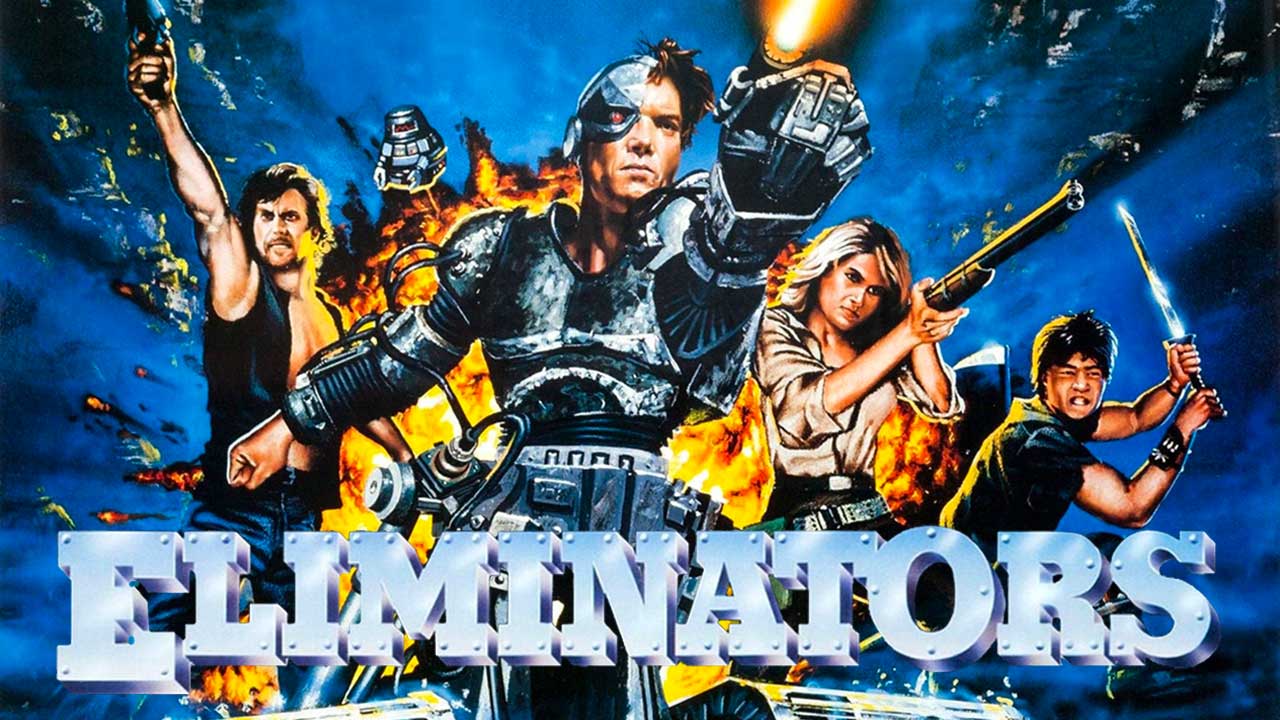
    If nothing else, the poster for Eliminators is probably one of the best B-movie posters ever made. While it has elements from the movie, it doesn’t quite match its overall quality, though not in a duplicitous way. This film had tons of crazy ideas, but the budget wasn’t enough to fully realize them. For instance, the Mandroid has a mobile unit he uses during his initial escape but abandons soon after. Also, we only ever see the Mandroid go back in time once during the opening sequence. If the film had more money, I’m sure they could’ve done something even crazier, but what’s there works just fine. Even for such a low budget, the effects are surprisingly decent, and there are some well-staged action sequences. More importantly, it manages to be fun and have some heart without being stupid or overly sappy.

    Patrick Reynolds is great as the Mandroid, managing to squeeze some humanity into a robotic character. It’s eerily similar to Peter Weller’s character in Robocop, right down to him trying to regain his humanity. As the cocky and arrogant Harry Fontana, Andrew Prine is fun, though part of me wishes they cast Tim Thomerson. Denise Crosby is likable as the scientist Colonel Hunter, and she has some good back-and-forths with Prine. Roy Dotrice is having fun playing an over-the-top villain, and some minor characters like Bayou Betty (Peggy Mannix) also shine. There are plenty of explosions, laser fights, and chase scenes to keep any action movie fan entertained. In a way, it’s like watching an 80s cartoon come to life, and sometimes that’s all you need. Overall, Eliminators is a fun, cheesy, and exciting sci-fi/action movie that’s enjoyable for what it is.


    Buy Eliminators from Amazon: https://amzn.to/3MbG3CC.

    Disclosure: The above link is an affiliate link, which means that, at zero cost to you, I will earn a commission if you click through the link and finalize a purchase.

    [/et_pb_text][/et_pb_column][/et_pb_row][/et_pb_section]

  • Disco Godfather (1979)

    Disco Godfather (1979)

    [et_pb_section fb_built=”1″ admin_label=”section” _builder_version=”4.16″ global_colors_info=”{}”][et_pb_row column_structure=”2_3,1_3″ admin_label=”row” _builder_version=”4.16″ background_size=”initial” background_position=”top_left” background_repeat=”repeat” global_colors_info=”{}”][et_pb_column type=”2_3″ _builder_version=”4.16″ custom_padding=”|||” global_colors_info=”{}” custom_padding__hover=”|||”][et_pb_text _builder_version=”4.16″ _module_preset=”default” global_colors_info=”{}”]

    While Petey Wheatstraw wasn’t necessarily a flop, it didn’t make nearly as much as Rudy Ray Moore’s previous movies. Moore’s producing partner, Theodore “T” Toney, decided that cleaning up his image would help boost his career. At the time, the disco craze was in full swing, and there was an epidemic of PCP sweeping the nation. With this in mind, they decided to make a disco-themed movie that addressed the PCP issue. Rather than rehire Cliff Roquemore, Moore decided to give a new director a shot, so he hired J. Robert Wagoner. While he was initially excited to work on the project, Wagoner quickly grew frustrated and lost interest. Roquemore came back as a writer and producer to help salvage things, but this film was doomed to fail. In August 1979, just days after the Fall of Disco, Disco Godfather made it to theaters across the US.

    [/et_pb_text][/et_pb_column][et_pb_column type=”1_3″ _builder_version=”4.16″ custom_padding=”|||” global_colors_info=”{}” custom_padding__hover=”|||”][et_pb_circle_counter title=”Rating” number=”45″ bar_bg_color=”#E09900″ _builder_version=”4.16″ _module_preset=”default” global_colors_info=”{}”][/et_pb_circle_counter][/et_pb_column][/et_pb_row][et_pb_row _builder_version=”4.16″ _module_preset=”default” global_colors_info=”{}”][et_pb_column type=”4_4″ _builder_version=”4.16″ _module_preset=”default” global_colors_info=”{}”][et_pb_text _builder_version=”4.16″ _module_preset=”default” global_colors_info=”{}”]

    Synopsis

    Tucker Williams (Rudy Ray Moore) is an ex-cop/DJ at a famous disco club, where he’s called the Disco Godfather. Everything is going well until his nephew Bucky (Julius Carry) starts freaking out and must go to the hospital. Dr. Fred Mathis (Jerry Jones) explains to Tucker that his nephew was taking a drug known as “angel dust.” Hearing this makes Tucker upset, so he decides to come out of retirement to stop the spread of angel dust. Meanwhile, Tucker meets Noel (Carol Speed), a local reporter who’s also determined to end the angel dust epidemic. While she leads rallies and protests, Tucker takes the law into his own hands and tracks down angel dust dealers. The trail leads him to businessman Stinger Ray (Hawthorne James), who’s been dealing cigarettes dipped in angel dust. It’s up to the Disco Godfather to clean up the streets from the threat of PCP.


    Review

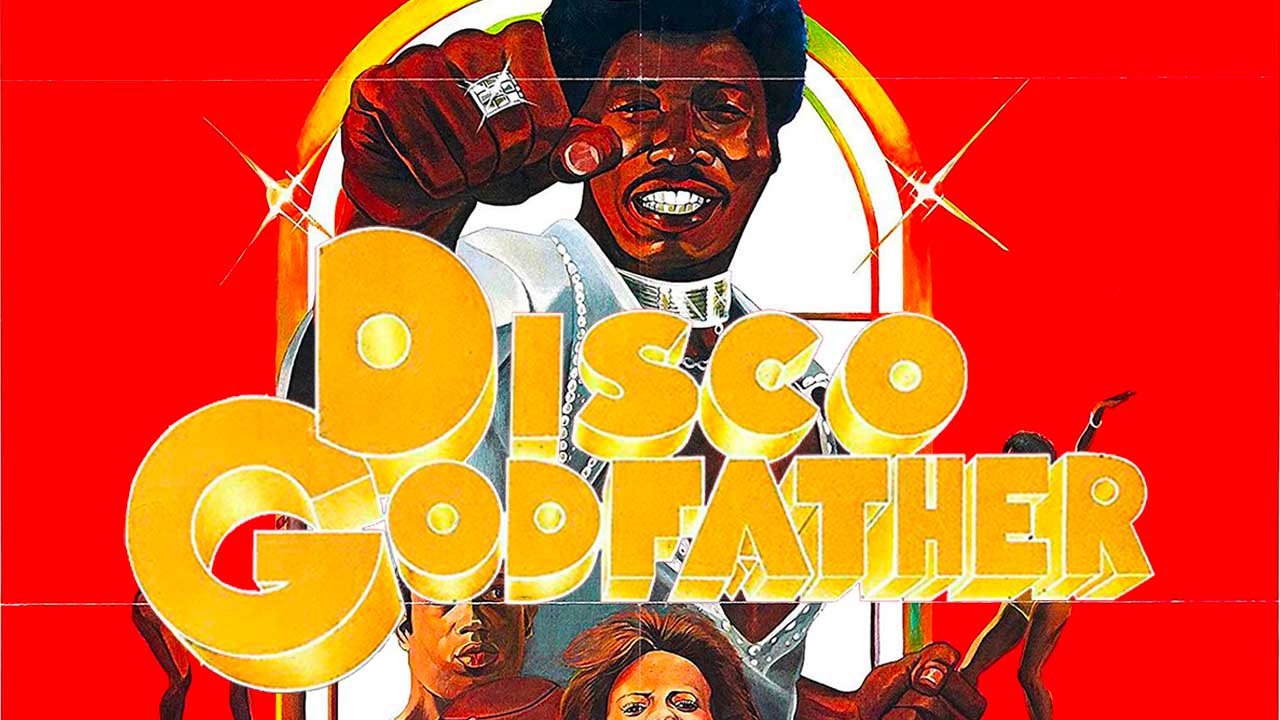
    Rudy Ray Moore has said that Disco Godfather ended his movie career, and it’s easy to see why. While his other movies didn’t offer much aside from surface-level entertainment, they still worked for what they were. With this, they tried going more mainstream by tackling an issue and chasing a then-popular trend that ended up dying. It doesn’t help that the anti-drug message is so heavy-handed that it starts turning into an after-school special. Even the disco theme, which was dying out by 1979, feels like they’re trying too hard to seem cool. Even then, the disco portions only comprise the first 30 or so minutes of the total runtime. Admittedly, these scenes are the film’s highlight, especially with Moore’s declaration, “Put yo weight on it!” He says it so much that you could make a drinking game out of it, but I wouldn’t recommend this.

    You can tell that Rudy Ray Moore is still trying despite not being too into the material. Despite him trying to give another exaggerated performance, it’s evident he had to pull back to reach mainstream appeal. Jerry Jones again delivers another understated and reserved performance, and newcomer Julies Carrey gives it his all. Carol Speed, who starred in several exploitation films in the 1970s, deserved way better than what she got here. When it comes to first-time directors, J. Robert Wagoner sadly falters where Cliff Roquemore excelled in the past movies. There are these weird hallucinatory sequences throughout the film, which help keep it from being dull. Admittedly, the idea of an ex-cop turned DJ taking on drug dealers should’ve worked, but unfortunately, it just didn’t here. Overall, Disco Godfather is hardly one of the worst movies ever, but it’s a sad end to Moore’s stardom.


    Buy Disco Godfather from Amazon: https://amzn.to/3hpd1kV.

    Disclosure: The above link is an affiliate link, which means that, at zero cost to you, I will earn a commission if you click through the link and finalize a purchase.

    [/et_pb_text][et_pb_code _builder_version=”4.27.4″ _module_preset=”default” hover_enabled=”0″ sticky_enabled=”0″]

    Where to watch Disco Godfather (1979)

    data-api-key=”LMVDLdLSH5ZJnQ4FMGMgyJCB8cmGbfCV” data-object-type=”Movie” data-title=”Disco Godfather” data-year=”1979″ data-theme=”light”>

    [/et_pb_code][/et_pb_column][/et_pb_row][/et_pb_section]

  • Petey Wheatstraw (1977)

    Petey Wheatstraw (1977)

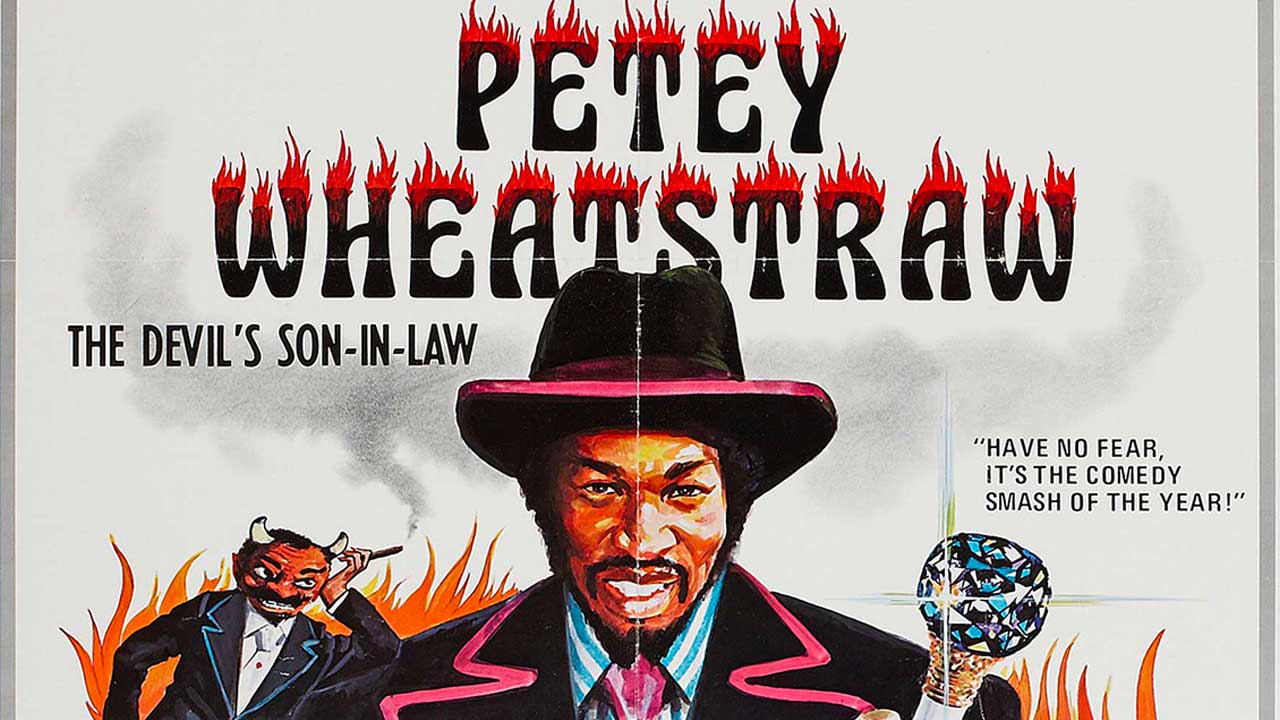
    [et_pb_section fb_built=”1″ admin_label=”section” _builder_version=”4.16″ global_colors_info=”{}”][et_pb_row column_structure=”2_3,1_3″ admin_label=”row” _builder_version=”4.16″ background_size=”initial” background_position=”top_left” background_repeat=”repeat” global_colors_info=”{}”][et_pb_column type=”2_3″ _builder_version=”4.16″ custom_padding=”|||” global_colors_info=”{}” custom_padding__hover=”|||”][et_pb_text _builder_version=”4.16″ _module_preset=”default” global_colors_info=”{}”]While Dolemite was a hit, The Human Tornado was an even bigger hit when it landed in theaters in 1976. Rudy Ray Moore knew he had to keep the momentum going with two back-to-back hit films under his belt. Having been impressed with his work on the last movie, Moore rehired Cliff Roquemore as director and writer. Instead of doing another Dolemite picture, Moore adapted another character from his stand-up routine: Petey Wheastraw: The Devil’s Son-In-Law. Much like how Moore gave him an opportunity, Roquemore decided to help out actors like Ebony Wright. With an estimated budget of around $700,000 to $750,000, this was Moore’s most expensive film at the time. Unfortunately, Dimension Pictures was facing financial troubles, so Transvue Pictures picked up the distribution rights. In late 1977, Rudy Ray Moore’s third major motion picture, Petey Wheatstraw, hit the big screen across the US.

    [/et_pb_text][/et_pb_column][et_pb_column type=”1_3″ _builder_version=”4.16″ custom_padding=”|||” global_colors_info=”{}” custom_padding__hover=”|||”][et_pb_circle_counter title=”Rating” number=”60″ bar_bg_color=”#EDF000″ _builder_version=”4.16″ _module_preset=”default” global_colors_info=”{}”][/et_pb_circle_counter][/et_pb_column][/et_pb_row][et_pb_row _builder_version=”4.16″ _module_preset=”default” global_colors_info=”{}”][et_pb_column type=”4_4″ _builder_version=”4.16″ _module_preset=”default” global_colors_info=”{}”][et_pb_text _builder_version=”4.27.2″ _module_preset=”default” global_colors_info=”{}”]

    Synopsis

    During a great Miami hurricane, a young woman (Rose Jewel Williams) gives birth to a six-year-old boy (Clifford Roquemore II). After the boy asserts dominance towards his father (Sy Richardson), his mother names him Petey Wheatstraw. As a teenager, Petey (Danny Poinson) trains under a martial arts master named Bantu (Brian Breye) after getting bullied. Now an adult, Petey (Rudy Ray Moore) is a successful comedian known for insulting the crowd and generally being loud. Rival comedians Leroy (Leroy Daniels) and Skillet (Ernest Mayhand) want Petey stopped, so they hire thugs to gun him down. In death, Petey meets Lou Cipher, aka Lucifer (G. Tito Shaw), who offers to make a deal with him. Lucifer will bring Petey back to life if he agrees to marry his daughter and bear him a grandson. Petey agrees and exacts his revenge, but he plans to double-cross the devil.


    Review

    Of Rudy Ray Moore’s movies, Petey Wheatstraw is easily the strangest of them all, which is both good and bad. On the one hand, it’s admirable that they tried doing something different and not retread the same ground. On the other hand, mixing various genres – comedy, horror, drama – might put off fans of Moore’s earlier movies. You know you’ve gone off the rails when a wacky comedy suddenly has a scene of a kid getting shot. Not only that but it’s followed up with an entire group of people getting gunned down after said kid’s funeral. Neither scene is played for laughs, and it’s such a weird tonal shift for such an odd movie. It’s even stranger when the film goes back to comedy, and the earlier dramatic scenes are glossed over. It’s almost admirable how they go all over the place with the film’s tone.

    Once again, Rudy Ray Moore is the film’s highlight, spouting off loud insults and making ridiculous faces. Also, there’s another outrageous sex scene with Moore, but this one’s reminiscent of a similar scene from A Clockwork Orange. G. Tito Shaw is almost the Jerry Jones of the film, delivering a very straight-laced performance with moments of outburst. Leroy and Skillet are funny during their stand-up routine, acting as a black version of Abbott and Costello. You can tell that Cliff Roquemore enjoyed having more control over this film, especially with the running motif of watermelons. There are still signs of the movie’s low budget, such as the laughable demon make-up, but these add charm. Your enjoyment will largely depend on how much you can handle the film’s juggling of genres for what it’s worth. Overall, Petey Wheatstraw isn’t as good as the last two, but it’s too weird to miss.


    Buy Petey Wheatstraw from Amazon: https://amzn.to/4ee0cog.

    Disclosure: The above link is an affiliate link, which means that, at zero cost to you, I will earn a commission if you click through the link and finalize a purchase.

    [/et_pb_text][et_pb_code _builder_version=”4.27.4″ _module_preset=”default” hover_enabled=”0″ sticky_enabled=”0″]

    Where to watch Petey Wheatstraw (1977)

    data-api-key=”LMVDLdLSH5ZJnQ4FMGMgyJCB8cmGbfCV” data-object-type=”Movie” data-title=”Petey Wheatstraw” data-year=”1977″ data-theme=”light”>

    [/et_pb_code][/et_pb_column][/et_pb_row][/et_pb_section]

  • The Human Tornado (1976)

    The Human Tornado (1976)

    [et_pb_section fb_built=”1″ admin_label=”section” _builder_version=”4.16″ global_colors_info=”{}”][et_pb_row column_structure=”2_3,1_3″ admin_label=”row” _builder_version=”4.16″ background_size=”initial” background_position=”top_left” background_repeat=”repeat” global_colors_info=”{}”][et_pb_column type=”2_3″ _builder_version=”4.16″ custom_padding=”|||” global_colors_info=”{}” custom_padding__hover=”|||”][et_pb_text _builder_version=”4.16″ _module_preset=”default” global_colors_info=”{}”]

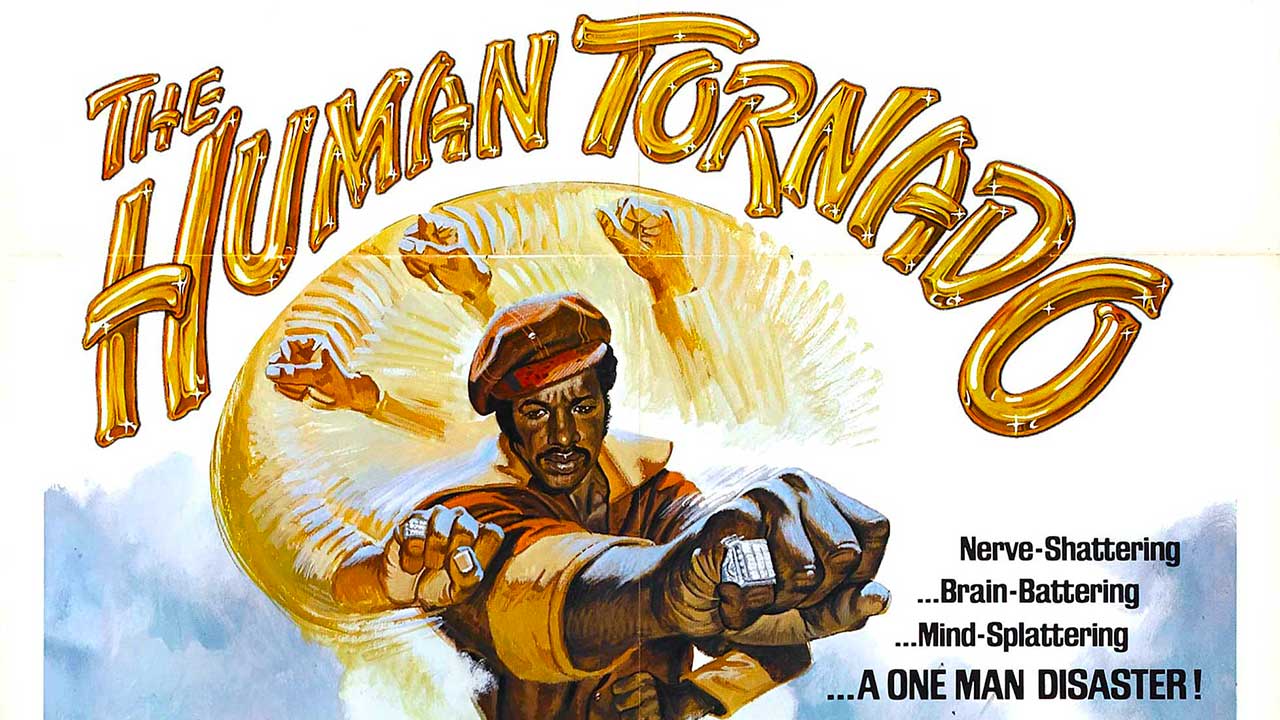
    Rudy Ray Moore took a huge gamble when making Dolemite, but thankfully, that gamble paid off. While people didn’t track box office totals back then, it’s reported that the film grossed $12 million on a $100,000 budget. Moore decided to strike while the iron was hot and make a sequel with this success. Since D’Urville Martin didn’t care about the original, Moore hired a new director to helm the project. Through his producing partner T. Toney, Moore met theater director Cliff Roquemore, a Detroit native looking for his big break. Moore liked his theater work and hired Roquemore to helm the sequel with his ideas for the film. Much of the cast and crew from the original returned, and the shoot went much smoother this time around. After a four-week shooting schedule, The Human Tornado made its way to theaters in the summer of 1976.

    [/et_pb_text][/et_pb_column][et_pb_column type=”1_3″ _builder_version=”4.16″ custom_padding=”|||” global_colors_info=”{}” custom_padding__hover=”|||”][et_pb_circle_counter title=”Rating” number=”75″ bar_bg_color=”#EDF000″ _builder_version=”4.16″ _module_preset=”default” global_colors_info=”{}”][/et_pb_circle_counter][/et_pb_column][/et_pb_row][et_pb_row _builder_version=”4.16″ _module_preset=”default” global_colors_info=”{}”][et_pb_column type=”4_4″ _builder_version=”4.16″ _module_preset=”default” global_colors_info=”{}”][et_pb_text _builder_version=”4.16″ _module_preset=”default” global_colors_info=”{}”]

    Synopsis

    Dolemite (Rudy Ray Moore) throws a massive party at his mansion to celebrate after a successful comedy tour. Unfortunately, the party’s interrupted when the racist Sheriff Beatty (J.B. Baron) breaks in, finding his wife in bed with Dolemite. Dolemite escapes and hits the road with his friends Bo (Ernie Hudson), Jimmy (James Cromartie), and Dough (Ed Montgomery). Once home, Queen Bee (Lady Reed) tells Dolemite that local crime boss Cavaletti (Herb Graham) kidnapped two of his girls. Meanwhile, Beatty enlists police Captain Ryan (Jack Kelly) to hunt down Dolemite, informing Agent Blakely (Jerry Jones) of the situation. With help from his lady friend Hurricane Annie (Gloria Delaney), Dolemite kicks ass and takes names searching for his girls. It’s up to Dolemite and company to free the girls, take out Cavaletti, and get even with the racist sheriff. It’s a hell of a storm when The Human Tornado rolls in!


    Review

    Compared to its predecessor, The Human Tornado is in many ways an improvement that enhances what made the original work. It’s got the same wacky humor, kung-fu fighting, and vulgar taunts as Dolemite, but cranked up to 11. One example of the gags going more over-the-top is when they replay Rudy Ray Moore doing an outrageous stunt. Like in the last film, Rudy Ray Moore is firing on all cylinders and then some with his performance. You can tell he’s having more fun with his exaggerated body movements and how he delivers his ridiculous lines. Compared to D’Urville Martin, Cliff Roquemore’s direction is superior, with all the fast and slow-motion effects added. His kinetic filmmaking adds to just how wild and crazy the overall film is, making it overwhelming at times. Honestly, you’ll be so overwhelmed, you’ll feel like Barbara Gerl’s character by the film’s end.

    It’s great seeing a young Ernie Hudson playing a relatively significant supporting role, and he does a great job. Also, Jerry Jones gives another excellent performance as Blakely, though he doesn’t have as much to do here. The rest of the supporting cast play their parts as appropriately exaggerated as possible, further adding to the film’s charm. You can tell that the crew learned a lot from the last movie, given the lack of noticeable technical flubs. Admittedly, even though this is supposed to be a sequel, it works more as a standalone film. Plus, while the last movie almost had little to no plot, this one has almost too much story to follow. Still, if you can sit back and not take it too seriously, you’ll be in for a fun thrill ride. Overall, The Human Tornado takes what worked before and doubles down on that tenfold.


    Buy The Human Tornado from Amazon: https://amzn.to/35boPEI.

    Disclosure: The above link is an affiliate link, which means that, at zero cost to you, I will earn a commission if you click through the link and finalize a purchase.

    [/et_pb_text][et_pb_code _builder_version=”4.27.4″ _module_preset=”default” hover_enabled=”0″ sticky_enabled=”0″]

    Where to watch The Human Tornado (1976)

    data-api-key=”LMVDLdLSH5ZJnQ4FMGMgyJCB8cmGbfCV” data-object-type=”Movie” data-title=”The Human Tornado” data-year=”1976″ data-theme=”light”>

    [/et_pb_code][/et_pb_column][/et_pb_row][/et_pb_section]